

“Death Has No Master”, interview with director Jorge Thielen Armand
Jorge Thielen Armand discusses "Death Has No Master", Venezuela, class violence, sound, memory and the house at the centre of the film.
Listeners:
Top listeners:
 play_arrow
ENGLISH Channel 01 If English is your language, or a language you understand, THIS IS YOUR CHANNEL !
 play_arrow
ITALIAN Channel 02 Se l’italiano è la tua lingua, o una lingua che conosci, QUESTO È IL TUO CANALE!
 play_arrow
EXTRA Channel 03 FRED Film Radio channel used to broadcast press conferences, seminars, workshops, master classes, etc.
 play_arrow
GERMAN Channel 04 Wenn Ihre Sprache Deutsch ist, oder Sie diese Sprache verstehen, dann ist das IHR KANAL !
 play_arrow
POLISH Channel 05
 play_arrow
SPANISH Channel 06 Si tu idioma es el español, o es un idioma que conoces, ¡ESTE ES TU CANAL!
 play_arrow
FRENCH Channel 07 Si votre langue maternelle est le français, ou si vous le comprenez, VOICI VOTRE CHAINE !
 play_arrow
PORTUGUESE Channel 08
 play_arrow
ROMANIAN Channel 09 Dacă vorbiţi sau înţelegeţi limba română, ACESTA ESTE CANALUL DUMNEAVOASTRĂ!
 play_arrow
SLOVENIAN Channel 10
 play_arrow
ENTERTAINMENT Channel 11 FRED Film Radio Channel used to broadcast music and live shows from Film Festivals.
 play_arrow
BULGARIAN Channel 16 Ако българският е вашият роден език, или го разбирате, ТОВА Е ВАШИЯТ КАНАЛ !
 play_arrow
CROATIAN Channel 17 Ako je hrvatski tvoj jezik, ili ga jednostavno razumiješ, OVO JE TVOJ KANAL!
 play_arrow
LATVIAN Channel 18
 play_arrow
DANISH Channel 19
 play_arrow
HUNGARIAN Channel 20
 play_arrow
DUTCH Channel 21
 play_arrow
GREEK Channel 22
 play_arrow
CZECH Channel 23
 play_arrow
LITHUANIAN Channel 24
 play_arrow
SLOVAK Channel 25
 play_arrow
ICELANDIC Channel 26 Ef þú talar, eða skilur íslensku, er ÞETTA RÁSIN ÞÍN !
 play_arrow
INDUSTRY Channel 27 FRED Film Radio channel completely dedicated to industry professionals.
 play_arrow
EDUCATION Channel 28 FRED Film Radio channel completely dedicated to film literacy.
 play_arrow
SARDU Channel 29 Si su sardu est sa limba tua, custu est su canale chi ti deghet!
 play_arrow
“Conversation with” at the 20th Marrakech IFF, interview with actor Willem Dafoe Bénédicte Prot
 play_arrow
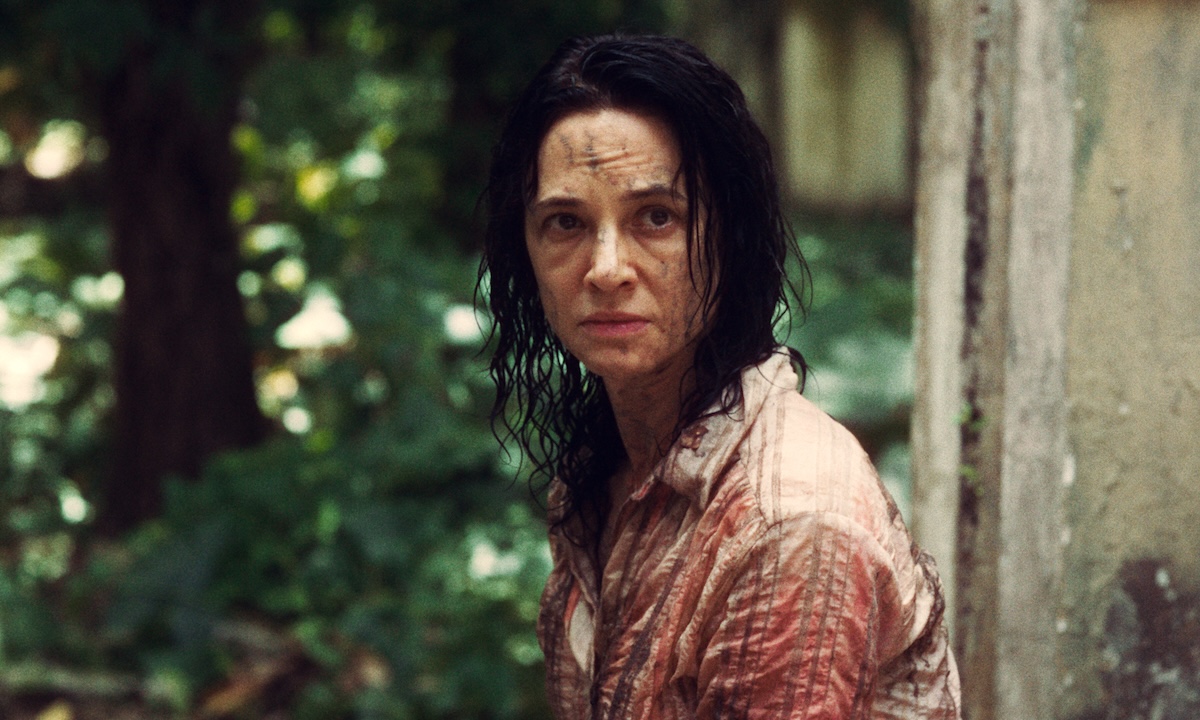
"Death Has No Master", interview with actress Asia Argento Federica Scarpa
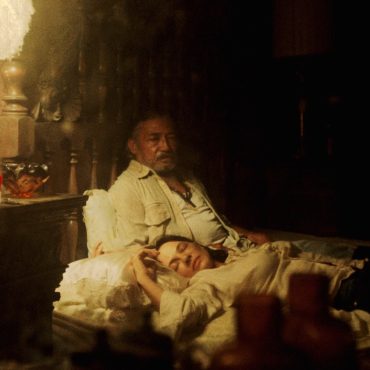
At the Festival de Cannes 2026, Asia Argento returns with “Death Has No Master”, the new feature by Venezuelan filmmaker Jorge Thielen Armand, presented as a world premiere in the Quinzaine des Cinéastes. The film, also titled “La muerte no tiene dueño”, follows Caro, a woman who travels to Venezuela to sell her late father’s cacao plantation, only to find the family mansion occupied by its former staff.
Asia Argento describes the experience as both destabilising and artistically necessary. Acting in Spanish and spending two months in Venezuela, one dedicated to preparation and one to shooting, placed her in a state of vulnerability that became part of the role. “It made me feel very insecure, not speaking the language,” says the actress. “I used that frustration for my character.”
For Asia Argento, Caro is not simply a woman reclaiming property. She is someone already close to collapse, forced to confront what land, inheritance and family history can conceal. The actress describes the character as marked by entitlement, colonial memory, and an unresolved relation to Venezuela.
“There is this primal animal in me,” says Asia Argento, reflecting on how the film explores the instinctive violence attached to home, property and bloodline. In her reading, “Death Has No Master” examines a basic human impulse: the transformation of grief and inheritance into conflict. The mansion becomes more than a location. It is a place where buried histories return through bodies, rooms, sounds and gestures.
The film’s official synopsis frames this struggle as one that unearths violence embedded in the land and its memory, and Asia Argento connects that idea to a more intimate performance process. She explains that she built an entire past for Caro, including details never shown on screen, to inhabit her instability with precision.
The shoot in Venezuela became, in Asia Argento’s words, an experience of self-imposed isolation. She says she did not go to the beach, restaurants or leisure spaces, choosing instead to remain in her hotel room and reread the script obsessively. “I’m not gonna miss this chance,” says Asia Argento. “So I gave it my all.”
That intensity shaped a performance she now recognises as disturbing and deliberately unguarded. “When I looked at the movie, I was like, wow, I looked really deranged,” she says. The language barrier amplified the unease, the constant evolution of the script, and the atmosphere of the house where rehearsals took place, which she describes as charged with dark energy.
Although Asia Argento initially approached “Death Has No Master” as a political film, she only fully understood its genre dimension after seeing the completed work. With its sound design, photography, blood, tension and psychological disturbance, the film revealed itself to her as a horror-inflected thriller with a 1970s sensibility.
“I had no idea the movie was horror,” says Asia Argento. “When I saw it with the music, with the lights, I understood it’s my turf.” The actress, whose career is deeply connected to genre cinema, identifies the film’s paranormal and psychological texture as part of her own artistic heritage.
The film brings together professional and non-professional performers, a working method familiar to Jorge Thielen Armand. Asia Argento recalls a month of rehearsals in the house, shared meditations and a process that helped the group reach a common rhythm. She was especially struck by Dogreika Tovar, whose natural presence pushed her to find a balance between technique and instinct.
Her relationship with Jorge Thielen Armand was based on hierarchy and trust. After more than 70 films, Argento says she needs a director who knows where the film is going. “He’s the director, I’m the actress,” she says, describing him as precise, opinionated and able to contain her own need for control.
For Asia Argento, returning to Cannes carries personal weight. She admits she thought she might never return, making this invitation a significant moment. The Quinzaine des Cinéastes, she says, remains one of the sections where she looks for the pulse of contemporary cinema.
“I feel in the right place,” says Asia Argento. “I really love directors and art movies. I feel at home.”
Caro travels to Venezuela to sell her late father’s cacao plantation, only to find the family mansion occupied by its former staff, who are determined to remain at all costs. As Caro takes justice into her own hands to claim the inheritance she believes is hers, she sets off a struggle that unearths the violence buried in the land and its memory.
Jorge Thielen Armand discusses "Death Has No Master", Venezuela, class violence, sound, memory and the house at the centre of the film.
Explore the captivating "9 Temples to Heaven" journey and discover Thailand’s spiritual rituals, cultural significance, and cinematic beauty in the new Sompot Chidgasornpongse's film.
Khozy Rizal and Lam Li Shuen discuss Mothers Are Mothering at Cannes 2026, exploring queer identity, motherhood and emotional alienation.
Two Prosecutors, based on Georgy Demidov’s novella, marks Loznitsa’s return to fiction and to Cannes competition
Presented out of competition in the Open section of Venice 83, Theo Rollason and Peter Tatchell trace Derek Jarman's legacy and today's fight for LGBTQ+ rights in Queer Edward II
"Listy-Letters from the Silenced Country" by director Andrei Kutsila reveals intimate stories of Belarusian prisoners and exiles, giving voice to resilience and hope amid repression.
"Guria" by director Levan Koguashvili offers a captivating blend of humor and tragedy set in 90s Georgia, highlighting human resilience and authentic stories from post-Soviet times.
"I Matter" by director Alina Şerban tells a powerful, personal story of Roma youth, unearthing untold truths and fostering self-representation.