

“Possible Love”, interview with director Lee Chang-dong and actors Jeon Do-yeon and Sul Kyung-gu
Director Lee Chang-dong and cast talk about Possible Love, in Competition at the Venice Film Festival 2026.
Listeners:
Top listeners:
 play_arrow
ENGLISH Channel 01 If English is your language, or a language you understand, THIS IS YOUR CHANNEL !
 play_arrow
ITALIAN Channel 02 Se l’italiano è la tua lingua, o una lingua che conosci, QUESTO È IL TUO CANALE!
 play_arrow
EXTRA Channel 03 FRED Film Radio channel used to broadcast press conferences, seminars, workshops, master classes, etc.
 play_arrow
GERMAN Channel 04 Wenn Ihre Sprache Deutsch ist, oder Sie diese Sprache verstehen, dann ist das IHR KANAL !
 play_arrow
POLISH Channel 05
 play_arrow
SPANISH Channel 06 Si tu idioma es el español, o es un idioma que conoces, ¡ESTE ES TU CANAL!
 play_arrow
FRENCH Channel 07 Si votre langue maternelle est le français, ou si vous le comprenez, VOICI VOTRE CHAINE !
 play_arrow
PORTUGUESE Channel 08
 play_arrow
ROMANIAN Channel 09 Dacă vorbiţi sau înţelegeţi limba română, ACESTA ESTE CANALUL DUMNEAVOASTRĂ!
 play_arrow
SLOVENIAN Channel 10
 play_arrow
ENTERTAINMENT Channel 11 FRED Film Radio Channel used to broadcast music and live shows from Film Festivals.
 play_arrow
BULGARIAN Channel 16 Ако българският е вашият роден език, или го разбирате, ТОВА Е ВАШИЯТ КАНАЛ !
 play_arrow
CROATIAN Channel 17 Ako je hrvatski tvoj jezik, ili ga jednostavno razumiješ, OVO JE TVOJ KANAL!
 play_arrow
LATVIAN Channel 18
 play_arrow
DANISH Channel 19
 play_arrow
HUNGARIAN Channel 20
 play_arrow
DUTCH Channel 21
 play_arrow
GREEK Channel 22
 play_arrow
CZECH Channel 23
 play_arrow
LITHUANIAN Channel 24
 play_arrow
SLOVAK Channel 25
 play_arrow
ICELANDIC Channel 26 Ef þú talar, eða skilur íslensku, er ÞETTA RÁSIN ÞÍN !
 play_arrow
INDUSTRY Channel 27 FRED Film Radio channel completely dedicated to industry professionals.
 play_arrow
EDUCATION Channel 28 FRED Film Radio channel completely dedicated to film literacy.
 play_arrow
SARDU Channel 29 Si su sardu est sa limba tua, custu est su canale chi ti deghet!
 play_arrow
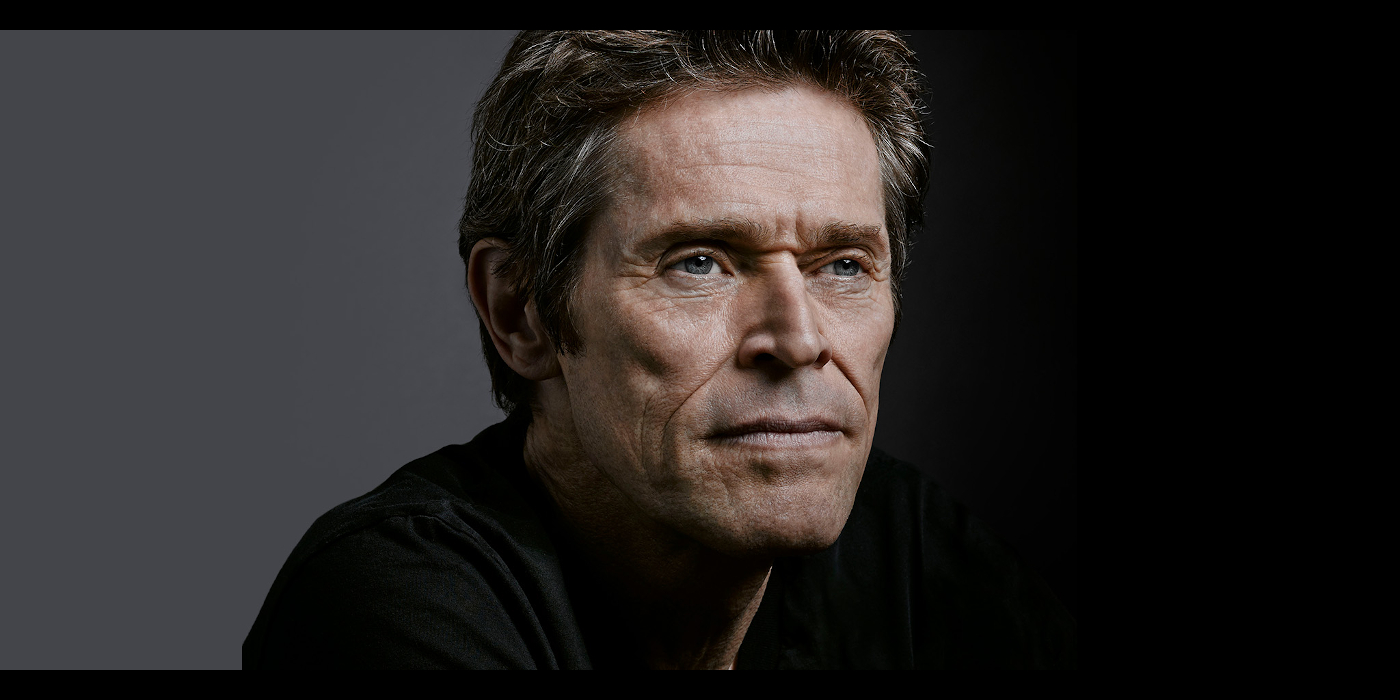
“Conversation with” at the 20th Marrakech IFF, interview with actor Willem Dafoe Bénédicte Prot
 play_arrow
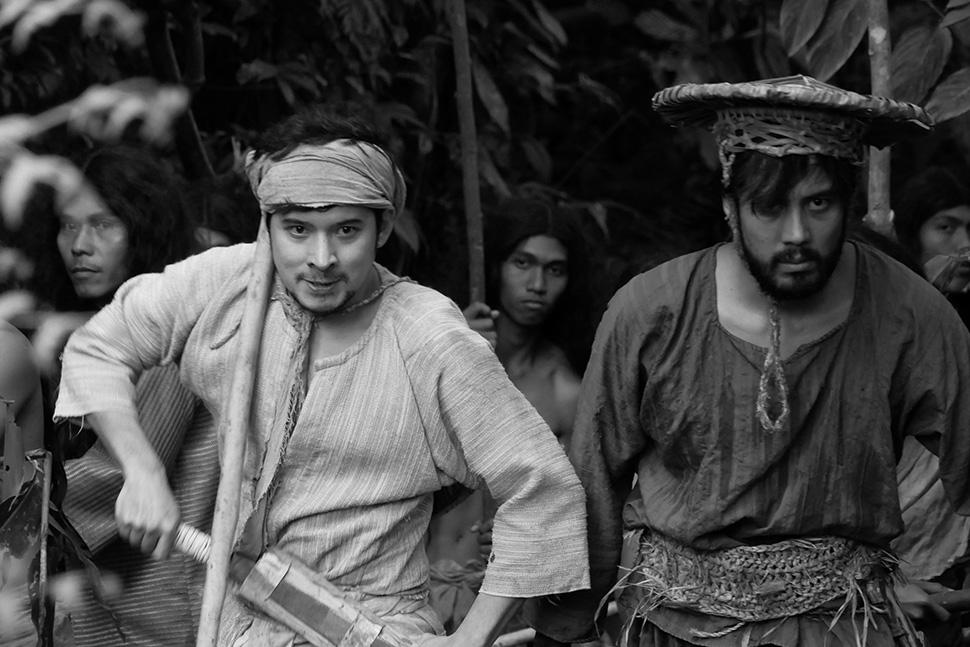
"Let Us Through Dear Ancestors", interview with director Lav Diaz and producer Monty Blencowe David Martos
Selected in the Open section of the Venice Film Festival 2026, Let Us Through Dear Ancestors is set in 1617, when the Spanish friar Padre Enciso, encomendero of one of the islands in Las Islas Filipinas, rules with unrelenting toughness and insatiable libido, proclaiming his mission “to tame these savages.” Director Lav Diaz and producer Monty Blencowe talk about the forgotten history behind the film, its philosophy of slow cinema, and the story of how the film nearly didn’t get made.
For Diaz, the film exists above all to educate. “It’s all education. I just want to educate our people about what happened during that era, that period, because what’s happening in the present, you have to examine the past.”
The history he wants to bring back, he explains, has largely been erased: “That period was really forgotten now. They didn’t even know that it happened. So it will be a shock to them to realize that colonization is not just officially from imperial Spain, but it’s also the Catholic Church. It was a power then, everything, the word of the friars. So we should go back to that and discourse on it, so that we can understand what’s happening in our culture, understand the present.”
Diaz’s filmmaking style, deliberately slow and demanding, is a direct response to how he sees commercial cinema working on audiences. “For me it’s connection. I need to have a good, some kind of a real connection with the audience, not just imposing and manipulating them with their emotions. The way we do it in commercial movies, it’s all manipulated: the sound, the fast cuts. For me, we should take a break. Let’s look at life. Let’s discourse on it. Let’s go deeper in life. Be dialectical about life.”
Asked whether audiences might eventually push back against the pace of modern screen culture, Diaz doesn’t hesitate: “Everything is fast now, but we’ll try. There’s a need to just breathe, and let’s do something about it, because everything is fast, and the wall of ignorance, the wall of lies, the wall of violence, all these tyrannies that are debuckling culture, is here. So we need to fight it with the truth. We need to fight it with just sitting down. Let’s look at life more, other than just looking at little cell phones, little computers, and we don’t see the world anymore. Let’s go back to poetry, let’s go back to music, let’s go back to philosophy, let’s make love better.”
Producing a Lav Diaz film, says Blencowe, has been easier than expected, even if Diaz’s ideas keep evolving along the way: “Honestly, it wasn’t challenging from my end. Lav and Hazel, they run a great production, so I’m very grateful for making it easy. I will say that Lav can change the ideas of what he wants to do, so that’s a little different, but hey, look what he produces: all these amazing films, so it works.”
Financing an independent film like this one, he explains, relies on a particular kind of backer: “It’s different from the typical commercial films. You go about it with people who are interested in supporting a Lav Diaz film, people that want to tell history. I think that’s a different type of investor, but they are out there, and I was lucky enough that I knew a bunch of people that are big fans of Lav, and we could put it together.”
That support, it turns out, arrived just in time. “Monty saved the film,” says Diaz. “The original producers, they backed out, except for one. We were in LA, he was driving his car, we went for breakfast, and I told him: ‘We have a problem in the production.’ I said, ‘How much more do you need?’ But, okay, I’m in. That’s it. We finished the film.”
1617. The Spanish friar, Padre Enciso, the encomendero of one of the islands in Las Islas Filipinas, rules with unrelenting toughness and insatiable libido, “To tame these savages,” he proclaims. He salves his cruelty effectively by invoking the soul’s emancipation through Jesus’ suffering; and the hospitable and embracing indigenous Malay is doomed.
Director Lee Chang-dong and cast talk about Possible Love, in Competition at the Venice Film Festival 2026.
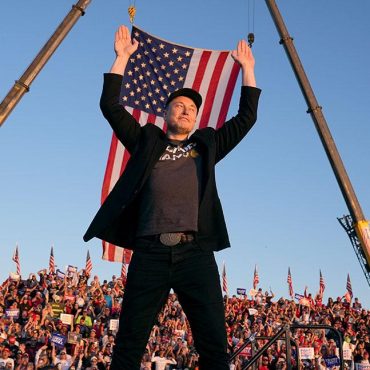
Alex Gibney on Musk, his documentary on Elon Musk, in the Open section at the Venice Film Festival 2026.
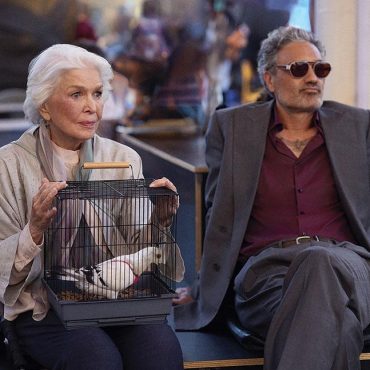
Kornél Mundruczó on Place to Be, with Ellen Burstyn and Taika Waititi, in the Open section at Venice 2026.
We met with Renate Ranzi, of the IDM Music & Film Commission of Sudtirol. We talked abut the Leonardo Di Costanzo film that has been shot with their support and about all the funds and help they can provide to …
Pascal Diot, directeur du Venice Production Bridge, sur 15 ans d'évolution et le nouveau VPB Location Market.
In the Open section at Venice 83, Luke Lorentzen on falling back in love with filmmaking in Boatbuilders
Javier Bardem will be one of the major guests of the Rome Film Fest 2026, receiving the Lifetime Achievement Award and presenting Rodrigo Sorogoyen’s El ser querido.
Liryc Dela Cruz, director of A Brief Encounter, at the International Critics Week, Venice Film Festival 2026.