

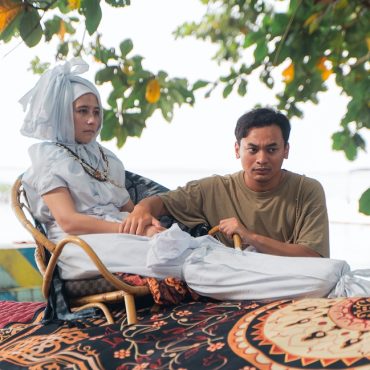
“Holy Crowd”, interview with the directors Reza Fahriyansyah and Ananth Subramaniam
Reza Fahriyansyah and Ananth Subramaniam discuss Holy Crowd at Cannes 2026, exploring miracles, herd mentality and collective obsession.
Listeners:
Top listeners:
 play_arrow
ENGLISH Channel 01 If English is your language, or a language you understand, THIS IS YOUR CHANNEL !
 play_arrow
ITALIAN Channel 02 Se l’italiano è la tua lingua, o una lingua che conosci, QUESTO È IL TUO CANALE!
 play_arrow
EXTRA Channel 03 FRED Film Radio channel used to broadcast press conferences, seminars, workshops, master classes, etc.
 play_arrow
GERMAN Channel 04 Wenn Ihre Sprache Deutsch ist, oder Sie diese Sprache verstehen, dann ist das IHR KANAL !
 play_arrow
POLISH Channel 05
 play_arrow
SPANISH Channel 06 Si tu idioma es el español, o es un idioma que conoces, ¡ESTE ES TU CANAL!
 play_arrow
FRENCH Channel 07 Si votre langue maternelle est le français, ou si vous le comprenez, VOICI VOTRE CHAINE !
 play_arrow
PORTUGUESE Channel 08
 play_arrow
ROMANIAN Channel 09 Dacă vorbiţi sau înţelegeţi limba română, ACESTA ESTE CANALUL DUMNEAVOASTRĂ!
 play_arrow
SLOVENIAN Channel 10
 play_arrow
ENTERTAINMENT Channel 11 FRED Film Radio Channel used to broadcast music and live shows from Film Festivals.
 play_arrow
BULGARIAN Channel 16 Ако българският е вашият роден език, или го разбирате, ТОВА Е ВАШИЯТ КАНАЛ !
 play_arrow
CROATIAN Channel 17 Ako je hrvatski tvoj jezik, ili ga jednostavno razumiješ, OVO JE TVOJ KANAL!
 play_arrow
LATVIAN Channel 18
 play_arrow
DANISH Channel 19
 play_arrow
HUNGARIAN Channel 20
 play_arrow
DUTCH Channel 21
 play_arrow
GREEK Channel 22
 play_arrow
CZECH Channel 23
 play_arrow
LITHUANIAN Channel 24
 play_arrow
SLOVAK Channel 25
 play_arrow
ICELANDIC Channel 26 Ef þú talar, eða skilur íslensku, er ÞETTA RÁSIN ÞÍN !
 play_arrow
INDUSTRY Channel 27 FRED Film Radio channel completely dedicated to industry professionals.
 play_arrow
EDUCATION Channel 28 FRED Film Radio channel completely dedicated to film literacy.
 play_arrow
SARDU Channel 29 Si su sardu est sa limba tua, custu est su canale chi ti deghet!
 play_arrow
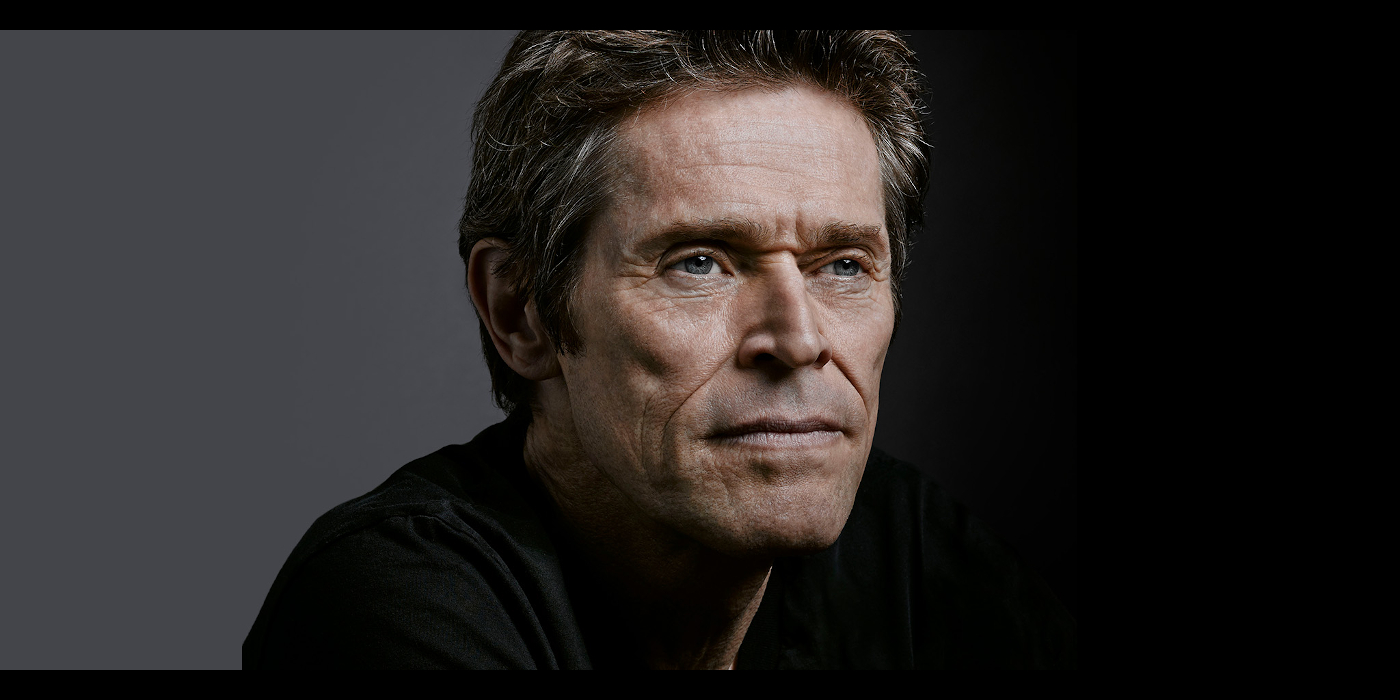
“Conversation with” at the 20th Marrakech IFF, interview with actor Willem Dafoe Bénédicte Prot
 play_arrow
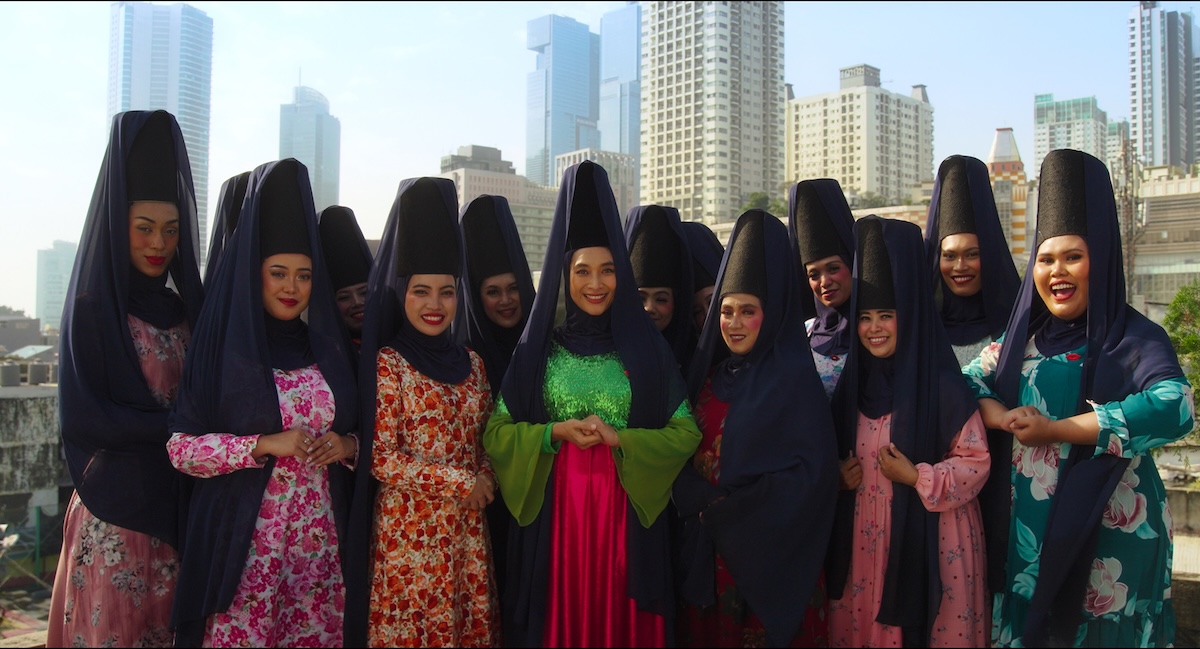
"Mothers are Mothering", interview with the directors Khozy Rizal and Lam Li Shuen Federica Scarpa
Presented during the Cannes Film Festival as part of the International Critics’ Week initiative, Next Step Studio: Indonesia,
“Makers Are Mothering” emerges as one of the most singular short films of the program dedicated to new Indonesian voices in cinema.
Co-directed by Indonesian filmmaker Khozy Rizal and Singaporean director Lam Li Shuen, the film combines black comedy, queer sensibility and science fiction to tell the story of Nia, a woman trapped within domestic suffocation and emotional displacement.
For Khozy Rizal, the project’s origin was deeply personal.
“It came from my mother,” he explained. “She always went out of the house, and when I asked why, she said she didn’t like being at home, and she didn’t like my father.”
That revelation became the emotional nucleus of the story. Khozy Rizal initially imagined the project as a comedy-drama centred on female friendship and domestic dissatisfaction. The transformation came when he shared the script with Lam Li Shuen, who introduced a radically different perspective.
“Fantasy and sci-fi can sometimes feel more real than reality,” she observed.
The addition of alien imagery and speculative elements allowed the filmmakers to externalise feelings of estrangement, especially the sensation of not belonging in one’s own home.
The title “Makers Are Mothering” immediately suggests irony and affection at the same time. According to the directors, the phrase originated in queer online culture, where “mothering” is often used to praise someone who performs with confidence or charisma.
Yet within the film, the expression acquires a more layered meaning.
The story is populated by multiple maternal figures: Nia herself, the women surrounding her and the mysterious “all-mother” presence that hovers over the narrative. Through these figures, the film explores motherhood not as a fixed biological identity, but as a form of solidarity and mutual survival.
Female friendship becomes central to the film’s emotional architecture, particularly in contrast to the oppressive domestic environment Nia inhabits.
The directors deliberately built strong visual oppositions between these spaces. Nia’s home is dark, claustrophobic and emotionally stagnant, while the gatherings between women are vibrant, colourful, and fluid.
“We wanted to create the feeling of suffocation,” Lam Li Shuen explained, “and then contrast it with moments of freedom.”
One of the most striking aspects of “Makers Are Mothering” is the way it merges psychological realism with genre elements. Rather than using science fiction as spectacle, the filmmakers employ it as emotional language.
The alien figure becomes a metaphor for otherness, displacement and desire. To reinforce this sensation, the directors even chose to shoot certain sequences on 16mm film, seeking a warmer, more organic texture that could evoke another universe.
For Lam Li Shuen, visual language was inseparable from emotional experience.
“We wanted the audience to feel desire, entrapment and release through the images themselves,” she noted.
That sensorial approach also shapes the film’s portrayal of violence. Domestic abuse and emotional oppression are rarely shown explicitly. Instead, they emerge through atmosphere, sound and destabilising visual interruptions.
The recurring earthquake motif, for example, functions simultaneously as a political metaphor for contemporary Indonesia and as an expression of Nia’s unstable emotional reality.
Khozy Rizal described the house itself as a place that constantly “shakes her up.”
Both filmmakers described the collaboration as unusually instinctive and creatively open.
“We’re both crazy filmmakers,” Khozy Rizal joked. “We were never shy to put everything on the table.”
Their artistic sensibilities initially appeared very different. Khozy Rizal’s cinema tends toward vibrant colours and emotional immediacy, while Lam Li Shuen’s previous work often explores darker and more restrained atmospheres. Yet the fusion of these approaches ultimately became one of the short film’s defining strengths.
The production itself was extremely demanding. The entire shoot lasted only two days, despite involving dance choreography, intimacy coordination, practical effects and emotionally complex performances.
The directors repeatedly emphasised the importance of trust within the cast and crew. Actress Happy Salma, in particular, impressed them with her ability to navigate the film’s constantly shifting emotional tones.
The challenge was not simply dramatic performance, but sustaining contradictory emotions simultaneously.
“We wanted scenes that were sad but also funny at once,” Khozy Rizal explained.
Nia, 50, in an abusive marriage navigates a fragmented inner world where desire, memory, and ritual intertwine. A reunion with a former lover reawakens intimacy but exposes the persistence of violence and entrapment. As reality dissolves into hallucination, she reaches for a final, elusive escape.
Reza Fahriyansyah and Ananth Subramaniam discuss Holy Crowd at Cannes 2026, exploring miracles, herd mentality and collective obsession.
"Caravan", for the film's director Zuzana Kirchnerova, was also a way to "give a voice" to all family members who are caretakers and get marginalised in our society.
Laura Wandel’s Adam’s sake, at the Semaine de la critique, relies on the perfect duo: Léa Drucker and Anamaria Vartolomei
Edinburgh Spanish Film Festival
Marian Arechega, director of the vibrant Edinburgh Spanish Film Festival, discusses the 2026 edition programme, showcasing recent and diverse cinema from Spain.
Nicolas Winding Refn on Her Private Hell, his first feature in ten years, in Italian cinemas from October 1.
Discover how EWIP - European Work in Progress connects European and African films with top buyers, boosting distribution and festival success.
Rome is once again expanding the scope of its Film Fest: thirteen days of cinema, international premieres, renowned auteurs, emerging talent, series, documentaries, and cinematic heritage—with Javier Bardem, Paolo Genovese, and Monica Vitti at the heart of an edition that …