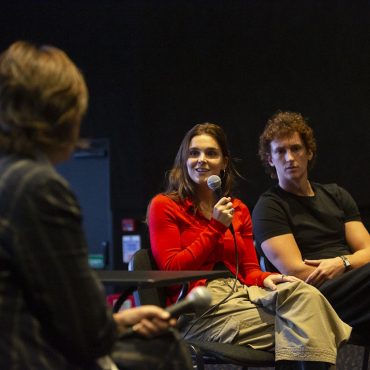
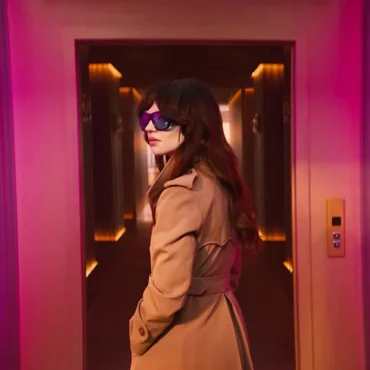
“Viva”, interview with the director and protagonist Aina Clotet
Aina Clotet discusses Viva at Cannes 2026, exploring desire, illness, emotional dependence and the fear of loneliness.
Listeners:
Top listeners:
play_arrow
ENGLISH Channel 01 If English is your language, or a language you understand, THIS IS YOUR CHANNEL !
play_arrow
ITALIAN Channel 02 Se l’italiano è la tua lingua, o una lingua che conosci, QUESTO È IL TUO CANALE!
play_arrow
EXTRA Channel 03 FRED Film Radio channel used to broadcast press conferences, seminars, workshops, master classes, etc.
play_arrow
GERMAN Channel 04 Wenn Ihre Sprache Deutsch ist, oder Sie diese Sprache verstehen, dann ist das IHR KANAL !
play_arrow
POLISH Channel 05
play_arrow
SPANISH Channel 06 Si tu idioma es el español, o es un idioma que conoces, ¡ESTE ES TU CANAL!
play_arrow
FRENCH Channel 07 Si votre langue maternelle est le français, ou si vous le comprenez, VOICI VOTRE CHAINE !
play_arrow
PORTUGUESE Channel 08
play_arrow
ROMANIAN Channel 09 Dacă vorbiţi sau înţelegeţi limba română, ACESTA ESTE CANALUL DUMNEAVOASTRĂ!
play_arrow
SLOVENIAN Channel 10
play_arrow
ENTERTAINMENT Channel 11 FRED Film Radio Channel used to broadcast music and live shows from Film Festivals.
play_arrow
BULGARIAN Channel 16 Ако българският е вашият роден език, или го разбирате, ТОВА Е ВАШИЯТ КАНАЛ !
play_arrow
CROATIAN Channel 17 Ako je hrvatski tvoj jezik, ili ga jednostavno razumiješ, OVO JE TVOJ KANAL!
play_arrow
LATVIAN Channel 18
play_arrow
DANISH Channel 19
play_arrow
HUNGARIAN Channel 20
play_arrow
DUTCH Channel 21
play_arrow
GREEK Channel 22
play_arrow
CZECH Channel 23
play_arrow
LITHUANIAN Channel 24
play_arrow
SLOVAK Channel 25
play_arrow
ICELANDIC Channel 26 Ef þú talar, eða skilur íslensku, er ÞETTA RÁSIN ÞÍN !
play_arrow
INDUSTRY Channel 27 FRED Film Radio channel completely dedicated to industry professionals.
play_arrow
EDUCATION Channel 28 FRED Film Radio channel completely dedicated to film literacy.
play_arrow
SARDU Channel 29 Si su sardu est sa limba tua, custu est su canale chi ti deghet!
play_arrow
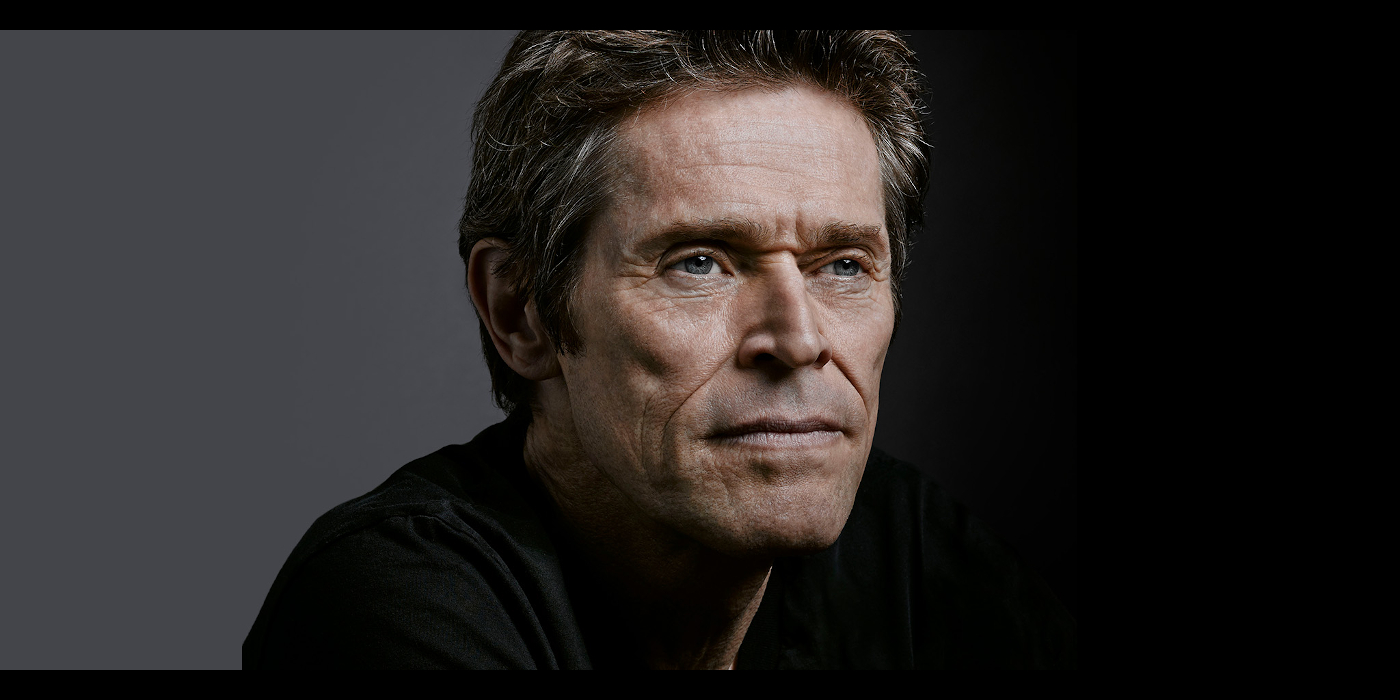
“Conversation with” at the 20th Marrakech IFF, interview with actor Willem Dafoe Bénédicte Prot
play_arrow
“Double Freedom”, interview with director Lisandro Alonso Chiara Nicoletti
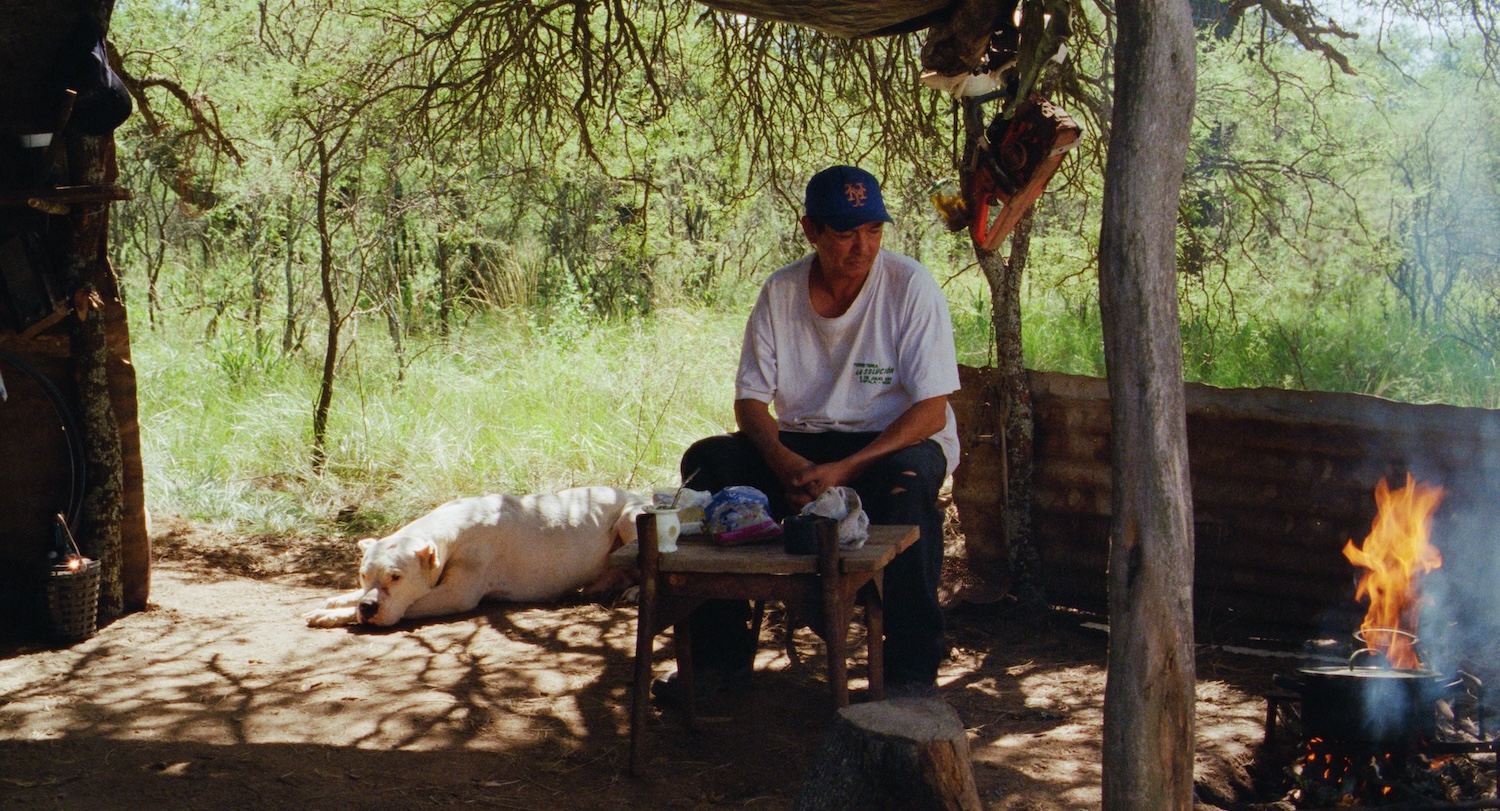
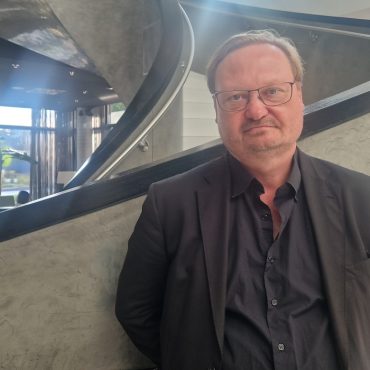
Presented at the Quinzaine des Cinéastes at the 79th Cannes Film Festival, “Double Freedom (La libertad doble)” is Argentine director Lisandro Alonso‘s unexpected sequel to “La Libertad”, the 2001 debut that launched his career, also at Cannes. Twenty-five years later, the film reunites Lisandro Alonso with Misael Saavedra, the real-life woodcutter whose solitary existence in the Argentine pampa became the subject of that first film. This time, Misael’s quiet freedom is disrupted when he must care for his older sister, played by Chilean actress Catalina Saavedra. Produced by Planta, Deptford Film and Alonso’s own 4L, with international sales handled by Luxbox, the film is a co-production between Chile, Argentina, Luxembourg, Germany and the United Kingdom.
The impulse behind “Double Freedom” was, by Lisandro Alonso‘s own admission, a desire to return to the beginning. After the multi-continent experience of “Eureka“, he wanted something lighter, closer to home. He immediately called Ilse Hughan, his longtime producer, who told him what Misael Saavedra was up to, and the idea of a sequel began to take shape. “I never made a sequel, or I never thought that I was going to make a sequel with the same character, same group of people, 25 years later. So I think it was a kind of risk and a good challenge for me“. The shoot took place on his father’s farm, with largely the same crew, many of whom no longer work in cinema, reassembled for the occasion.
What might have been a simple return became something more urgent. Lisandro Alonso wove his own family experiences into Misael Saavedra‘s fictional life, using the character as a vessel for a broader reflection on what happens to people without resources in a country where the social safety net is being dismantled. “He already had not a lot of sources when we started shooting the first film, and 25 years later he has still even less. So, you cannot pull the rope anymore. Something is going to break“. It is, Alonso says, probably the most political film he has ever made.
The title itself carries a playful ambiguity. Freedom, Lisandro Alonso notes, has become a loaded word in Argentina, heavily used by the current government in ways he finds questionable. “Double Freedom” doesn’t offer a neat definition. “It doesn’t have like a real meaning. But I thought it’s like if you go for whiskey and you ask for a double whiskey: it’s bigger, better, stronger, something like that“.
Asked about the relationship between cinema and politics, a debate that opened this year’s festival, Lisandro Alonso comments with a straightforward answer: “Every decision that you take, every frame that you decide to create, there’s some politics in it“.
Misael works alone. Armed with his axe, he fells trees in the forest.
An unexpected responsibility upends his life, and the rhythm of his days gradually dissolves into a wilderness where human reason no longer holds meaning.

Written by: Chiara Nicoletti
Guest
Lisandro AlonsoFestival
Cannes Film FestivalAina Clotet discusses Viva at Cannes 2026, exploring desire, illness, emotional dependence and the fear of loneliness.
"The love that remains", at Cannes 78, is Pálmason’s more personal and intimate film.
The Phoenician Scheme by Wes Anderson, in Cannes’ competition sees the participation of newcomers Mia Threapleton and Riz Ahmed and welcomes back Richard Ayoade
Ghost Trail, in Cannes 77, sees winner of the UCR best actor award 2022 Adam Bessa coming back as protagonist
With "I See Buildings Fall Like Lightning", Clio Barnard tells the story of turning thirty when the promise of the future has already been broken
With "Everytime", Sandra Wollner crafts a quietly devastating portrait of grief, absence and the brutal tenderness of going on
With the powerful story of "Flesh and Fuel", we explore a love between truck drivers highlighting work, identity, and authentic intimacy in a touching, realistic portrayal. We talked about it with one of the actors, Julian Świeżewski.
"Nostalgia for the Future" by Brecht Debackere explores archives, memory, and identity, blending film, philosophy, and innovation in a unique, thought-provoking style, while telling the life and ideals of a genius of filmmaking such Chris Marker.
© 2023 Emerald Clear Ltd - all rights reserved.