
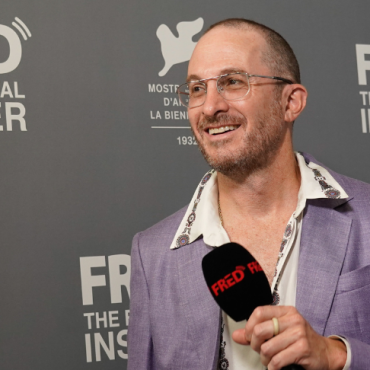
Darren Aronofsky to Receive Pardo d’Onore at Locarno 2026
Darren Aronofsky to receive the Pardo d’Onore at Locarno 2026, presenting The Fountain and Mother!
Listeners:
Top listeners:
 play_arrow
ENGLISH Channel 01 If English is your language, or a language you understand, THIS IS YOUR CHANNEL !
 play_arrow
ITALIAN Channel 02 Se l’italiano è la tua lingua, o una lingua che conosci, QUESTO È IL TUO CANALE!
 play_arrow
EXTRA Channel 03 FRED Film Radio channel used to broadcast press conferences, seminars, workshops, master classes, etc.
 play_arrow
GERMAN Channel 04 Wenn Ihre Sprache Deutsch ist, oder Sie diese Sprache verstehen, dann ist das IHR KANAL !
 play_arrow
POLISH Channel 05
 play_arrow
SPANISH Channel 06 Si tu idioma es el español, o es un idioma que conoces, ¡ESTE ES TU CANAL!
 play_arrow
FRENCH Channel 07 Si votre langue maternelle est le français, ou si vous le comprenez, VOICI VOTRE CHAINE !
 play_arrow
PORTUGUESE Channel 08
 play_arrow
ROMANIAN Channel 09 Dacă vorbiţi sau înţelegeţi limba română, ACESTA ESTE CANALUL DUMNEAVOASTRĂ!
 play_arrow
SLOVENIAN Channel 10
 play_arrow
ENTERTAINMENT Channel 11 FRED Film Radio Channel used to broadcast music and live shows from Film Festivals.
 play_arrow
BULGARIAN Channel 16 Ако българският е вашият роден език, или го разбирате, ТОВА Е ВАШИЯТ КАНАЛ !
 play_arrow
CROATIAN Channel 17 Ako je hrvatski tvoj jezik, ili ga jednostavno razumiješ, OVO JE TVOJ KANAL!
 play_arrow
LATVIAN Channel 18
 play_arrow
DANISH Channel 19
 play_arrow
HUNGARIAN Channel 20
 play_arrow
DUTCH Channel 21
 play_arrow
GREEK Channel 22
 play_arrow
CZECH Channel 23
 play_arrow
LITHUANIAN Channel 24
 play_arrow
SLOVAK Channel 25
 play_arrow
ICELANDIC Channel 26 Ef þú talar, eða skilur íslensku, er ÞETTA RÁSIN ÞÍN !
 play_arrow
INDUSTRY Channel 27 FRED Film Radio channel completely dedicated to industry professionals.
 play_arrow
EDUCATION Channel 28 FRED Film Radio channel completely dedicated to film literacy.
 play_arrow
SARDU Channel 29 Si su sardu est sa limba tua, custu est su canale chi ti deghet!
 play_arrow
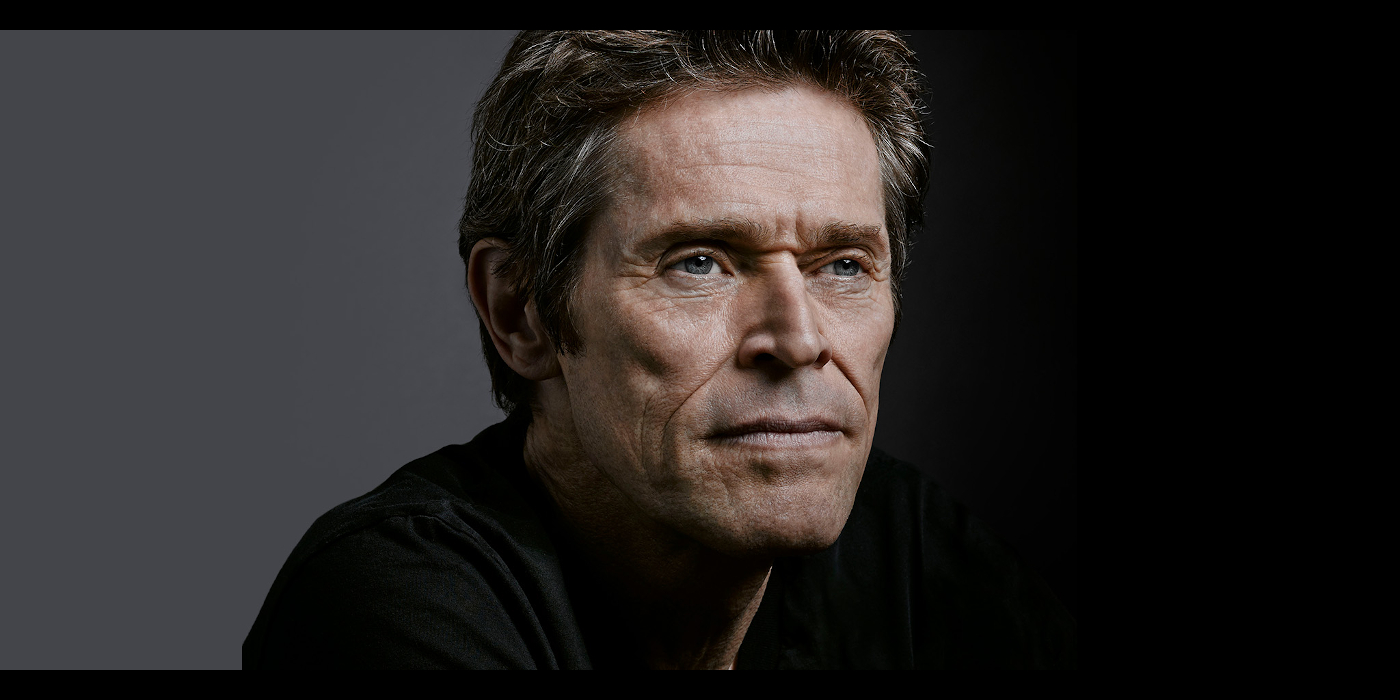
“Conversation with” at the 20th Marrakech IFF, interview with actor Willem Dafoe Bénédicte Prot
For Pride Month 2026, FRED Film Radio celebrates LGBTQIA+ cinema not only as a field of representation, but as a living archive of voices, bodies, desires and memories that continue to ask for space, care and attention.
Every year, Pride reminds us that visibility is never simply symbolic. It can be a form of protection, a gesture of recognition, a way of saying to someone, somewhere, that their story exists and deserves to be heard. For a radio devoted to cinema and conversation, this matters deeply. Listening is part of how we take a position.
This year’s selection brings together interviews recorded across the international festival circuit, through films that explore identity, desire, political resistance, family, adolescence, labour and the right to exist in public and private spaces. It is not intended as a fixed canon, but as an editorial path through works that open different windows on queer experience.
Some films look at historical persecution, others at migration, love, activism or the fragile spaces where bodies and desires become visible. Together, they remind us that queer cinema is not a genre, but a field of images, voices and gestures that keeps expanding the way we understand the world.
A crucial starting point is the conversation with Joss Morfitt, writer and researcher, recorded at BFI Flare: London LGBTQIA+ Film Festival. In the interview, Morfitt reflects on the history and cultural importance of one of the world’s most significant LGBTQIA+ film festivals, placing queer cinema within a broader context of archive, community and visibility.
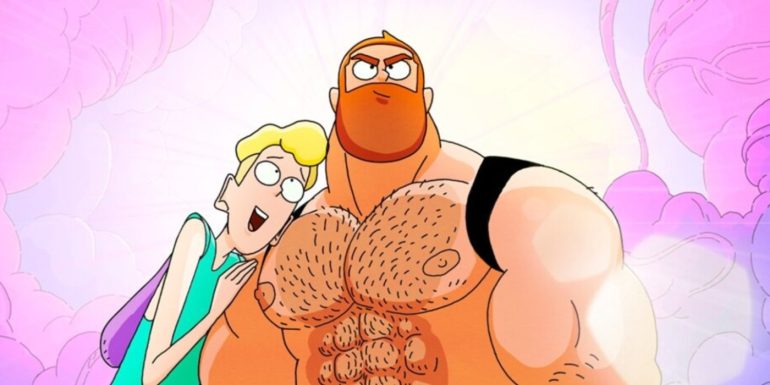
At Cannes 2026, queer representation emerged through very different cinematic forms. One of the most discussed titles on the Croisette was Jim Queen, the film by Marco Nguyen and Simon Batteaux that became one of the most enthusiastic discoveries of this year’s festival. Through animation, pop energy, and queer imagination, the film brings a playful yet politically meaningful presence to the Cannes landscape. We spoke with Marco Nguyen and Simon Batteaux about the film’s creation, tone and reception.
Cannes also offers one of the emotional centres of this Pride Month selection through Amarga Navidad, the new film by Pedro Almodóvar. We gathered several interviews around the film, among them, the conversation with Rossy de Palma stands out for the way it connects personal memory, queer spectatorship and the political history of Almodóvar’s cinema.
She explains that, after years of meeting people who thanked her for the director’s films, she came to understand the deep impact of works such as La ley del deseo. For many gay viewers, seeing two men make love on screen meant recognising that what they felt was not wrong. It was not only a scene. It was a door opening. “Pedro opened many little windows in society. Cinema is the excuse to change the world”, says Rossy de Palma.
Several films in FRED’s Pride Month 2026 selection confront the relationship between desire and systems of control. In Narciso, Paraguayan filmmaker Marcelo Martinessi revisits a dark chapter of his country’s history, exploring persecution, authoritarianism and the criminalisation of queer lives. The film opens to a reflection on how state violence and social silence shape bodies, memories and identities.
A different, but equally urgent, political perspective comes through in The Activist, directed by Lithuanian filmmaker Romas Zabarauskas. His cinema has often engaged with queer identity, political visibility and the need to resist cultural erasure. In the interview, Zabarauskas discusses activism not as an abstract position, but as a lived condition, shaped by the body, public speech and the courage required to occupy space.
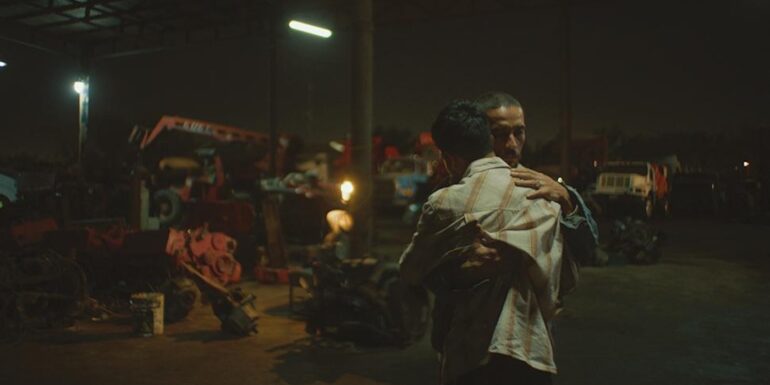
In En el camino, Mexican director David Pablos enters a landscape marked by masculinity, violence and desire. The film follows an encounter that complicates the rules of the road movie and turns physical movement into an emotional and political space. Through intimacy and danger, Pablos examines how queer desire can survive within environments built to suppress vulnerability.
Questions of identity and self-determination also traverse work, territory, and social structures. In Miss Carbón, directed by Agustina Macri, gender identity intersects with labour, dignity, and the right to be recognised within a traditionally masculine environment. The film places its protagonist within a world where personal affirmation becomes inseparable from economic and social survival.
In Iván & Hadoum, Ian De La Rosa stages intimacy inside a working environment, using the enclosed space of a greenhouse to explore love, ambition, exploitation and moral choice. The film observes how affection and social pressure coexist, especially when precarious conditions shape private desire.
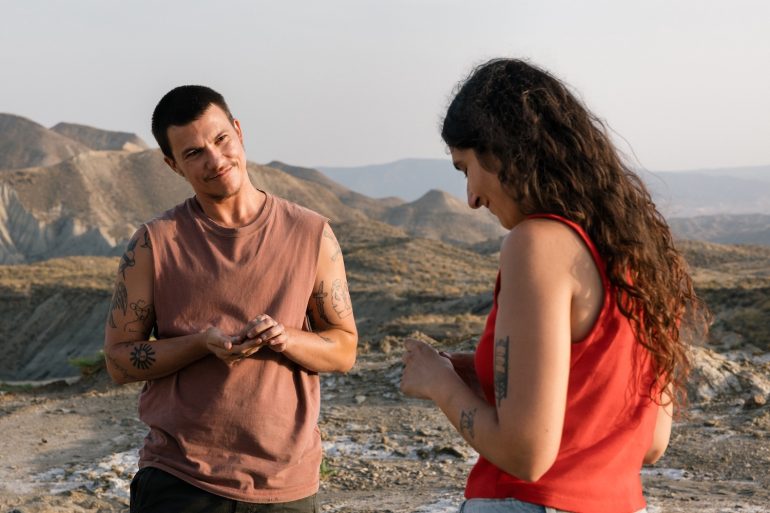
In a Whisper, directed by Leyla Bouzid, adds another layer to this map of belonging. Through her attention to voice, body and the unspoken, Bouzid reflects on desire and silence with a sensitivity that places emotional conflict at the centre of the image. The film becomes part of a wider conversation about what can be said, what must remain hidden and how cinema can give shape to intimate uncertainty.
Pride Month is also a moment to look at younger characters, fragile transitions and the need for recognition. In La più piccola, actress Nadia Melliti speaks with us about a film that observes adolescence, perception, and identity through a delicate, attentive gaze. The title itself suggests a condition of apparent smallness, while the interview reveals the emotional and social complexity that can be contained in a young character’s experience.
With Coward, Belgian director Lukas Dhont continues his exploration of vulnerability, shame, tenderness and the social codes that shape the body. His cinema has often focused on young people negotiating identity, expectation and fear, and this interview adds another chapter to a filmography attentive to the emotional cost of visibility.
Elephants in the Fog, directed by Abinash Bikram Shah, expands the selection beyond strictly Western contexts, adding a perspective on conflict, silence and the fragile transmission of memory. The film’s presence in this Pride Month journey reminds us that queer readings of cinema can also emerge through questions of vulnerability, marginality and the difficulty of being heard inside violent systems.
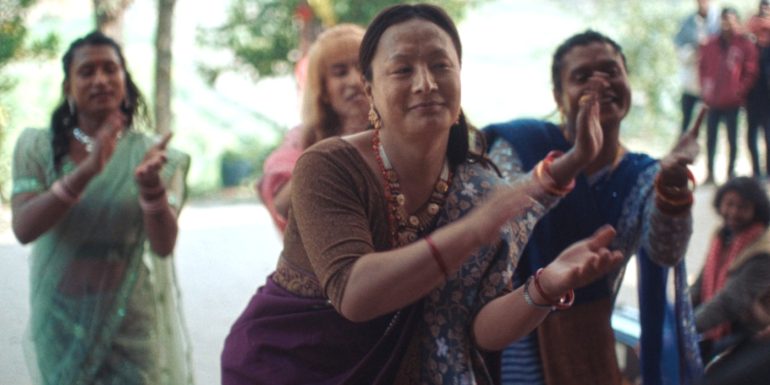
For FRED Film Radio, celebrating Pride Month means returning to the voices that challenge simplification. These interviews show that LGBTQIA+ cinema does not speak with one voice. It is intimate and collective, playful and painful, historical and contemporary. It moves through festivals, archives, bodies, political struggles and private revelations.
It also reminds us why these conversations matter. A film can give someone language for a feeling they could not name. An interview can preserve the context behind an image. A festival can become a temporary home for stories that still struggle to find space elsewhere.
During Pride Month 2026, FRED Film Radio invites audiences to revisit these conversations and continue listening to the artists, researchers and performers who keep queer cinema alive, complex and necessary. Pride is a celebration, but it is also attention, memory and care. For us, this means keeping the microphone open.
Darren Aronofsky to receive the Pardo d’Onore at Locarno 2026, presenting The Fountain and Mother!
The 79th Cannes Film Festival has revealed its Official Selection, with returning masters and rising voices set to compete for the Palme d'Or from May 12 to 23.
For Pride Month 2025, FRED Film Radio honors LGBTQI+ cinema with exclusive interviews and powerful stories of identity, love, and resistance.
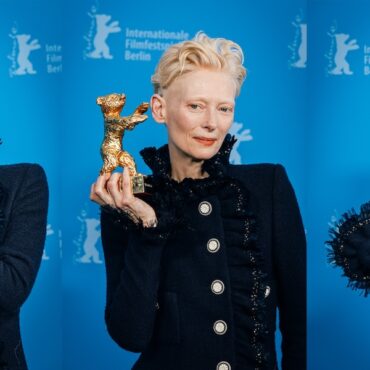
The Honorary Golden Bear of the 75th. Berlinale, Tilda Swinton shares her thoughts on career, cinema, and filmmaking.
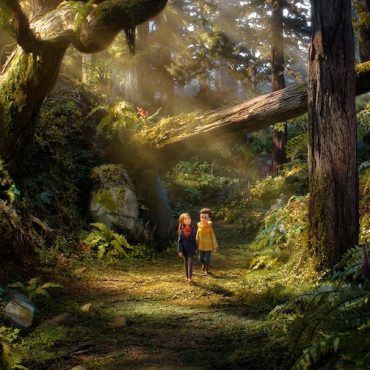
Character designer Thibault Leclercq talks about Wildwood and its stop-motion puppets, at the 24th edition of Alice nella Città.
Edinburgh Spanish Film Festival
Marian Arechega, director of the vibrant Edinburgh Spanish Film Festival, discusses the 2026 edition programme, showcasing recent and diverse cinema from Spain.
Nicolas Winding Refn on Her Private Hell, his first feature in ten years, in Italian cinemas from October 1.
Discover how EWIP - European Work in Progress connects European and African films with top buyers, boosting distribution and festival success.