

Cannes 2026: The 79th Festival Unveils Its Official Selection
The 79th Cannes Film Festival has revealed its Official Selection, with returning masters and rising voices set to compete for the Palme d'Or from May 12 to 23.
Listeners:
Top listeners:
 play_arrow
ENGLISH Channel 01 If English is your language, or a language you understand, THIS IS YOUR CHANNEL !
 play_arrow
ITALIAN Channel 02 Se l’italiano è la tua lingua, o una lingua che conosci, QUESTO È IL TUO CANALE!
 play_arrow
EXTRA Channel 03 FRED Film Radio channel used to broadcast press conferences, seminars, workshops, master classes, etc.
 play_arrow
GERMAN Channel 04 Wenn Ihre Sprache Deutsch ist, oder Sie diese Sprache verstehen, dann ist das IHR KANAL !
 play_arrow
POLISH Channel 05
 play_arrow
SPANISH Channel 06 Si tu idioma es el español, o es un idioma que conoces, ¡ESTE ES TU CANAL!
 play_arrow
FRENCH Channel 07 Si votre langue maternelle est le français, ou si vous le comprenez, VOICI VOTRE CHAINE !
 play_arrow
PORTUGUESE Channel 08
 play_arrow
ROMANIAN Channel 09 Dacă vorbiţi sau înţelegeţi limba română, ACESTA ESTE CANALUL DUMNEAVOASTRĂ!
 play_arrow
SLOVENIAN Channel 10
 play_arrow
ENTERTAINMENT Channel 11 FRED Film Radio Channel used to broadcast music and live shows from Film Festivals.
 play_arrow
BULGARIAN Channel 16 Ако българският е вашият роден език, или го разбирате, ТОВА Е ВАШИЯТ КАНАЛ !
 play_arrow
CROATIAN Channel 17 Ako je hrvatski tvoj jezik, ili ga jednostavno razumiješ, OVO JE TVOJ KANAL!
 play_arrow
LATVIAN Channel 18
 play_arrow
DANISH Channel 19
 play_arrow
HUNGARIAN Channel 20
 play_arrow
DUTCH Channel 21
 play_arrow
GREEK Channel 22
 play_arrow
CZECH Channel 23
 play_arrow
LITHUANIAN Channel 24
 play_arrow
SLOVAK Channel 25
 play_arrow
ICELANDIC Channel 26 Ef þú talar, eða skilur íslensku, er ÞETTA RÁSIN ÞÍN !
 play_arrow
INDUSTRY Channel 27 FRED Film Radio channel completely dedicated to industry professionals.
 play_arrow
EDUCATION Channel 28 FRED Film Radio channel completely dedicated to film literacy.
 play_arrow
SARDU Channel 29 Si su sardu est sa limba tua, custu est su canale chi ti deghet!
 play_arrow
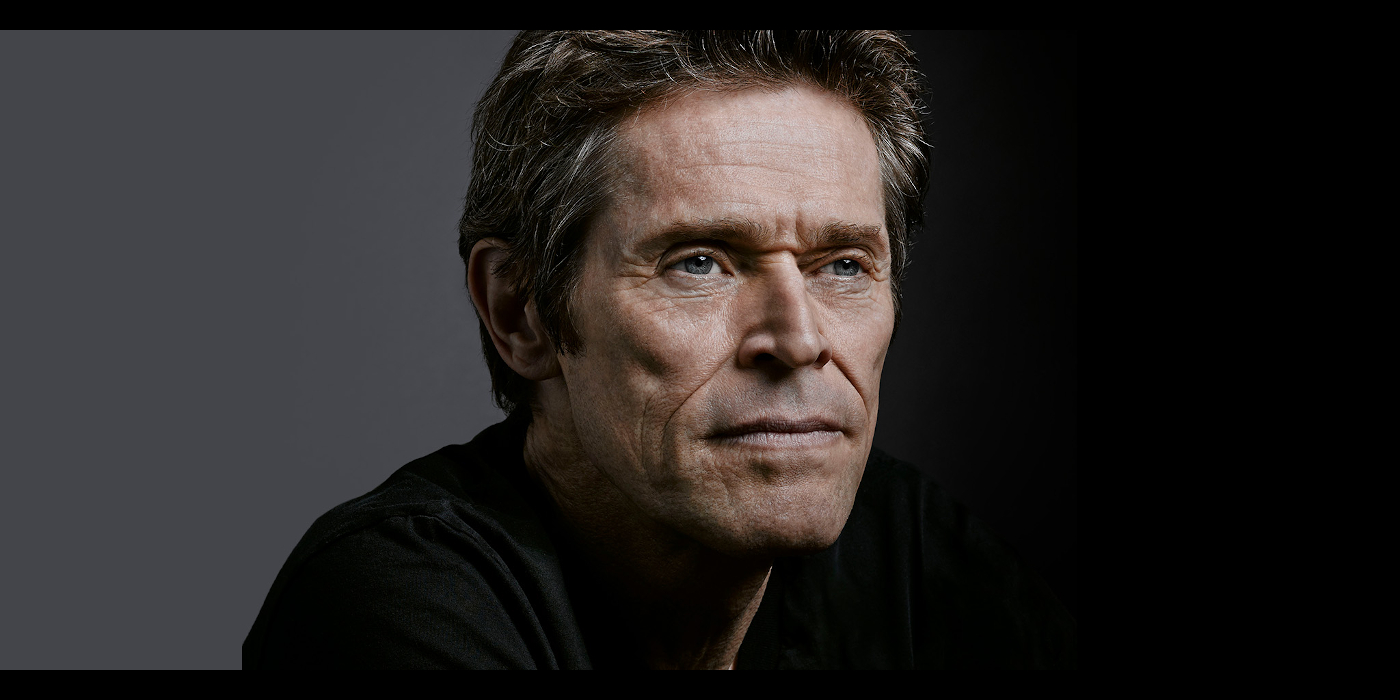
“Conversation with” at the 20th Marrakech IFF, interview with actor Willem Dafoe Bénédicte Prot
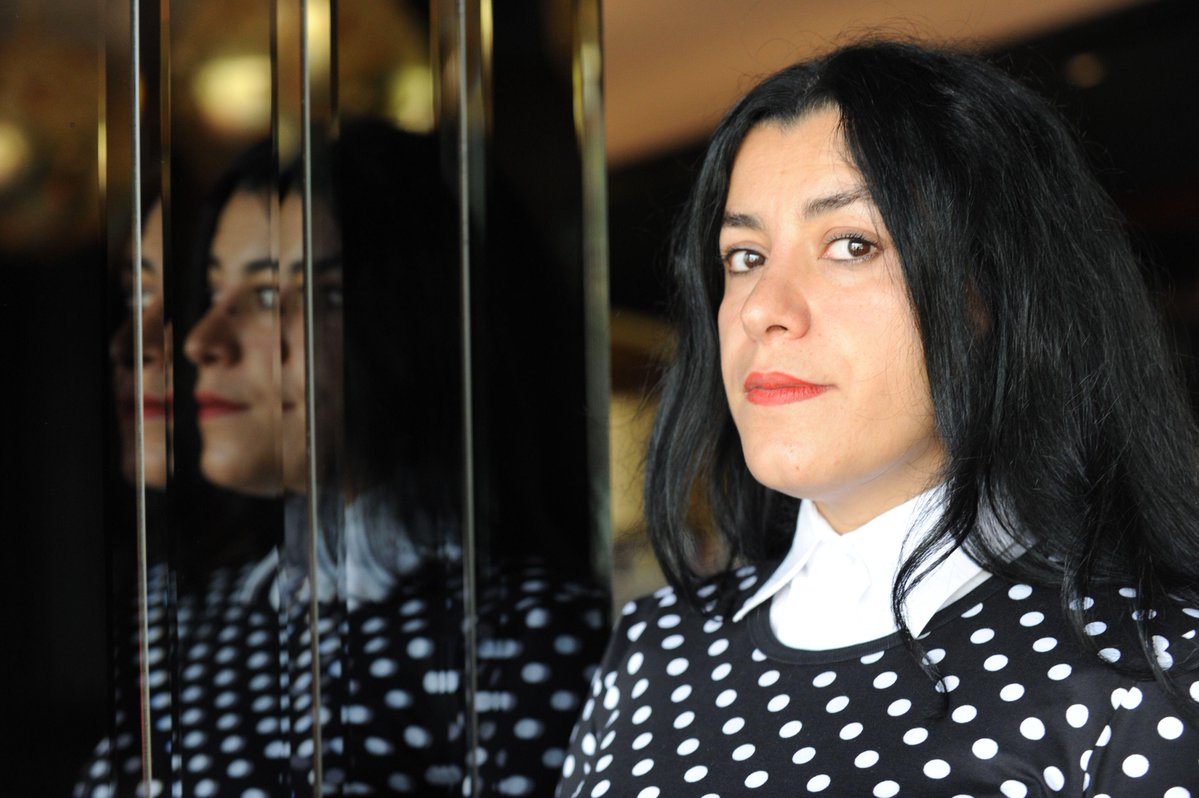
Marjane Satrapi, the Iranian-French author, artist and filmmaker whose work gave millions of readers a more intimate understanding of modern Iran, has died at the age of 56.
People close to Satrapi said she had “died of sadness” a little over a year after the death of her husband, the Swedish producer, actor and screenwriter Mattias Ripa, who died on 8 April 2025.
The phrase is painful in its simplicity, but it also risks narrowing a life that resisted every form of simplification. Satrapi was never only the author of Persepolis, never only an exile, never only a political artist. She was a comic-book creator, painter, screenwriter, director and public intellectual whose work moved with unusual freedom between private memory and collective history.
Born on 22 November 1969 in Rasht, near the Caspian Sea, and raised in Tehran, Satrapi grew up in a politically engaged family. She was a child during the 1979 Islamic Revolution and lived through the early years of the Islamic Republic and the Iran-Iraq War before leaving Iran as a teenager to study in Austria.
Those experiences became the foundation of Persepolis, the graphic memoir published in France between 2000 and 2003. In its stark black-and-white panels, Satrapi transformed political upheaval into lived experience. The Iranian Revolution was not presented as an abstract historical event, but as something that entered classrooms, homes, family conversations, clothing and childhood imagination.
The young Marji, rebellious, observant and often funny, became one of the most recognisable figures in contemporary graphic literature. Through her, Satrapi challenged the tendency to reduce Iranians to political symbols. The achievement of Persepolis was not only to explain Iran to Western readers. It was to insist on the complexity of Iranian lives.
The animated film adaptation, co-directed by Satrapi and Vincent Paronnaud, won the Jury Prize at the 2007 Cannes Film Festival and was nominated for the Academy Award for Best Animated Feature. Its success confirmed the international reach of a story that remained deeply personal.
Satrapi’s filmmaking career extended well beyond autobiography. She directed Chicken with Plums, adapted with Paronnaud from her own graphic novel, as well as The Voices, Radioactive and Dear Paris.
In a FRED Film Radio interview for The Voices at Sundance London, Satrapi spoke about the central challenge of making a serial killer emotionally legible: “How to make out of a serial killer somebody that everybody would love at the end of the film and everybody would have feeling for.”
The remark reveals an essential aspect of her cinema. Satrapi was drawn to characters who could not be easily judged, admired or dismissed. Her films explored the unstable space between sympathy and discomfort.
That same instinct shaped Radioactive, her 2019 portrait of Marie Curie, starring Rosamund Pike. Speaking to FRED Film Radio at the Zurich Film Festival, Satrapi rejected the idea of portraying Curie as a flawless icon: “We are talking about a human being. That is not always likeable. She doesn’t compromise. She doesn’t try to please.”
It is difficult not to hear an echo of Satrapi herself in those words.
Throughout her life, Satrapi remained an outspoken critic of Iran’s clerical establishment and a committed defender of women’s rights. In 2024, she coordinated Woman, Life, Freedom, a collaborative work of graphic nonfiction responding to the protest movement that followed the death of Mahsa Amini in police custody in 2022.
The project brought together artists, journalists, academics and activists, extending the political purpose that had always been present in her work. For Satrapi, art was not decoration or propaganda. It was a way of preserving complexity against repression.
Her death leaves a profound absence in European culture, Iranian diasporic writing and international cinema. Yet her work remains unusually alive because it refuses solemnity without abandoning seriousness. Marjane Satrapi understood that irony could coexist with grief, that political history could be told through family memory, and that freedom begins with the right to be represented as a full human being.
The 79th Cannes Film Festival has revealed its Official Selection, with returning masters and rising voices set to compete for the Palme d'Or from May 12 to 23.
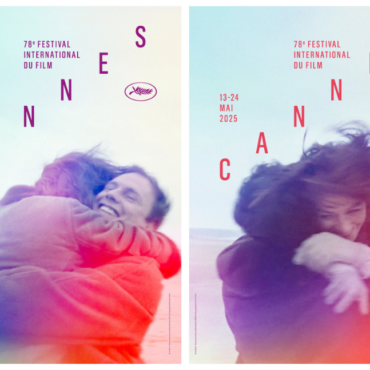
For the first time in its history, the Cannes Film Festival reveals two official posters for its 78th edition, inspired by Claude Lelouch’s 1966 Palme d’Or-winning masterpiece A Man and a Woman.
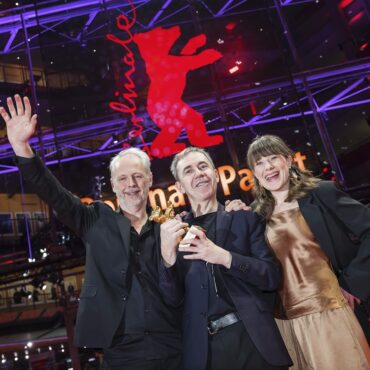
The 75th Berlinale concluded with Dreams (Sex Love) winning the Golden Bear, while Silver Bear awards honored The Blue Trail, The Message, and standout performances by Rose Byrne and Andrew Scott.
The Spanish star, Marisa Paredes, muse of Pedro Almodóvar, passed away on December 17, 2024, at the age of 78
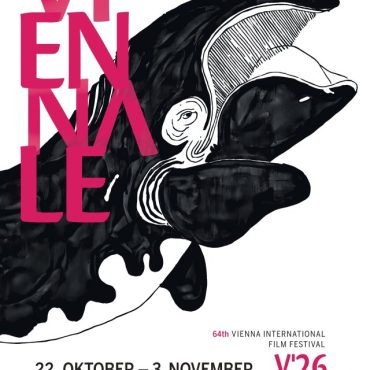
Eva Sangiorgi, director of the Viennale 2026, on a city festival with over 100 features, no competition and a Robert Aldrich retrospective.
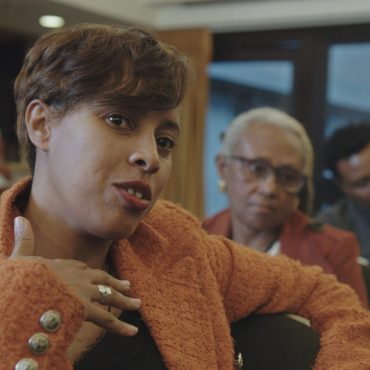
Ruth Beckermann on Wax & Gold, her documentary on Ethiopia seen through a hotel in Addis Ababa, at the Rome Film Fest 2026.
A dark fairy tale about growing up, belonging and the fear of being replaced. Bàrbara Farré and Diego Betancor discuss the personal origins of Mala Bèstia, its unsettling vision of adolescence and the decision to make a debut feature without …
Character designer Thibault Leclercq talks about Wildwood and its stop-motion puppets, at the 24th edition of Alice nella Città.