

“Hamnet”, interview with the director Chloé Zhao
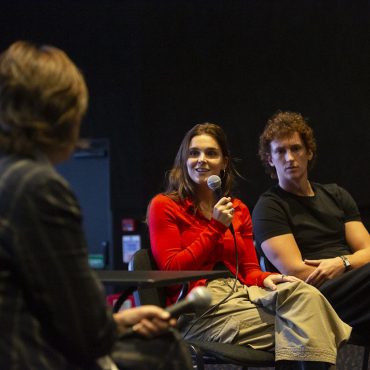
Chloé Zhao discusses “Hamnet”, a powerful tale of love, grief, and artistic transformation, at the 20th Rome Film Fest.
Listeners:
Top listeners:
 play_arrow
ENGLISH Channel 01 If English is your language, or a language you understand, THIS IS YOUR CHANNEL !
 play_arrow
ITALIAN Channel 02 Se l’italiano è la tua lingua, o una lingua che conosci, QUESTO È IL TUO CANALE!
 play_arrow
EXTRA Channel 03 FRED Film Radio channel used to broadcast press conferences, seminars, workshops, master classes, etc.
 play_arrow
GERMAN Channel 04 Wenn Ihre Sprache Deutsch ist, oder Sie diese Sprache verstehen, dann ist das IHR KANAL !
 play_arrow
POLISH Channel 05
 play_arrow
SPANISH Channel 06 Si tu idioma es el español, o es un idioma que conoces, ¡ESTE ES TU CANAL!
 play_arrow
FRENCH Channel 07 Si votre langue maternelle est le français, ou si vous le comprenez, VOICI VOTRE CHAINE !
 play_arrow
PORTUGUESE Channel 08
 play_arrow
ROMANIAN Channel 09 Dacă vorbiţi sau înţelegeţi limba română, ACESTA ESTE CANALUL DUMNEAVOASTRĂ!
 play_arrow
SLOVENIAN Channel 10
 play_arrow
ENTERTAINMENT Channel 11 FRED Film Radio Channel used to broadcast music and live shows from Film Festivals.
 play_arrow
BULGARIAN Channel 16 Ако българският е вашият роден език, или го разбирате, ТОВА Е ВАШИЯТ КАНАЛ !
 play_arrow
CROATIAN Channel 17 Ako je hrvatski tvoj jezik, ili ga jednostavno razumiješ, OVO JE TVOJ KANAL!
 play_arrow
LATVIAN Channel 18
 play_arrow
DANISH Channel 19
 play_arrow
HUNGARIAN Channel 20
 play_arrow
DUTCH Channel 21
 play_arrow
GREEK Channel 22
 play_arrow
CZECH Channel 23
 play_arrow
LITHUANIAN Channel 24
 play_arrow
SLOVAK Channel 25
 play_arrow
ICELANDIC Channel 26 Ef þú talar, eða skilur íslensku, er ÞETTA RÁSIN ÞÍN !
 play_arrow
INDUSTRY Channel 27 FRED Film Radio channel completely dedicated to industry professionals.
 play_arrow
EDUCATION Channel 28 FRED Film Radio channel completely dedicated to film literacy.
 play_arrow
SARDU Channel 29 Si su sardu est sa limba tua, custu est su canale chi ti deghet!
 play_arrow
“Conversation with” at the 20th Marrakech IFF, interview with actor Willem Dafoe Bénédicte Prot
 play_arrow
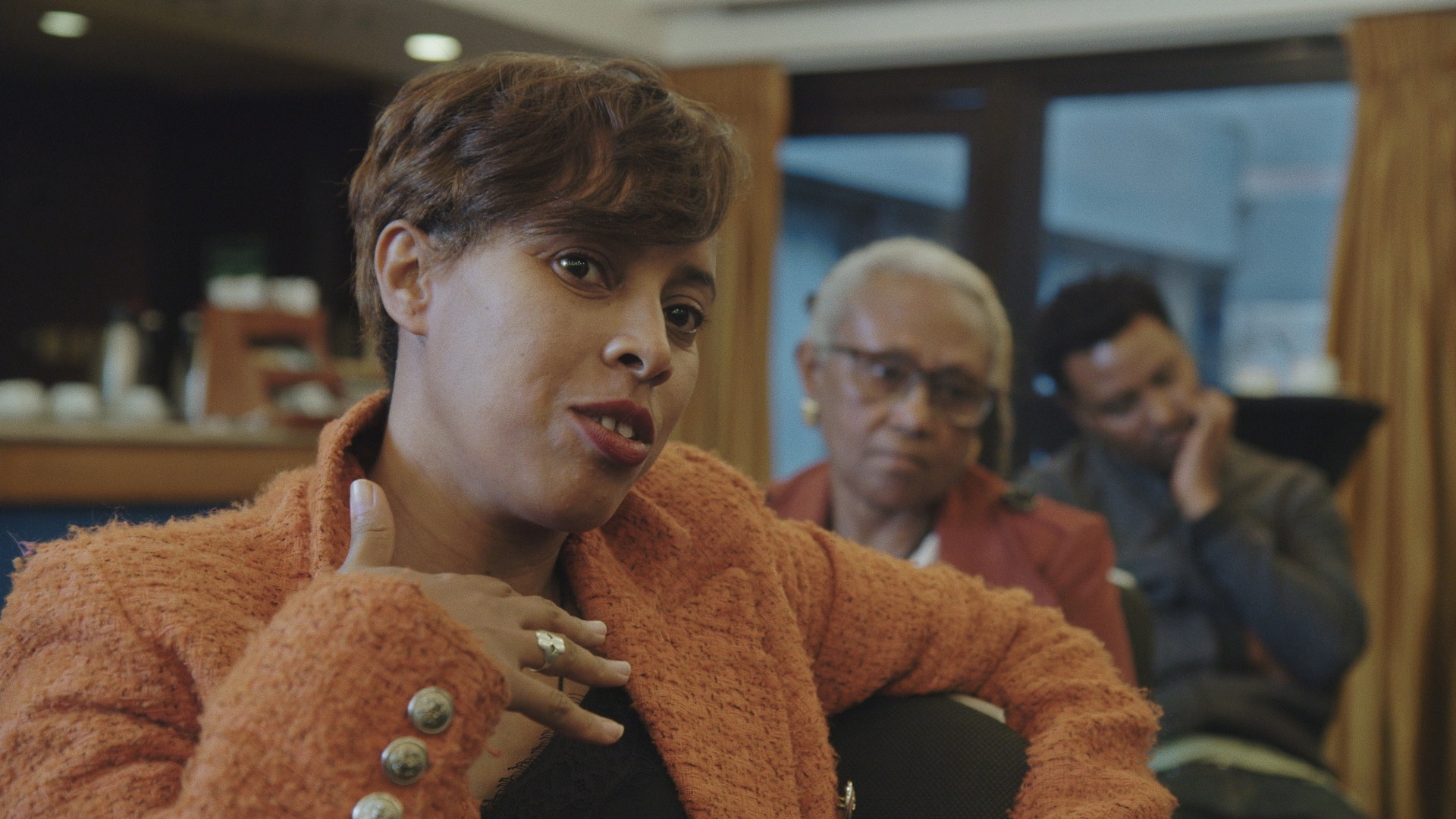
"Wax & Gold", interview with director Ruth Beckermann Gianluca De Angelis
During the Rome Film Fest 2026, we spoke with Ruth Beckermann, director of the documentary feature Wax & Gold. The documentary, presented at the Festival, examines Ethiopia through the life of a hotel and the histories attached to it. The film brings together contemporary scenes, archival footage, music and reflections on how outsiders have represented the country. Beckermann’s account is indeed notable for questioning both the European gaze and the easy narratives that can turn historical figures into symbols.
During our interview for FRED Film Radio, it was clear how the Hilton in Addis Ababa offered Ruth Beckermann a setting through which to encounter middle- and upper-class guests alongside employees with relatively stable work. In her documentary Wax & Gold, did not want to frame Ethiopia solely through images of rural poverty, a perspective that often dominates television coverage. The hotel does obviously not represent every layer of society, she stressed, but its mix of visitors and workers reveals a different part of the country. Its routines also give the documentary a place from which to observe social relations without claiming to speak for all Ethiopians.
Much of the historical footage in Wax & Gold was made by British, Italian and other European filmmakers or journalists, and Beckermann told us how she treated those images not as neutral proof, but as material shaped by the viewpoints of their makers and by her own position as a European filmmaker. The documentary indeed asks viewers to consider where historical images come from and how their meaning is formed. That approach also informs its portrait of Hailé Selassié, whose long rule included modernisation but also neglect during devastating famines. Beckermann described the emperor as a complicated figure, whose later reputation has been coloured by what followed his overthrow, including the communist regime.
Sound gives the film another way to approach Ethiopia beyond archival images and narration. Beckermann drew on Ethiopian jazz, and a musical passage accompanies the film’s departure from the hotel and the journey through the city, bringing its streets into the documentary’s sensory landscape. Beckermann’s Wax & Gold also reflects on Addis Ababa’s rapid transformation, where new construction exists alongside persistent poverty. While nonetheless Europeans may favour preserving old urban spaces, she found a sort of untold energy also in the city’s drive for better infrastructure and new buildings, even if it means contrasting that confidence in the future with Europe’s attachment to its past.
At the heart of WAX AND GOLD stands the Hilton Hotel in Addis Ababa, the grand hotel commissioned by Emperor Haile Selassie in the 1960s as a symbol of modernity, prestige, and power. It is here that Ruth Beckermann chooses to stay, turning this place suspended between past and present into a privileged vantage point from which to explore Ethiopia’s history and its profound contradictions. Through the hotel’s spaces, conversations with the people who pass through it, and archival footage, a narrative takes shape that intertwines the country’s history with that of Europe, bringing to light the lingering traces of Italian colonialism and the Fascist occupation. Outside, meanwhile, Addis Ababa continues to transform: construction sites, unfinished buildings, workers waiting for buses, and new architectural developments paint a portrait of a city marked by inequality and aspirations for change. Moving constantly between observation and personal reflection, documentation and memory, Beckermann questions the very possibility of telling a single, definitive historical truth. Her perspective does not seek conclusive answers but instead grapples with the ambiguities of representation and with the position of an outsider observing a reality to which she does not belong. The film’s title refers to an Ethiopian tradition of expression in which words carry two layers of meaning: wax, what appears on the surface, and gold, the deeper, hidden meaning. This metaphor runs throughout the documentary, inviting viewers to look beyond images and established historical narratives.
Chloé Zhao discusses “Hamnet”, a powerful tale of love, grief, and artistic transformation, at the 20th Rome Film Fest.
At the Rome Film Fest, “I’m Curious Johnny”, director Julien Temple and Johnny Pigozzi talk about fame, friendship, and 50 years of photos turned into one playful, revealing film.
Exploring Revenge and Redemption: Bille August and Sam Claflin Discuss The Count of Monte Cristo
Reading Lolita in Teheran by Eran Riklis, premiering at Rome Film Fest brings on the big screen the freedom and power of the book by Azar Nafisi
A dark fairy tale about growing up, belonging and the fear of being replaced. Bàrbara Farré and Diego Betancor discuss the personal origins of Mala Bèstia, its unsettling vision of adolescence and the decision to make a debut feature without …
Character designer Thibault Leclercq talks about Wildwood and its stop-motion puppets, at the 24th edition of Alice nella Città.
Edinburgh Spanish Film Festival
Marian Arechega, director of the vibrant Edinburgh Spanish Film Festival, discusses the 2026 edition programme, showcasing recent and diverse cinema from Spain.
Nicolas Winding Refn on Her Private Hell, his first feature in ten years, in Italian cinemas from October 1.