
“Madi Makambu”, interview with the director Machérie Ekwa Bahango
Madi Makambu: Machérie Ekwa Bahango's second feature explores denied pregnancy in Kinshasa, selected for Final Cut in Venice 2026.
Listeners:
Top listeners:
 play_arrow
ENGLISH Channel 01 If English is your language, or a language you understand, THIS IS YOUR CHANNEL !
 play_arrow
ITALIAN Channel 02 Se l’italiano è la tua lingua, o una lingua che conosci, QUESTO È IL TUO CANALE!
 play_arrow
EXTRA Channel 03 FRED Film Radio channel used to broadcast press conferences, seminars, workshops, master classes, etc.
 play_arrow
GERMAN Channel 04 Wenn Ihre Sprache Deutsch ist, oder Sie diese Sprache verstehen, dann ist das IHR KANAL !
 play_arrow
POLISH Channel 05
 play_arrow
SPANISH Channel 06 Si tu idioma es el español, o es un idioma que conoces, ¡ESTE ES TU CANAL!
 play_arrow
FRENCH Channel 07 Si votre langue maternelle est le français, ou si vous le comprenez, VOICI VOTRE CHAINE !
 play_arrow
PORTUGUESE Channel 08
 play_arrow
ROMANIAN Channel 09 Dacă vorbiţi sau înţelegeţi limba română, ACESTA ESTE CANALUL DUMNEAVOASTRĂ!
 play_arrow
SLOVENIAN Channel 10
 play_arrow
ENTERTAINMENT Channel 11 FRED Film Radio Channel used to broadcast music and live shows from Film Festivals.
 play_arrow
BULGARIAN Channel 16 Ако българският е вашият роден език, или го разбирате, ТОВА Е ВАШИЯТ КАНАЛ !
 play_arrow
CROATIAN Channel 17 Ako je hrvatski tvoj jezik, ili ga jednostavno razumiješ, OVO JE TVOJ KANAL!
 play_arrow
LATVIAN Channel 18
 play_arrow
DANISH Channel 19
 play_arrow
HUNGARIAN Channel 20
 play_arrow
DUTCH Channel 21
 play_arrow
GREEK Channel 22
 play_arrow
CZECH Channel 23
 play_arrow
LITHUANIAN Channel 24
 play_arrow
SLOVAK Channel 25
 play_arrow
ICELANDIC Channel 26 Ef þú talar, eða skilur íslensku, er ÞETTA RÁSIN ÞÍN !
 play_arrow
INDUSTRY Channel 27 FRED Film Radio channel completely dedicated to industry professionals.
 play_arrow
EDUCATION Channel 28 FRED Film Radio channel completely dedicated to film literacy.
 play_arrow
SARDU Channel 29 Si su sardu est sa limba tua, custu est su canale chi ti deghet!
 play_arrow
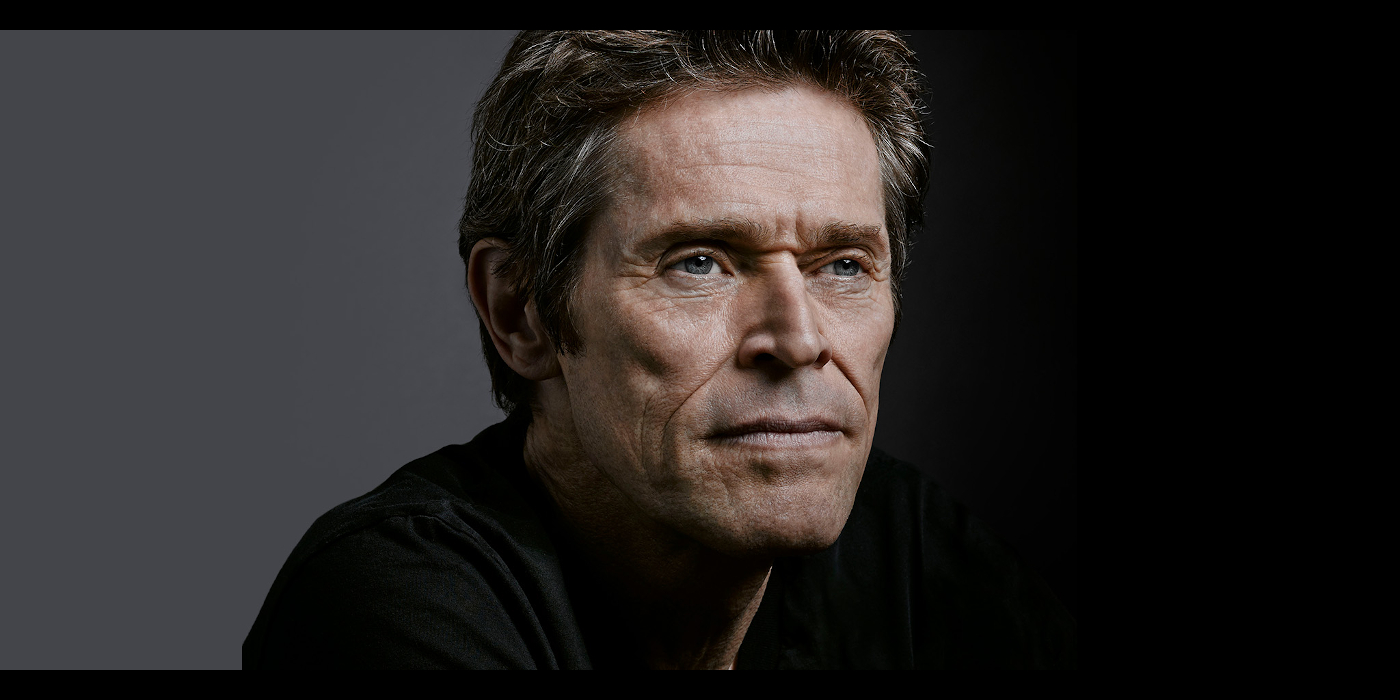
“Conversation with” at the 20th Marrakech IFF, interview with actor Willem Dafoe Bénédicte Prot
 play_arrow
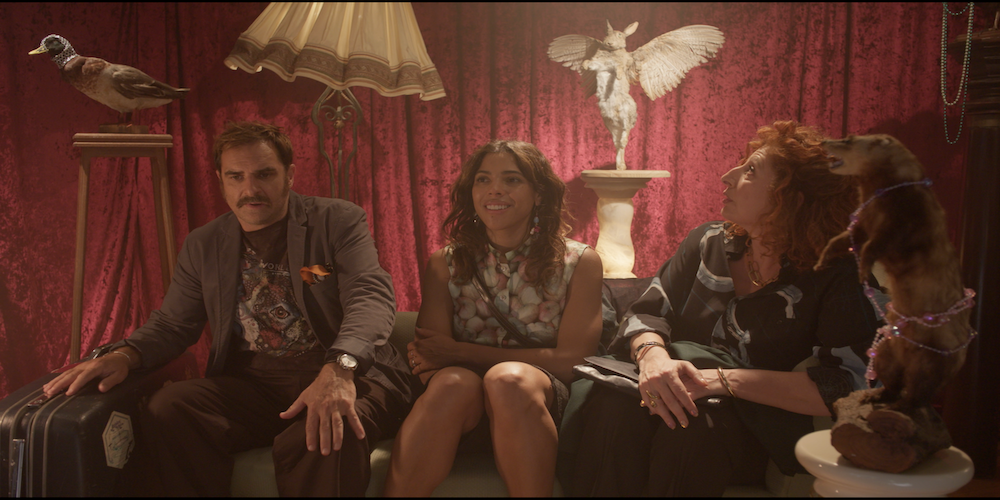
"A quarter to Thursday", interview with the director, Sofia Djama Carolina Mancini
A Quarter to Thursday by Algerian screenwriter and director Sophia Djama, is one of the six feature films selected at the 14th edition of Final Cut in Venice 2026, the program of Venice Film Festival and Venice Production Bridge that supports film in post-production from all African countries and six countries of the Middle East (Jordan, Iraq, Lebanon, Palestine, Syria and Yemen).
Sophia Djama is a filmmaker whose work explores surrealist worlds and political themes. With A Quarter to Thursday, she aims to address issues of fascism, authoritarianism, and gender rights through a satirical lens, set against a backdrop of absurd situations. The discussion was held to shed light on her creative process, production journey, and the social commentary embedded in her film.
In the interview, Sophia Djama discusses the origins of her project and how it ties to her earlier short stories. Her initial short film, Limply on Saturday Morning centered on absurd and surreal adventures in Algiers. She decided to adapt one of her stories into a feature film, which led to the creation of A Quarter to Thursday. The film depicts a bizarre, timeless, and placeless world where characters face absurd situations amid rising fascist tendencies. Djama emphasizes that the film is a reflection of global political regression, not confined to a single country. She uses surrealism to explore themes of chaos, authoritarianism, and gender oppression, inspired by her concern for women’s rights and the resurgence of far-right movements in Europe and beyond.
Sophia Djama shares insights into the production challenges of her film, which involves France, Belgium, and Algeria. She found it difficult to secure funding due to the complex administrative and financial landscape. Her French co-producer, Jean Bréhat and Emma Binet, were crucial in bringing A Quarter to Thursday to life despite limited resources. The film’s financing also relied heavily on France’s CNC, which supported her project through substantial funding. She created her own Algerian company mainly to facilitate administrative procedures and to handle funding applications from Algerian and Arab funds. Djama describes her efforts to connect different national contexts into her project while maintaining her vision of surrealism and political critique.
The film includes animation by algerian painter Mehdi Bardi, adding a surreal layer to the storytelling. Music by Issam Krimi complements the film’s atmosphere of tension and repression, reflecting the outside world’s chaos versus the characters’ inner struggles. Sophia Djama hopes that her presence at Venice’s Final Cut will increase her project’s visibility, aiming to win awards and attract industry attention to her politically engaged cinema.
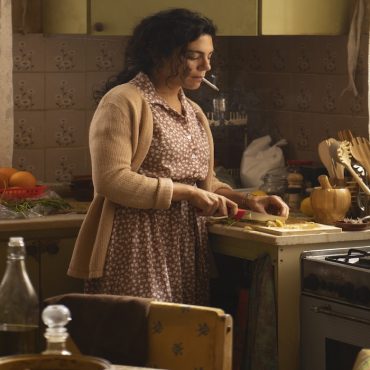
In a country where presidents never die, Goussam finds herself unexpectedly pregnant and determined to abort. Accompanied by Riad, a cynical middle-aged illustrator, and Cherifa, an extravagant cabaret performer, she navigates a crumbling healthcare system, corrupt doctors, and black-market medication, as the city trembles on the edge of uprising. What begins as an urgent, practical mission spirals into a series of darkly comic misadventures: an expired abortion pill, a jailed doctor, a depressed Soviet gynecologist with a collection of formaldehyde fetuses, and a nocturnal infiltration of a military base to bury a Jack Russel named Trump. Beneath the absurdity runs a sharp political undercurrent: the same authoritarian machine that stages fake popular support and surveils its citizens also decides what women can do with their bodies. The film traces an unlikely friendship in full, tender, unsparing detail, against a backdrop where the personal and the political are inseparable, and where even a dog’s burial becomes, somehow, an act of resistance.
Madi Makambu: Machérie Ekwa Bahango's second feature explores denied pregnancy in Kinshasa, selected for Final Cut in Venice 2026.
Rula Nasser presents "Occupational Hazards" at the Venice Film Festival 2026, exploring Palestinian family resilience through dark comedy. Click to read!
Talking with Pascal Diot, director of the Venice Production Bridge, we got insights into this year's event, highlighting its role in connecting immersive content markets and supporting international film and TV projects.
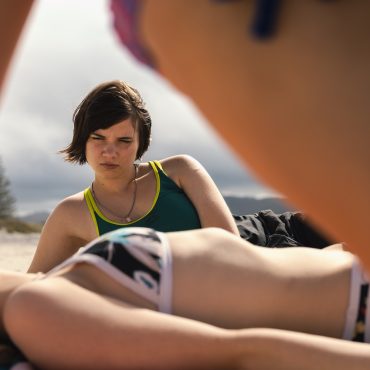
At Alice nella Città 2026 with Big Girls Don't Cry, Paloma Schneidman on adolescence, desire and the blurry space between child and adult
Eva Sangiorgi, director of the Viennale 2026, on a city festival with over 100 features, no competition and a Robert Aldrich retrospective.
Ruth Beckermann on Wax & Gold, her documentary on Ethiopia seen through a hotel in Addis Ababa, at the Rome Film Fest 2026.
A dark fairy tale about growing up, belonging and the fear of being replaced. Bàrbara Farré and Diego Betancor discuss the personal origins of Mala Bèstia, its unsettling vision of adolescence and the decision to make a debut feature without …