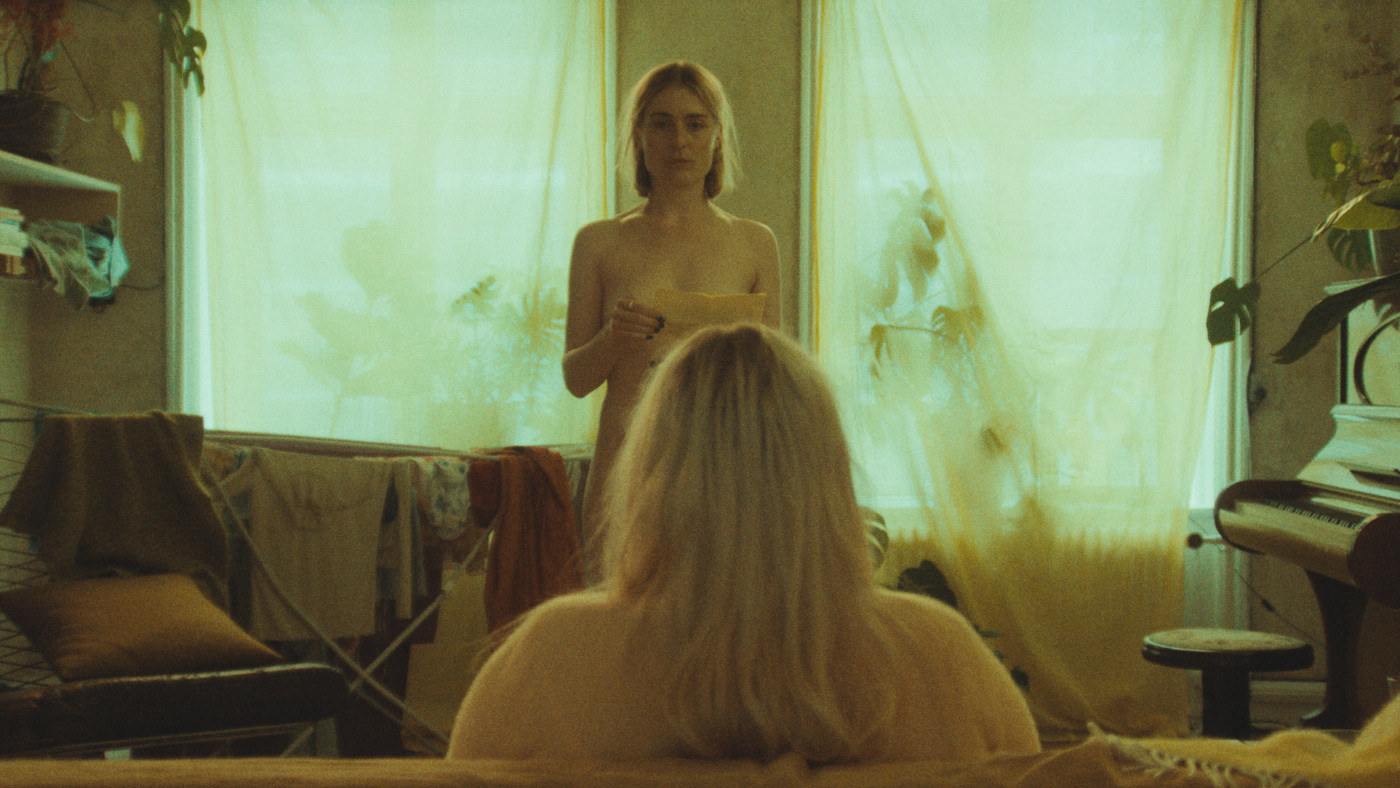
At the Karlovy Vary International Film Festival, we talked with Hilke Rönnfeldt, a rising talent selected for the FUTURE FRAMES program. Her short film “A Study of Empathy”, which has already won the Pardo d’Oro for Best Short at the Locarno Film Festival, sharply examines the art world and human interaction. The film follows art student Penelope and her subject, Dana, whose meeting takes an unexpected turn, leaving Dana profoundly disturbed.
Introducing “A Study of Empathy”
When asked to describe “A Study of Empathy“, Hilke Rönnfeldt characterizes it as “a study of empathy indeed. The film follows Dana, who receives a visit from a performance artist student. The experience turns out differently than expected, leaving Dana puzzled about her feelings and self-perception,” she explains.
Inspiration Behind the Film
Hilke Rönnfeldt shares the dual inspirations for her film “A Study of Empathy“. “I find empathy fascinating—it’s so individual. What one person considers empathy might not be the same for another. I wanted to explore this through fiction,” she says. “Additionally, I once participated in an art performance that left me deeply puzzled and reflective about my reactions and feelings. These experiences inspired the story.”
Impact of Digital Interactions on Empathy
Reflecting on contemporary society’s focus on digital interactions, Hilke Rönnfeldt notes, “There’s a shift from in-person contact to online expressions, where we lack the visual and emotional cues. This change has impacted how we relate to each other and was a significant aspect of my research for the film.”
Role of Art and Cinema in Emotional Experience
Discussing the role of art and Cinema, Hilke Rönnfeldt asserts, “Cinema is one of the strongest mediums to explore and reflect emotions. Combining image, sound, and dialogue allows for a nuanced expression of feelings. For me, cineCinemaps identify and articulate emotions that might otherwise remain unspoken.”
Challenges in Making “A Study of Empathy”
Hilke Rönnfeldt recounts the main challenge of making her film “A Study of Empathy”: “The production had to go very fast as it was a graduation project at Super 16 in Copenhagen. We lost our initial location two months before shooting, so everything from scriptwriting to securing new locations had to be done quickly,” she explains. “Additionally, directing intimate scenes required meticulous planning to ensure everyone felt comfortable and respected.”
Audience Reactions as a Study of Empathy
Reflecting on the audience’s reactions, Rönnfeldt finds it fascinating. “The film invited a range of interpretations—some judged the characters harshly, while others were more empathetic. It’s interesting to see how personal experiences influence perceptions of empathy,” she says.
Compelling Nature of Short Films
Hilke Rönnfeldt praises the short film format for its precision and freedom. “Short films allow for a concentrated exploration of themes. The audience’s attention and energy are fully engaged, which makes every frame significant,” she notes.
Future Projects
Hilke Rönnfeldt is working on new projects, including a short film about floating border shapes and a feature film script titled “The Deep Sea Blue”. She is excited to continue exploring themes of borders and emotional boundaries in her future work.
Experience at Future Frames
Describing her experience at the FUTURE FRAMES program, Rönnfeldt says, “It was amazing and intense. Meeting other filmmakers and seeing their diverse works was incredibly inspiring. I’m grateful to German Films and the European Film Promotion for this opportunity.“
Plot
Penelope is working on an art project about empathy, and Dana is one of her subjects. But the meeting between the two women does not turn out as Dana had hoped. The initially harmless experiment forces the young woman to question her own emotions and thus herself. It isn’t until the opening of Penelope’s exhibition that we see the many different forms empathy can take. Named Best International Short at the 2023 Locarno International Film Festival, the movie explores the limits of emotional vulnerability and the nature of emotion itself. A meditation on how much our perception of ourselves is dependent on our surroundings, the film naturally approaches its subject with both empathy and a subtle sense of humor.