
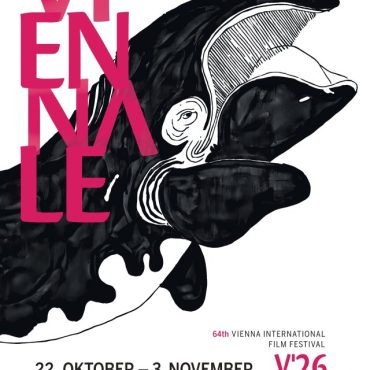
Viennale 2026, interview with the festival director Eva Sangiorgi
Eva Sangiorgi, director of the Viennale 2026, on a city festival with over 100 features, no competition and a Robert Aldrich retrospective.
Listeners:
Top listeners:
 play_arrow
ENGLISH Channel 01 If English is your language, or a language you understand, THIS IS YOUR CHANNEL !
 play_arrow
ITALIAN Channel 02 Se l’italiano è la tua lingua, o una lingua che conosci, QUESTO È IL TUO CANALE!
 play_arrow
EXTRA Channel 03 FRED Film Radio channel used to broadcast press conferences, seminars, workshops, master classes, etc.
 play_arrow
GERMAN Channel 04 Wenn Ihre Sprache Deutsch ist, oder Sie diese Sprache verstehen, dann ist das IHR KANAL !
 play_arrow
POLISH Channel 05
 play_arrow
SPANISH Channel 06 Si tu idioma es el español, o es un idioma que conoces, ¡ESTE ES TU CANAL!
 play_arrow
FRENCH Channel 07 Si votre langue maternelle est le français, ou si vous le comprenez, VOICI VOTRE CHAINE !
 play_arrow
PORTUGUESE Channel 08
 play_arrow
ROMANIAN Channel 09 Dacă vorbiţi sau înţelegeţi limba română, ACESTA ESTE CANALUL DUMNEAVOASTRĂ!
 play_arrow
SLOVENIAN Channel 10
 play_arrow
ENTERTAINMENT Channel 11 FRED Film Radio Channel used to broadcast music and live shows from Film Festivals.
 play_arrow
BULGARIAN Channel 16 Ако българският е вашият роден език, или го разбирате, ТОВА Е ВАШИЯТ КАНАЛ !
 play_arrow
CROATIAN Channel 17 Ako je hrvatski tvoj jezik, ili ga jednostavno razumiješ, OVO JE TVOJ KANAL!
 play_arrow
LATVIAN Channel 18
 play_arrow
DANISH Channel 19
 play_arrow
HUNGARIAN Channel 20
 play_arrow
DUTCH Channel 21
 play_arrow
GREEK Channel 22
 play_arrow
CZECH Channel 23
 play_arrow
LITHUANIAN Channel 24
 play_arrow
SLOVAK Channel 25
 play_arrow
ICELANDIC Channel 26 Ef þú talar, eða skilur íslensku, er ÞETTA RÁSIN ÞÍN !
 play_arrow
INDUSTRY Channel 27 FRED Film Radio channel completely dedicated to industry professionals.
 play_arrow
EDUCATION Channel 28 FRED Film Radio channel completely dedicated to film literacy.
 play_arrow
SARDU Channel 29 Si su sardu est sa limba tua, custu est su canale chi ti deghet!
 play_arrow
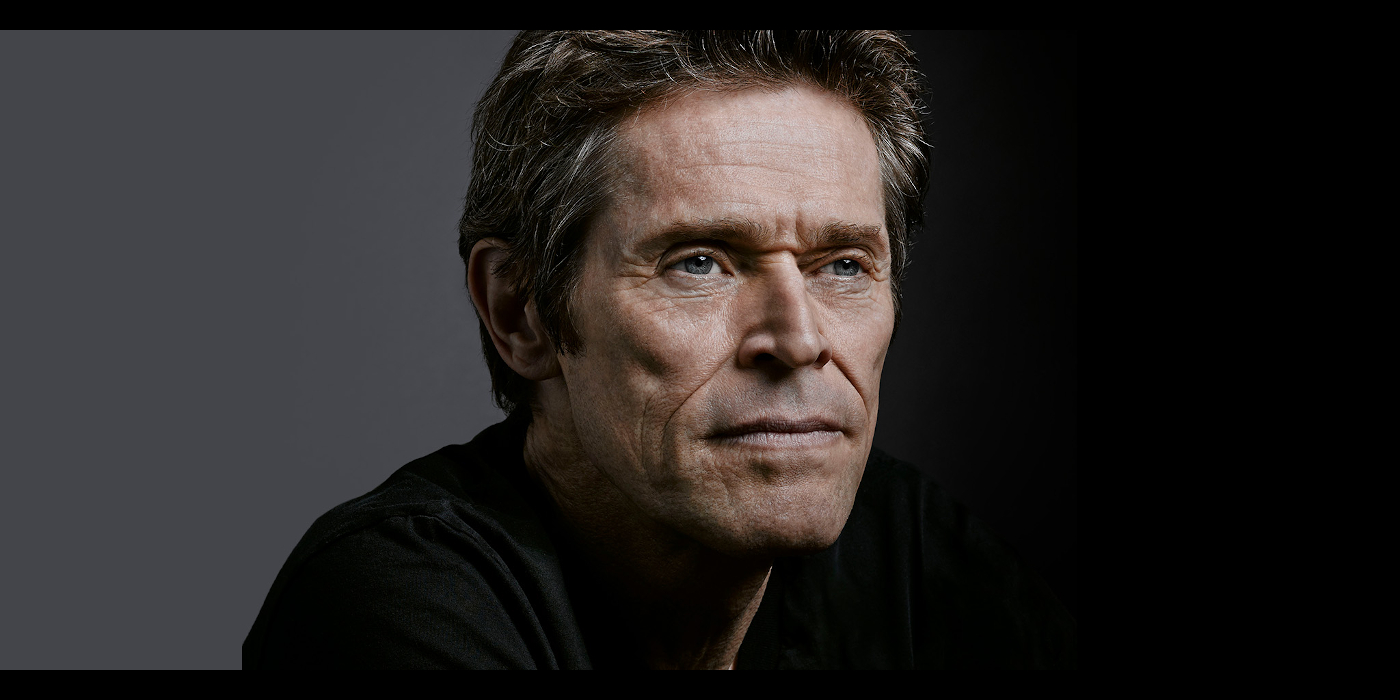
“Conversation with” at the 20th Marrakech IFF, interview with actor Willem Dafoe Bénédicte Prot
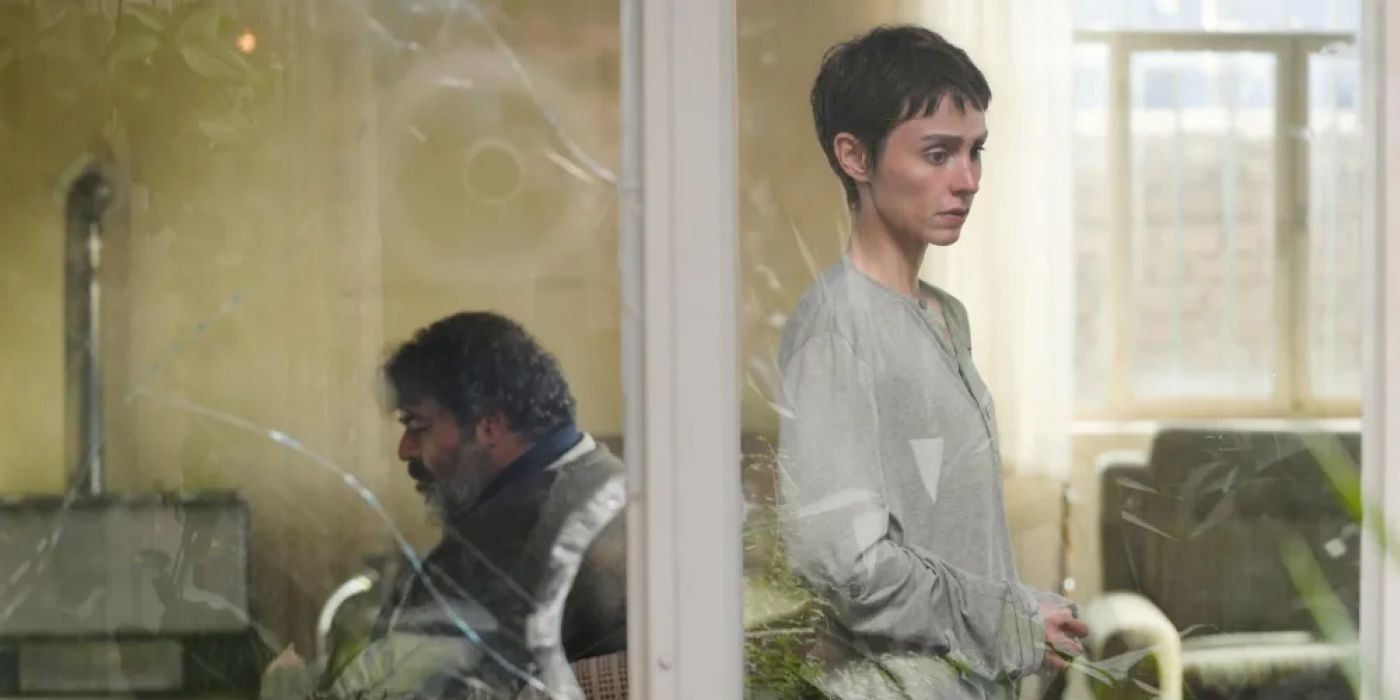
The film Falling House (Moragheb) traps its audience from the very first frame. Unfolding entirely within the claustrophobic walls of a single residence, the narrative creates a space that feels less like a home and more like a prison. For director Mohsen Gharaei, this setting was a deliberate choice to externalize the internal decay of the family unit. The house functions as a pressure cooker, where secrets and silence create a suffocating atmosphere that reflects the broader social anxieties prevalent in the filmmakers’ home country.
Gharaei notes that while the script was written long before the cameras began rolling, the underlying societal structures governing people’s lives remain stagnant. This unintended resonance makes Falling House feel hauntingly prophetic, even if the creative team insists they were not attempting to forecast specific political events. Instead, the film captures the inevitable byproduct of a system that exerts constant, invisible control over its citizens. The result is a domestic tragedy that feels universal in its depiction of how state-level pressure trickles down to fracture the most intimate human bonds.
One of the most striking aspects of bringing Falling House to the screen was the logistical and creative tightrope the filmmakers had to walk. Milad Khosravi and Mohsen Gharaei faced the reality of a sanitized script-submission process—a necessity in an environment where certain truths are considered dangerous to depict. Yet the final product refuses to be muted.
The film serves as a poignant, multigenerational portrait, particularly through its focus on three generations of women. Their struggles, woven together by grief and silence, represent both the resilience and the burdens carried by women navigating a complex, restrictive society. Gharaei’s approach to the narrative arc was not to simplify these struggles, but to ground them in a harsh, unvarnished reality that demands the audience’s attention. By choosing to present these stories despite the risks, the team has crafted a work of cinema that stands as a testament to the power of artistic defiance.
At the heart of the film lies the character of the father, Rashid—a figure defined by his contradictions. In one of the most powerful scenes, a character exclaims, “You are not a human being,” a moment that serves as a breaking point for the audience. However, Gharaei avoids the trap of portraying the father as a one-dimensional villain.
“I tried to show the father as a human first,” the director explains. He intentionally avoided creating distance between the protagonist and the audience, wanting viewers to recognize the proximity of the “monster” within us all. Gharaei highlights that the violence the father suffers outside the home—the humiliation and lack of trust he experiences in society—inevitably resonates within the family walls. It is a cycle of trauma in which the victim becomes the oppressor, a narrative choice that Gharaei insists was vital to evoke sympathy and understanding rather than simple condemnation.
As the film reaches its final act, it challenges the audience to reckon with the secrets that keep families apart. Mohsen Gharaei explains that the tragedy in Falling House lies not only in what is done, but also in what remains unsaid. The family is paralyzed by fear of the father’s reaction, choosing to hide truths about health and dreams rather than risk the fallout.
Ultimately, the father emerges as a stranger in his own home—a man who has missed the defining moments of his family’s existence. Gharaei suggests that even if the truth had been revealed, the outcome might have remained the same: the damage had already been done. It is a bleak, sobering conclusion that leaves viewers questioning the possibility of reconciliation when the foundations of trust have been eroded by years of fear. Despite the darkness, Gharaei holds onto a fragile hope for the new generation, believing that through the lessons of the past, a better future might still be built, however uncertain that path may be.
play_arrow
“Falling House (Moragheb)”, Interview with Director Mohsen Gharaei and Producer Milad Khosravi Laura Della Corte
A long-serving prison officer is suspended from duty after an unforgivable mistake. When he suddenly discovers that his eldest daughter plans to emigrate and pursue a career as a model, he becomes determined to stop her—doing everything in his power to prevent her from leaving home.
Eva Sangiorgi, director of the Viennale 2026, on a city festival with over 100 features, no competition and a Robert Aldrich retrospective.
Ruth Beckermann on Wax & Gold, her documentary on Ethiopia seen through a hotel in Addis Ababa, at the Rome Film Fest 2026.
A dark fairy tale about growing up, belonging and the fear of being replaced. Bàrbara Farré and Diego Betancor discuss the personal origins of Mala Bèstia, its unsettling vision of adolescence and the decision to make a debut feature without …
Character designer Thibault Leclercq talks about Wildwood and its stop-motion puppets, at the 24th edition of Alice nella Città.