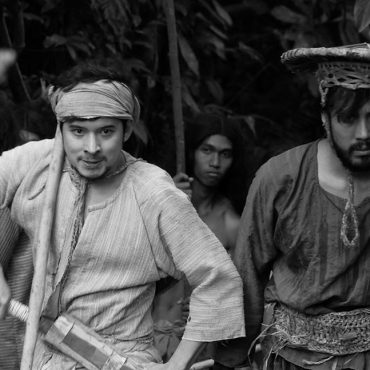
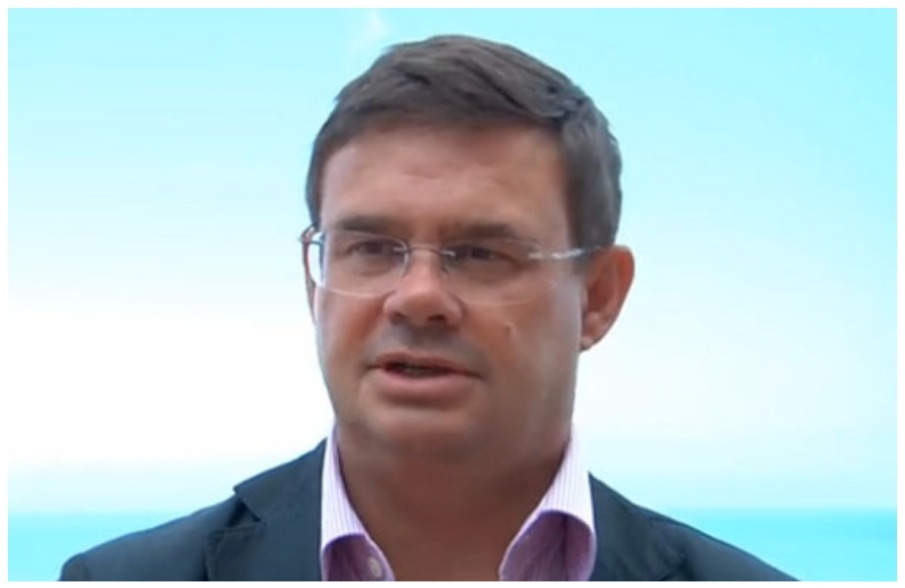
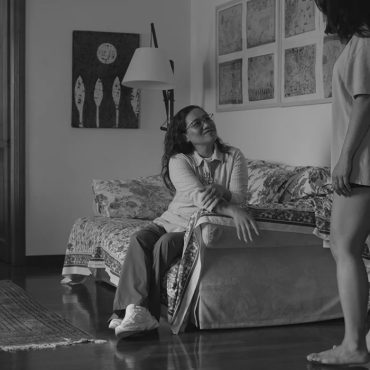
Presented in the Open section, out of competition, at the Venice Film Festival 2026, The Pervert’s Guide to Utopias follows philosopher Slavoj Žižek through landscapes of classic film, music, social media, archive footage and webcasts, as he maps the utopian illusions of our times through absurd juxtapositions and startling insights. As Žižek puts it in his statement on the film: “If aliens were to visit our earth and by chance ask me, ‘Could you explain to us what humanity is about?’, I would not tell them, ‘go around and look,’ I would tell them, ‘look at these and these and these movies, and you will understand us.'”
The film concludes a two-decade collaboration between director Sophie Fiennes and Slavoj Žižek, completing a trilogy that began with The Pervert’s Guide to Cinema (2006) and The Pervert’s Guide to Ideology (2012). Fiennes and Žižek talk about why they returned to the collaboration, the pessimism at the heart of the film, and the role cinema can play in understanding the present.
A Third Chapter for a World That Became More Provocative Than Them
Asked why they returned for a third collaboration after The Pervert’s Guide to Cinema and The Pervert’s Guide to Ideology, Fiennes says the decision came from the state of the world itself: “We’re responding to the world, and the world doesn’t stop just at ideology. It’s continued into a kind of madness that we were challenged to capture today’s world within the form of our films. We started this eight years ago. Some people say Slavoj is so provocative, but actually the world became much more provocative. So we meet it head on, but through cinema, because in cinema things play out that we can understand better than if we just look at the world as such, on iPhones, on continual streams of media.”
The Impossible Wish to Have the Cake and Eat It
Žižek describes himself as a pessimist, and the film’s starting point, he explains, is admitting that there are no easy answers: “People want — what is the Italian expression, the English is ‘you want to have a cake and eat it’: you want both sides, contradictory. We are aware that maybe the end of the world is approaching, a mega crisis, but we still want our relative welfare, to have a nice life and so on.”
He applies the same logic to the ecological crisis and to artificial intelligence: “We are all aware of it, but when you just want to limit the consumption of oil or whatever, everybody protests. Or artificial intelligence: media are full of ‘it’s running out of our control,’ but the research goes on in a crazy way, with hundreds of billions of dollars invested into it. The first thing to admit is that it’s utopian to say we go on, but just a little bit slower, in a constrained way.”
Quoting Antonio Gramsci, he warns of what can arise while the world hesitates between eras: “In the time when the old is dying before the new is here, monstrosities arise. Today I’m one level more pessimist: it’s not even that there is a clear great thing on the horizon, like socialism or a new welfare, but that we run into trouble and things are running towards a global morbidity.”
Still calling himself half a Marxist, Žižek turns Marx’s own famous phrase — that philosophers have only interpreted the world and the time is to change it — back on the 20th century itself: “What if in the 20th century we tried to change the world too fast, without really understanding it? What happened? The October revolution, and in fifteen years you get Stalin. So our motto today, and I say this as an engaged leftist, should be to take time, step back, and try to understand what is really going on.”
Cinema as Messages in a Bottle
For Fiennes, the films the two choose to examine carry more than entertainment value, because of the historical moment that produced them: “The films that we look at contain messages in a bottle, in a way, particularly with the way Slavoj is able to go into the tensions happening within dramas, often because of the historical time in which they are made. Last Year at Marienbad and Jeanne Dielman were both made after the Second World War. Chantal Akerman’s mother was in the death camps, and her response to her mother is what produces Jeanne Dielman. Apocalypse Now is produced after Vietnam. Blade Runner is already looking at artificial intelligence and biogenetics. Sometimes the imagination of filmmakers and writers is way ahead of what’s actually happening as we see it today.”
What interests her, she adds, is precisely their independence from formula: “They’re not films that are part of a big corporate machine, they’re not sanctioned by bureaucratic systems of checks and balances trying to replicate plot formats to make lots of money. They’re very personal films. This dimension of authorship within cinema has lots of revelations within it, but you need a good cinematic surgeon.”
Žižek makes a similar case for why cinema, rather than raw historical data, gets closer to the truth: “You know how you recognize an idiot? It’s a guy who says, ‘to really understand Shakespeare you have to know the details of Elizabethan history.’ I say quite the opposite: if you look at Elizabethan history you get too much data, but if you read a couple of Shakespeare’s best plays, you understand reality. Our wager is that it’s the same for cinema today: to understand cinema today you don’t have to know the Hollywood rules or American ideology, it’s the other way around. Even Hollywood at its best has this: to understand reality, you get it in a distilled, clear form in cinema.”
Plot
Philosopher Slavoj Žižek is our guide through landscapes of classic film, music, social media, archive and webcasts. Making unexpected twists and turns, he maps the utopian illusions of our times. Through absurd juxtapositions and startling insights, we are seduced into recognising our fate, in order to change it. “If aliens were to visit our earth and by chance ask me, ‘Could you explain to us what humanity is about?’” says Žižek, “I would not tell them, ‘go around and look,’ I would tell them, ‘look at these and these and these movies, and you will understand us.’” The Pervert’s Guide to Utopias concludes a two-decade collaboration between Sophie Fiennes and Slavoj Žižek, and completes a trilogy that began with The Pervert’s Guide to Cinema (2006) and The Pervert’s Guide to Ideology (2012).