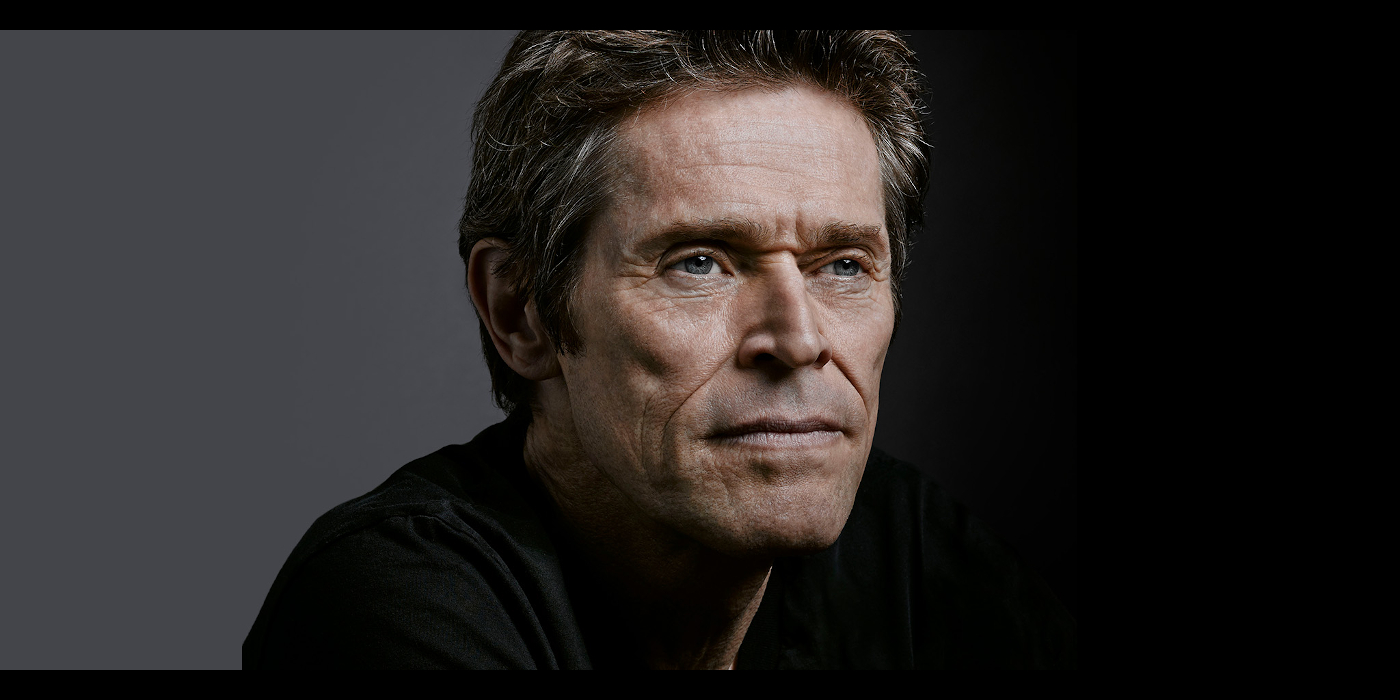
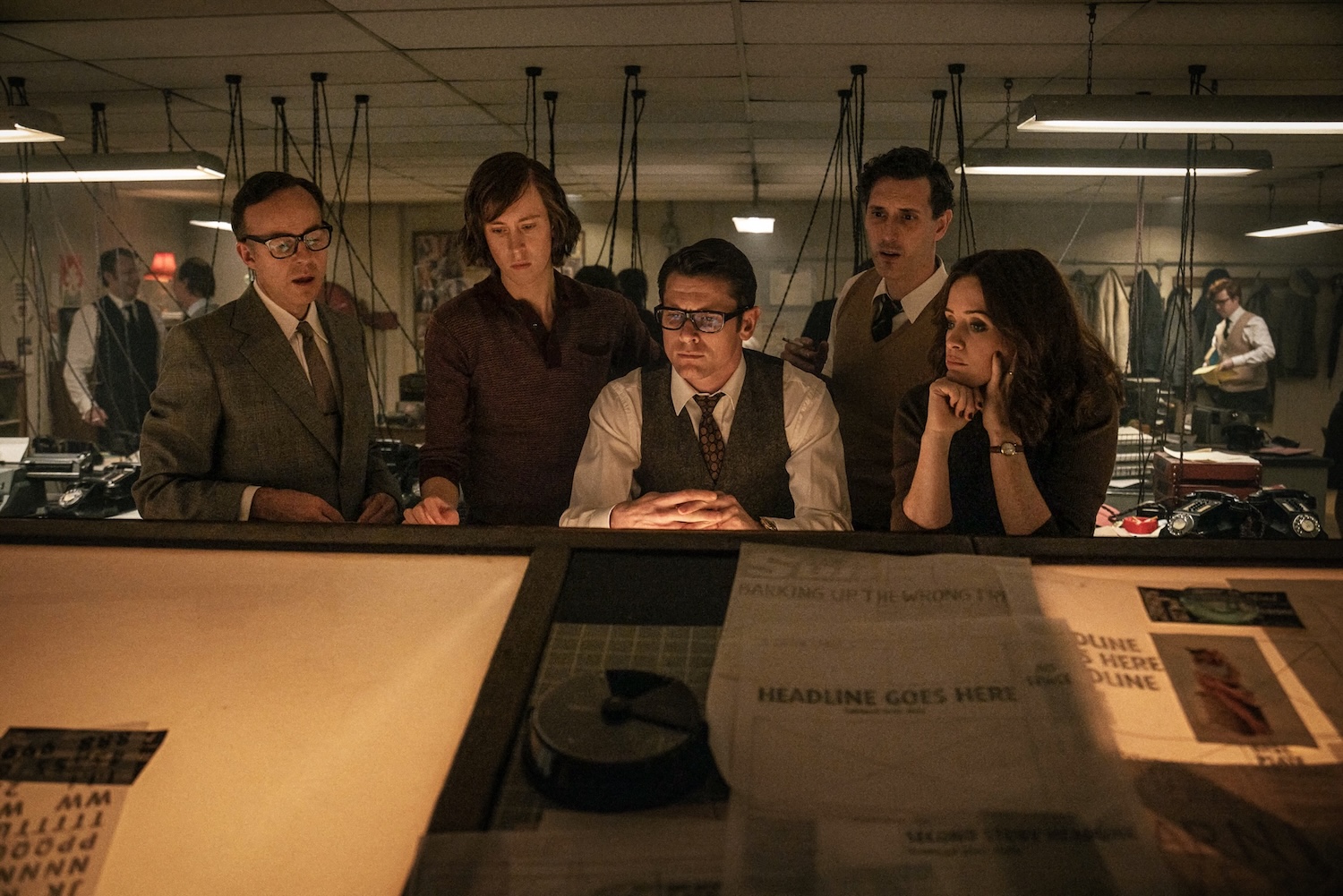
Ink, the film that opens the 83rd Venice International Film Festival 2026 in official competition, tells the story of The Sun, the British tabloid launched in 1969 by Rupert Murdoch and Larry Lamb. “1969: the year we first walked on the moon, and the year Rupert Murdoch and Larry Lamb launched a newspaper that was to change the world far more,” says director Danny Boyle, who describes it as born to become “a new tabloid that, against all the odds, became the biggest-selling newspaper in the world”: “cheeky, irreverent, daring… the ‘super soaraway’ Sun challenged the establishment and remade our world for the modern era.” Described in its synopsis as “an explosive cinematic rollercoaster about a group of visionaries and misfits,” Ink is based on a script by James Graham that Danny Boyle says he “felt compelled and privileged to make” and it marks the director’s first time at the festival itself: “I have been to La Biennale many times, but this is my baptism at the film festival.” Danny Boyle brought all of this to FRED Film Radio: from the rebellious, punk energy of these misfits and the darker consequences that follow them, to journalism as one of the pillars of humanity now threatened by AI, to his decision not to turn Rupert Murdoch into a straightforward villain.
A bunch of misfits, and an ignition point for modern media
For Danny Boyle, the appeal of the story lies as much in its characters as in its consequences. “They are a bunch of misfits and they’re rebels and they feel like they’re fighting against something,” he says of a Britain that “was very stultified, was very rigid.” That energy, he explains, “got all the attributes of a punk, of a rebel, of a rock and roll rebel.” But the film does not stop at the thrill of rebellion: “you begin to slide towards something a little darker. And there are consequences to this kind of behavior.” Danny Boyle draws a direct line from that newsroom to the present: “I think there’s an ignition point for where the modern media has ended up, where we are now with our media, and where we’ve ended up where the most powerful man in the world has no respect for truth. He just decides what the truth is.” And he is careful not to place the blame only on the newspaper’s founders: “we’re all complicit in it. It’s all our responsibility. And if we want to change it, we have to acknowledge that responsibility.”
Journalism, one of the tent poles of humanity
Asked about the parallel with today’s social media, where anyone can make something public whether or not they should, Danny Boyle widens the point to journalism itself: “it’s part of and it’s why journalism is one of the core tent poles of humanity. It’s one of the things that holds up humanity, that there are journalists who will not accept what they’re told and will challenge it. But there’s also, they have a judgment to make about how far they go.” For Danny Boyle, that role is now at risk from a different direction: “when you destroy journalism, that’s happening at the moment, you lose that and you hand it over to tech and to AI and to algorithms.” It remains to be seen “whether they will have that ability to challenge their masters, their tech giants, in the way that a journalist can challenge their master, their pay master.” He sees the erosion accelerating: “that is one of the things that’s being whittled away, and it’s accelerating that whittling away at the moment. And the biggest danger, I think, with AI is that it will change fundamentally one of the tent poles of humanity.”
Not another monster: a truthful Rupert Murdoch
Danny Boyle was equally deliberate about how the film portrays Rupert Murdoch, resisting the temptation to simply monsterize him. “The film is… a lot of the film is about truth,” he says, “so if you’re going to make a film about that, you have to start from a very true point.” That meant portraying Rupert Murdoch as he arrived in Britain, “a country that despised him as an Australian,” and that he “had to fight very hard as a rebel” to win over. Casting followed the same logic: “it was important to us to get an Australian to do it and to feel as truthful as possible,” Danny Boyle says of Guy Pearce, who he notes “looks very like one of Rupert Murdoch’s sons actually, Lachlan Murdoch.” The approach also meant acknowledging what Danny Boyle sees as genuine in the young Rupert Murdoch: “his love of newspapers, his love of journalism, his love of the print industry, and his ability, his desire to change what was a very rigid country, very set in its ways, very snobbish about outsiders coming in.” As he puts it, “there’s much to admire about Rupert as well, and I think it helps reset the palate”, steering the audience away from “another monsterized version of Rupert Murdoch as he’s become in many people’s eyes.”
Plot
An explosive cinematic rollercoaster about a group of visionaries and misfits who had an idea for a new kind of news – one that would give the people what they wanted and would change the face of the world we live in today.
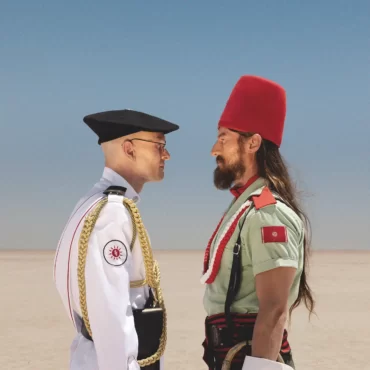
"Straight Circle" by director Oscar Hudson is a gripping film exploring war, nationalism and human conflict, set against a haunting dreamlike desert landscape
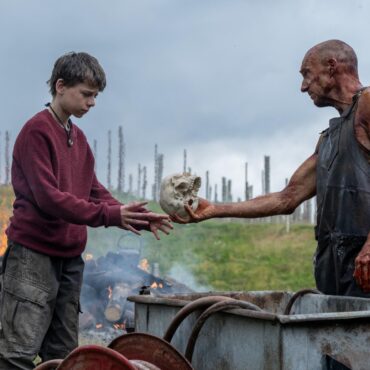
A dark fairy tale about growing up, belonging and the fear of being replaced. Bàrbara Farré and Diego Betancor discuss the personal origins of Mala Bèstia, its unsettling vision of adolescence and the decision to make a debut feature without …