

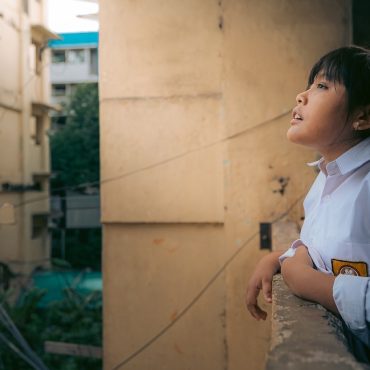
“Annisa”, interview with the co-director Sam Manacsa
Sam Manacsa discusses Annisa at Cannes 2026, exploring sound, adolescence and belonging through the perspective of a blind teenage girl.
Listeners:
Top listeners:
 play_arrow
ENGLISH Channel 01 If English is your language, or a language you understand, THIS IS YOUR CHANNEL !
 play_arrow
ITALIAN Channel 02 Se l’italiano è la tua lingua, o una lingua che conosci, QUESTO È IL TUO CANALE!
 play_arrow
EXTRA Channel 03 FRED Film Radio channel used to broadcast press conferences, seminars, workshops, master classes, etc.
 play_arrow
GERMAN Channel 04 Wenn Ihre Sprache Deutsch ist, oder Sie diese Sprache verstehen, dann ist das IHR KANAL !
 play_arrow
POLISH Channel 05
 play_arrow
SPANISH Channel 06 Si tu idioma es el español, o es un idioma que conoces, ¡ESTE ES TU CANAL!
 play_arrow
FRENCH Channel 07 Si votre langue maternelle est le français, ou si vous le comprenez, VOICI VOTRE CHAINE !
 play_arrow
PORTUGUESE Channel 08
 play_arrow
ROMANIAN Channel 09 Dacă vorbiţi sau înţelegeţi limba română, ACESTA ESTE CANALUL DUMNEAVOASTRĂ!
 play_arrow
SLOVENIAN Channel 10
 play_arrow
ENTERTAINMENT Channel 11 FRED Film Radio Channel used to broadcast music and live shows from Film Festivals.
 play_arrow
BULGARIAN Channel 16 Ако българският е вашият роден език, или го разбирате, ТОВА Е ВАШИЯТ КАНАЛ !
 play_arrow
CROATIAN Channel 17 Ako je hrvatski tvoj jezik, ili ga jednostavno razumiješ, OVO JE TVOJ KANAL!
 play_arrow
LATVIAN Channel 18
 play_arrow
DANISH Channel 19
 play_arrow
HUNGARIAN Channel 20
 play_arrow
DUTCH Channel 21
 play_arrow
GREEK Channel 22
 play_arrow
CZECH Channel 23
 play_arrow
LITHUANIAN Channel 24
 play_arrow
SLOVAK Channel 25
 play_arrow
ICELANDIC Channel 26 Ef þú talar, eða skilur íslensku, er ÞETTA RÁSIN ÞÍN !
 play_arrow
INDUSTRY Channel 27 FRED Film Radio channel completely dedicated to industry professionals.
 play_arrow
EDUCATION Channel 28 FRED Film Radio channel completely dedicated to film literacy.
 play_arrow
SARDU Channel 29 Si su sardu est sa limba tua, custu est su canale chi ti deghet!
 play_arrow
“Conversation with” at the 20th Marrakech IFF, interview with actor Willem Dafoe Bénédicte Prot
 play_arrow
"Original Wound", interview with the co director Sein Lyan Tun Federica Scarpa
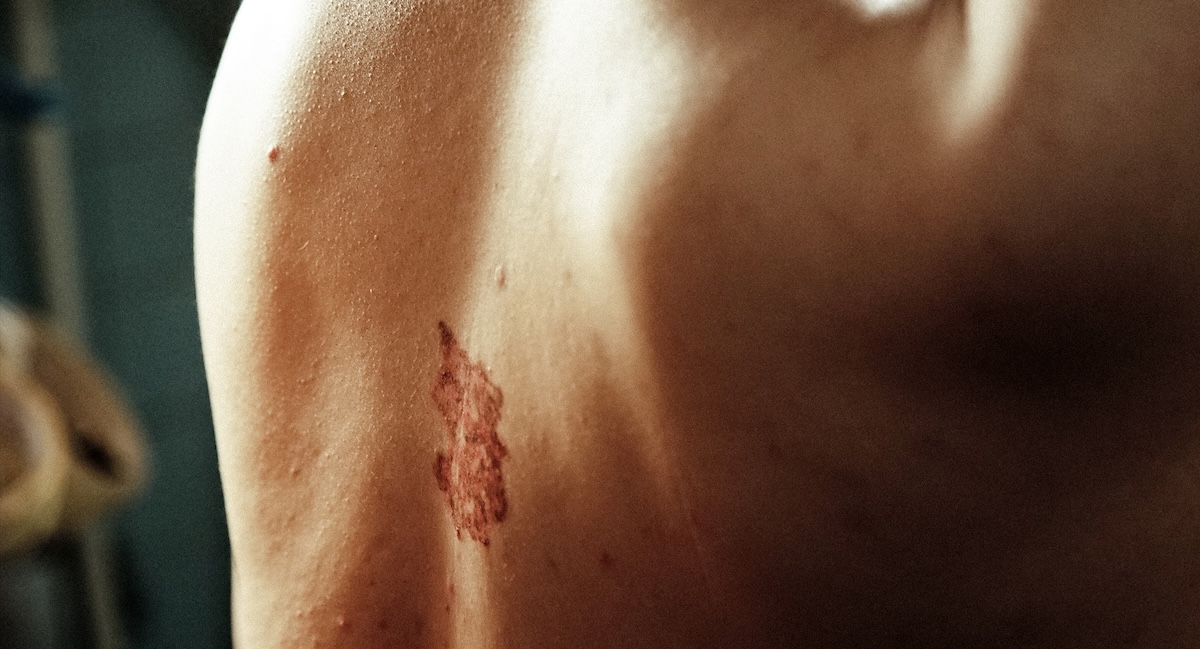
“Original Wound” emerges as one of the darkest and most emotionally unsettling films of the Indonesian collaborative program Next Step Studio.
Co-directed by Myanmar filmmaker Sein Lyan Tun and Indonesian director Shelby Kho, the short film centres on a brother and sister left alone in the family house after their mother’s death. As memories resurface, grief becomes increasingly unstable, exposing emotional wounds that neither character fully understands in the same way.
For Sein Lyan Tun, the project began through a shared emotional territory discovered during the writing process with Shelby Kho.
“We were trying to find a common ground,” he explained, “We both had experiences connected to family, trauma, parents and siblings.”
That mutual recognition gradually shaped a story centred not on explicit confrontation, but on the lingering psychological effects of emotional manipulation, abuse and silence within family structures.
The film avoids definitive explanations. Instead, it constructs a fragmented emotional space where memory itself becomes unstable and contradictory.
One of the most striking aspects of “Original Wound” is the way the brother and sister remember their mother differently. Their emotional realities overlap, but never fully coincide.
For Sein Lyan Tun, this fragmentation reflects the impossibility of absolute truth inside families.
“Sometimes parents say things to make you happy,” he observed, “but when you grow up, you realise those words were painful.”
The director repeatedly returned to the idea of swallowed emotions: experiences that remain unspoken for years yet continue to shape personal identity from within.
In “Original Wound”, trauma is never presented as a completed event. Instead, it exists as an ongoing process, constantly resurfacing through memory, silence and emotional repetition.
The mother’s absence paradoxically intensifies her presence throughout the film. Even after death, her emotional influence continues to structure the relationship between the siblings, separating them even while forcing them back together.
That contradiction becomes central to the film’s emotional tension: the simultaneous desire for connection and escape.
The domestic setting in “Original Wound” functions almost like another character.
Throughout the interview, Sein Lyan Tun described the house less as a physical location than as an emotional environment where unresolved trauma continues to circulate.
“Sometimes you swallow things, sometimes you speak them out,” he reflected. “But the suffering continues.”
The film’s claustrophobic atmosphere reinforces this sensation of emotional entrapment. Rooms feel closed, heavy and psychologically charged, as though the past itself remains embedded within the architecture.
For the director, this dynamic also carried a broader metaphorical dimension connected to political and social realities.
Comparing family structures to authoritarian systems, he described the mother figure as resembling a form of power that cannot easily be escaped.
“The mother is like the government,” he said. “The children are like the people.”
This political undercurrent remains subtle throughout the film, but it deepens the sense that personal trauma and larger structures of control often mirror one another.
Rather than relying heavily on dialogue, “Original Wound” communicates primarily through atmosphere, tension and emotional ambiguity.
Sein Lyan Tun explained that the filmmakers were less interested in providing clear psychological explanations than in creating an experiential emotional space for the audience.
The result is a film built around sensations: discomfort, emotional suffocation and the constant feeling that something unresolved remains trapped beneath the surface.
For viewers who have experienced similar family tensions, the director believes the emotional impact may feel immediately recognisable.
“Some people will watch it and say, ‘I know this pain,’” he noted.
At the same time, he acknowledged that audiences without those experiences may find the film’s emotional logic more difficult to interpret.
That uncertainty is intentional. “Original Wound” does not attempt to universalise trauma into simple catharsis. Instead, it preserves the instability and opacity that often define painful memories themselves.
After their mother’s death, a brother and sister remain in the house shaped by her control, negotiating conflicting memories of abuse and care. As ritual, body, and memory intertwine, their grief exposes a deeper entrapment, one that persists beyond her absence.
Sam Manacsa discusses Annisa at Cannes 2026, exploring sound, adolescence and belonging through the perspective of a blind teenage girl.
Reza Fahriyansyah and Ananth Subramaniam discuss Holy Crowd at Cannes 2026, exploring miracles, herd mentality and collective obsession.
Aina Clotet discusses Viva at Cannes 2026, exploring desire, illness, emotional dependence and the fear of loneliness.
Will Sharpe discusses grief, vulnerability and animation in "In Waves", opening film of Cannes Critics’ Week by Phuong-Mai Nguyen.
Edinburgh Spanish Film Festival
Marian Arechega, director of the vibrant Edinburgh Spanish Film Festival, discusses the 2026 edition programme, showcasing recent and diverse cinema from Spain.
Nicolas Winding Refn on Her Private Hell, his first feature in ten years, in Italian cinemas from October 1.
Discover how EWIP - European Work in Progress connects European and African films with top buyers, boosting distribution and festival success.
Rome is once again expanding the scope of its Film Fest: thirteen days of cinema, international premieres, renowned auteurs, emerging talent, series, documentaries, and cinematic heritage—with Javier Bardem, Paolo Genovese, and Monica Vitti at the heart of an edition that …