


“I’ll be gone in June”, interview with the director Katharina Rivilis
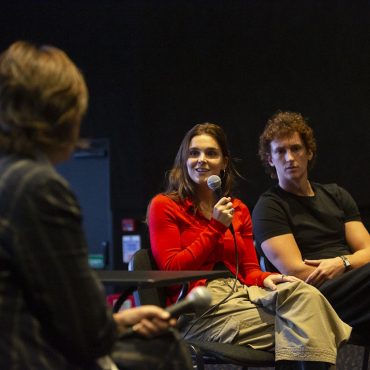
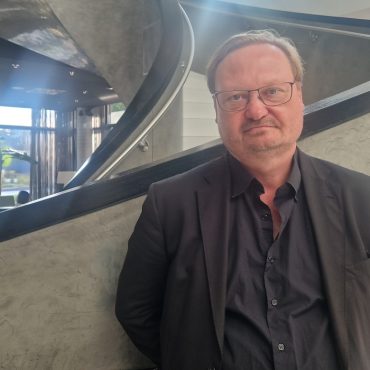
Katharina Rivilis discusses I’ll Be Gone in June at Cannes 2026, exploring adolescence, post-9/11 America and memory.
Listeners:
Top listeners:
 play_arrow
ENGLISH Channel 01 If English is your language, or a language you understand, THIS IS YOUR CHANNEL !
 play_arrow
ITALIAN Channel 02 Se l’italiano è la tua lingua, o una lingua che conosci, QUESTO È IL TUO CANALE!
 play_arrow
EXTRA Channel 03 FRED Film Radio channel used to broadcast press conferences, seminars, workshops, master classes, etc.
 play_arrow
GERMAN Channel 04 Wenn Ihre Sprache Deutsch ist, oder Sie diese Sprache verstehen, dann ist das IHR KANAL !
 play_arrow
POLISH Channel 05
 play_arrow
SPANISH Channel 06 Si tu idioma es el español, o es un idioma que conoces, ¡ESTE ES TU CANAL!
 play_arrow
FRENCH Channel 07 Si votre langue maternelle est le français, ou si vous le comprenez, VOICI VOTRE CHAINE !
 play_arrow
PORTUGUESE Channel 08
 play_arrow
ROMANIAN Channel 09 Dacă vorbiţi sau înţelegeţi limba română, ACESTA ESTE CANALUL DUMNEAVOASTRĂ!
 play_arrow
SLOVENIAN Channel 10
 play_arrow
ENTERTAINMENT Channel 11 FRED Film Radio Channel used to broadcast music and live shows from Film Festivals.
 play_arrow
BULGARIAN Channel 16 Ако българският е вашият роден език, или го разбирате, ТОВА Е ВАШИЯТ КАНАЛ !
 play_arrow
CROATIAN Channel 17 Ako je hrvatski tvoj jezik, ili ga jednostavno razumiješ, OVO JE TVOJ KANAL!
 play_arrow
LATVIAN Channel 18
 play_arrow
DANISH Channel 19
 play_arrow
HUNGARIAN Channel 20
 play_arrow
DUTCH Channel 21
 play_arrow
GREEK Channel 22
 play_arrow
CZECH Channel 23
 play_arrow
LITHUANIAN Channel 24
 play_arrow
SLOVAK Channel 25
 play_arrow
ICELANDIC Channel 26 Ef þú talar, eða skilur íslensku, er ÞETTA RÁSIN ÞÍN !
 play_arrow
INDUSTRY Channel 27 FRED Film Radio channel completely dedicated to industry professionals.
 play_arrow
EDUCATION Channel 28 FRED Film Radio channel completely dedicated to film literacy.
 play_arrow
SARDU Channel 29 Si su sardu est sa limba tua, custu est su canale chi ti deghet!
 play_arrow
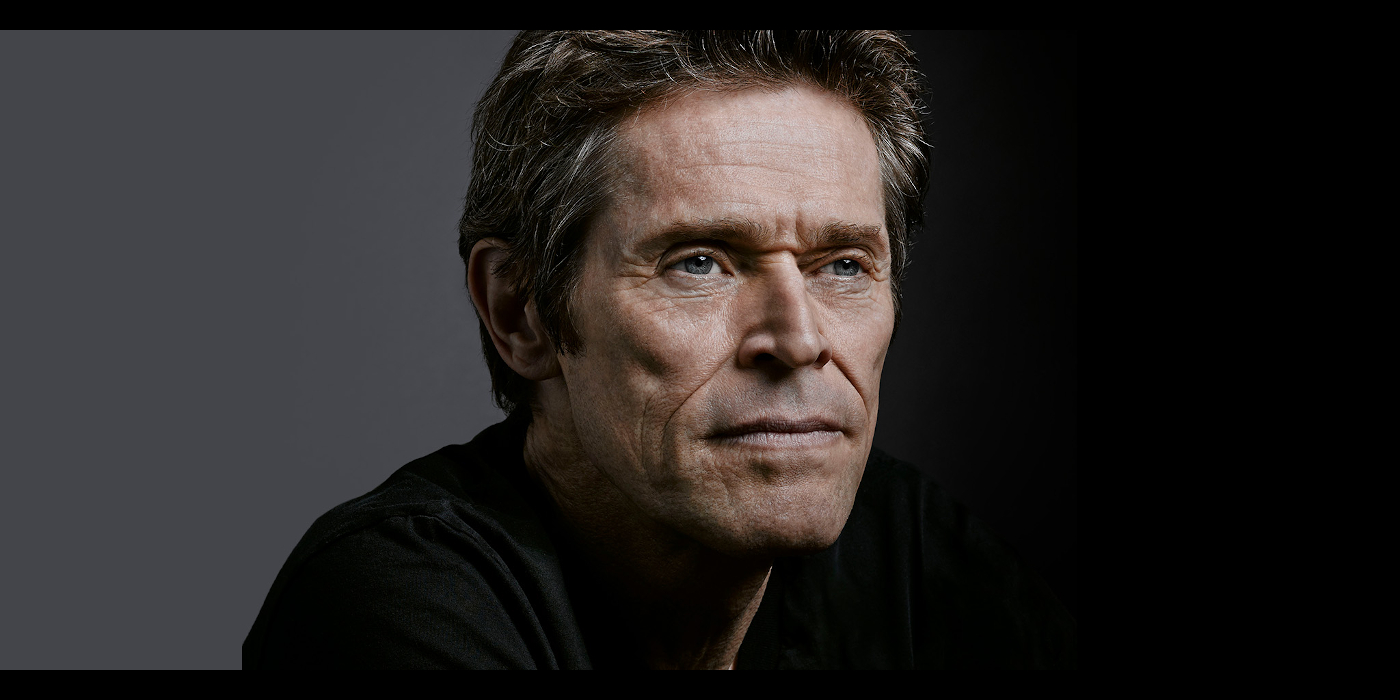
“Conversation with” at the 20th Marrakech IFF, interview with actor Willem Dafoe Bénédicte Prot
 play_arrow
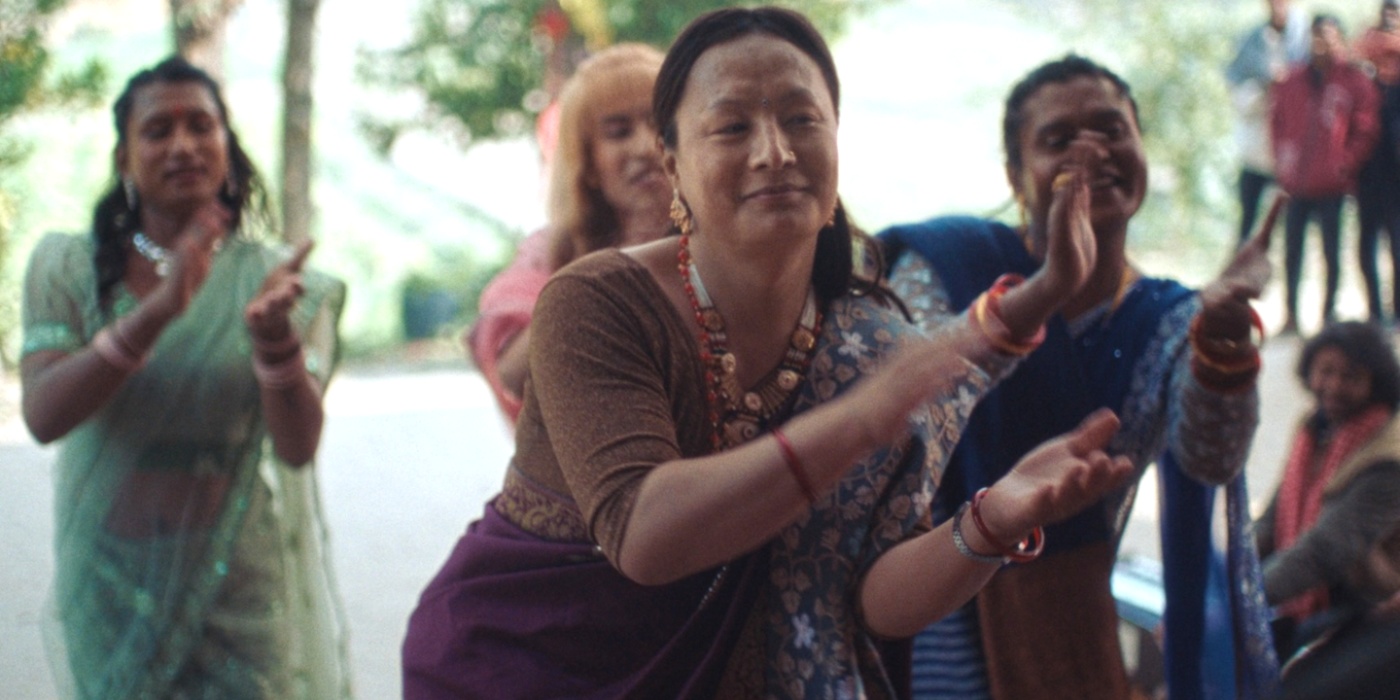
“Elephants in the Fog”, Interview with director Abinash Bikram Shah Chiara Nicoletti
Winner of the Un Certain Regard Jury Prize at the 79th Cannes Film Festival, “Elephants in the Fog” is the feature debut of Nepali writer-director Abinash Bikram Shah, and the first Nepali film ever selected for the section. Set in Thori, a forested village in Nepal’s southern Terai plains, the film follows Pirati, the matriarch of a Kinnar family, an ancient third-gender community both revered and feared whose dream of escaping with the man she loves is shattered when one of her daughters disappears during a nightly patrol against wild elephants. Pushpa Thing Lama stars in the lead role.
The film’s genesis lies in an unlikely place. During the Covid lockdowns, Abinash Bikram Shah was scrolling through TikTok when he came across videos of Kinnar women dancing, joking, performing with joy. The comments underneath were vile, filled with transphobia. But the women kept posting. That contradiction pulled him in. He visited the community repeatedly before writing a single line, drawn to the dynamics of a family that is not biological but no less real. “They are mostly outcast from society, from the family, and they found a new family to live in just to survive, just to belong somewhere. And the family that they live in, it’s so similar to what you call a “normal” family. It’s so dysfunctional for sure, but at the same time, there’s so much love, warmth, and everything”.
What Abinash Bikram Shah wanted to test was a question that traditional family dramas rarely ask: what happens when someone disappears from a chosen family? The pain is the same, but the world’s response is not. “We have all seen films about biological families where someone goes missing and how desperately they search. Here, the challenge is that they are not a biological family. But what if one goes missing? The pain and strength of Pirati as a mother, regardless of the origin of the relationship, is the motor and the centre of the movie”.
Casting Pushpa Thing Lama as Pirati was instinctive. Abinash Bikram Shah describes seeing her for the first time as love at first sight. But the path to the performance was long and difficult. Heavily influenced by Bollywood, Pushpa Thing Lama‘s initial work in front of the camera was far from the naturalism the film demanded. Workshops and acting lessons didn’t help. What eventually unlocked the performance was something simpler: closeness. “Slowly, I became closer to her, and we built a trust factor. It was a very long process because Pirati is such a complex character. It took a lot of time, but it was worth it”.
The title carries layers of meaning that Abinash Bikram Shah traces back to a story told to him by a mother in the community: the parable of the blind men and the elephant. Each one touches a different part of the animal and mistakes it for something else entirely. “She said that in Nepal, people see them with that same limited perspective. They see them as Kinnar women with powers or as sex workers, but they don’t see them as whole human beings”. Abinash Bikram Shah then discovered that elephants are matriarchal animals, which deepened the parallel with Pirati’s family. There is also the contradiction at the heart of Hindu culture: worshipping the elephant-headed god while scaring real elephants away. “My job as a director and writer is to bring that elephant out of the fog. We want their blessing, but we don’t want them around. This analogy flows so well with the story”.
In a Nepalese village nestled in the heart of a forest inhabited by wild elephants, Pirati, the matriarch of a Kinnar community, dreams of escaping to live with the man she loves. But when one of her daughters goes missing, she must investigate and choose between her desire for freedom and her responsibilities to her community.
Katharina Rivilis discusses I’ll Be Gone in June at Cannes 2026, exploring adolescence, post-9/11 America and memory.
Sam Manacsa discusses Annisa at Cannes 2026, exploring sound, adolescence and belonging through the perspective of a blind teenage girl.
Géssica Généus, director of "Marie Madeleine": "In Haiti, everything lives together – the beauty, the complexity of our society. It’s all there, all at once."
We discover, through the words of its director Alessandro Voglino, how the Film Commission Abruzzo is revitalizing the region’s cinema industry with €4M funding, fostering local talent, and attracting international productions.
Edinburgh Spanish Film Festival
Marian Arechega, director of the vibrant Edinburgh Spanish Film Festival, discusses the 2026 edition programme, showcasing recent and diverse cinema from Spain.
Nicolas Winding Refn on Her Private Hell, his first feature in ten years, in Italian cinemas from October 1.
Discover how EWIP - European Work in Progress connects European and African films with top buyers, boosting distribution and festival success.
Rome is once again expanding the scope of its Film Fest: thirteen days of cinema, international premieres, renowned auteurs, emerging talent, series, documentaries, and cinematic heritage—with Javier Bardem, Paolo Genovese, and Monica Vitti at the heart of an edition that …