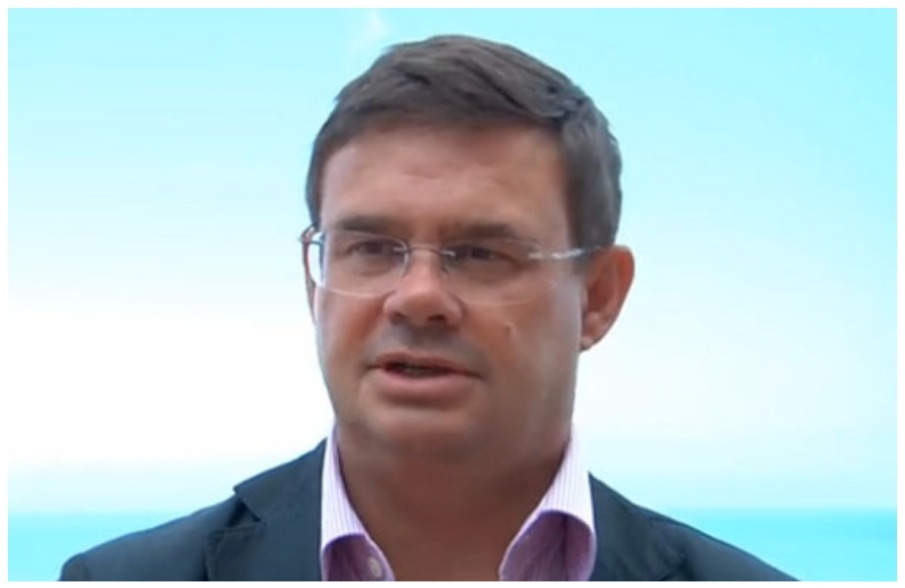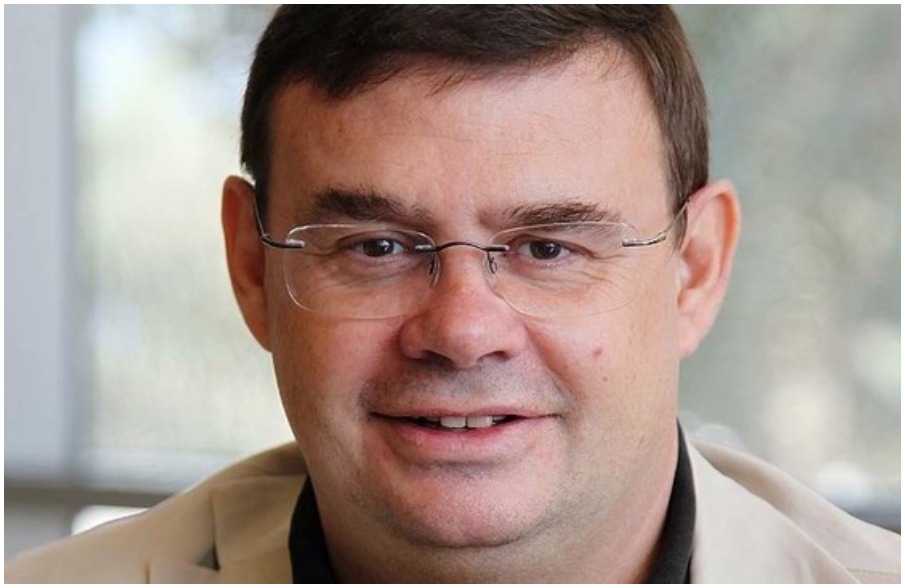


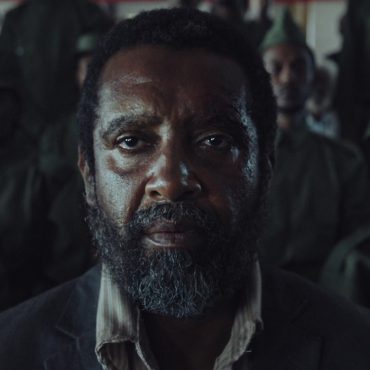
“Mehal Sefari”, interview with producer Tamara Mariam Dawit
Discover how Mehal Sefari , Ethiopia's first film in 14 years at Venice, highlights a powerful story set during the Red Terror, opening doors for African cinema.
Listeners:
Top listeners:
 play_arrow
ENGLISH Channel 01 If English is your language, or a language you understand, THIS IS YOUR CHANNEL !
 play_arrow
ITALIAN Channel 02 Se l’italiano è la tua lingua, o una lingua che conosci, QUESTO È IL TUO CANALE!
 play_arrow
EXTRA Channel 03 FRED Film Radio channel used to broadcast press conferences, seminars, workshops, master classes, etc.
 play_arrow
GERMAN Channel 04 Wenn Ihre Sprache Deutsch ist, oder Sie diese Sprache verstehen, dann ist das IHR KANAL !
 play_arrow
POLISH Channel 05
 play_arrow
SPANISH Channel 06 Si tu idioma es el español, o es un idioma que conoces, ¡ESTE ES TU CANAL!
 play_arrow
FRENCH Channel 07 Si votre langue maternelle est le français, ou si vous le comprenez, VOICI VOTRE CHAINE !
 play_arrow
PORTUGUESE Channel 08
 play_arrow
ROMANIAN Channel 09 Dacă vorbiţi sau înţelegeţi limba română, ACESTA ESTE CANALUL DUMNEAVOASTRĂ!
 play_arrow
SLOVENIAN Channel 10
 play_arrow
ENTERTAINMENT Channel 11 FRED Film Radio Channel used to broadcast music and live shows from Film Festivals.
 play_arrow
BULGARIAN Channel 16 Ако българският е вашият роден език, или го разбирате, ТОВА Е ВАШИЯТ КАНАЛ !
 play_arrow
CROATIAN Channel 17 Ako je hrvatski tvoj jezik, ili ga jednostavno razumiješ, OVO JE TVOJ KANAL!
 play_arrow
LATVIAN Channel 18
 play_arrow
DANISH Channel 19
 play_arrow
HUNGARIAN Channel 20
 play_arrow
DUTCH Channel 21
 play_arrow
GREEK Channel 22
 play_arrow
CZECH Channel 23
 play_arrow
LITHUANIAN Channel 24
 play_arrow
SLOVAK Channel 25
 play_arrow
ICELANDIC Channel 26 Ef þú talar, eða skilur íslensku, er ÞETTA RÁSIN ÞÍN !
 play_arrow
INDUSTRY Channel 27 FRED Film Radio channel completely dedicated to industry professionals.
 play_arrow
EDUCATION Channel 28 FRED Film Radio channel completely dedicated to film literacy.
 play_arrow
SARDU Channel 29 Si su sardu est sa limba tua, custu est su canale chi ti deghet!
 play_arrow
“Conversation with” at the 20th Marrakech IFF, interview with actor Willem Dafoe Bénédicte Prot
 play_arrow
"Eldorado, the taste of the South", interview with producer, Francesca Duca Carolina Mancini
Francesca Duca, producer (from Le Moindre Geste) of Eldorado, the taste of the South by Tunisian director and screenwriter Alaa Eddine Aljem. Eldorado, the taste of the South is one of the six feature films selected at the 14th edition of Final Cut in Venice 2026, the program of Venice Film Festival and Venice Production Bridge that supports film in post-production from all African countries and six countries of the Middle East (Jordan, Iraq, Lebanon, Palestine, Syria and Yemen).
Eldorado, the taste of the South explores the themes of migration and societal borders, blending humour and melancholy, which are hallmark elements of Alaa Eddine Aljem’s unique cinematic language. We discussed the film’s story, co-production challenges, and future steps for this compelling project.
The film Eldorado, the taste of the South is Alaa Eddine Aljem’s second feature, following his debut The Unknown Saint, premiered in Cannes Critics Week in 2019. Francesca Duca explains that the movie explores the universal quest for a better life, using a mix of humour and melancholy to depict a utopian island where Saharan African and Moroccan migrants believe they can find peace and prosperity. The narrative highlights how different groups react to this strange society, using cinema to mirror real capitalist struggles, and its focus on socio-economic themes through a poetic lens.
The production process for Eldorado, the taste of the South has been an odyssey, with financing and co-production challenges over the past six years. Francesca Duca shares that the project involved collaborations with Morocco, France, Italy, Norway, and other partners. She details how initial financing fell through when a French partner pulled out just before shooting, which delayed the process but ultimately led to strong new alliances. The film’s development required resilience, with support from multiple institutions like CNC, Morocco, the French Cinema du Monde, Norway, Red Sea Film Festival, reflecting the international nature of this project. The complex process underscores the importance of solid partnerships, a theme that resonates with the collaborative spirit of Eldorado, the taste of the South, highlighting cross-cultural storytelling and international cooperation.
Currently, the film is in post-production, having wrapped shooting in Marrakech and Italy. Francesca Duca describes the creative choices made, including building Eldorado, the taste of the South in Moroccan studios like Jacaranda and shooting additional scenes in Rome. The film’s visuals involve a mix of studio sets and physical locations, emphasizing the contrast between the utopian society and the real-world struggles of migrants. Francesca Duca emphasizes their confidence in the film’s potential, especially with the support of their sales agent, BFF, based in Belgium, and support from various cultural funds. The aim is to push Eldorado, the taste of the South through festivals and markets, with a focus on its timely commentary on migration and societal borders. The upcoming stages include final editing and festival submissions, with anticipation of future recognition in international markets.
Adama is part of a group of Sub-Saharan migrants who reach northern Morocco, waiting to cross the sea.
They’ve heard whispers of Eldorado – a hidden island. where a just, egalitarian society was built in secret, far from the rest of the world.
On the night of the crossing, a mix-up by the smuggler throws a second group into the boat: Moroccan migrants bound for a different route to Spain, led by the headstrong Ahmed, who forces his way aboard.
On arrival, they’re seized and taken to a “welcome center,” where the director, Franck, lays out the rules of this new society. Entry is scarce, and secrecy is sacred – so before anyone earns citizenship, they must spend twelve months at the center, working off the cost of their stay in the tomato sauce factory that bears the island’s name. The Sub-Saharan group tries to disappear into the routine, hoping to prove themselves worthy. The Moroccans, who never asked for any of this, start plotting an escape instead. Tension rises between the two groups. What neither of them knows is that there is no secret island. There is no Eldorado. They never even left Morocco. There is only a factory – and a workforce that costs nothing.
Discover how Mehal Sefari , Ethiopia's first film in 14 years at Venice, highlights a powerful story set during the Red Terror, opening doors for African cinema.
Our usual meeting with the director of the Venice Production Bridge, Pascal Diot, we talk about the results of this year's event and discuss the possible evolution and novelties for the next edition
Talking with Pascal Diot, director of the Venice Production Bridge, we got insights into this year's event, highlighting its role in connecting immersive content markets and supporting international film and TV projects.
Two players in the Book Adaptation Rights Market talk about the opportunities that such an event can bring and the productivity that the peculiarities of it (one single location, an intense one to one meeting schedule and the quality of …
Discover the intriguing story behind A quarter to Thursday, a surreal film exploring absurdity, politics, and resilience in a world lacking common sense.
Opening Venice's Mostra 2026 with his festival debut, INK, Danny Boyle on the 1969 birth of The Sun, journalism as a pillar of humanity threatened by AI, and his refusal to turn Rupert Murdoch into a monster
The Oscar-winning co-directors of No Other Land return with a documentary produced by The Guardian, set to screen in Sala Grande on 10 September.
Florin Șerban’s You Don’t Belong Here leads the Locarno Film Festival 2026 palmarès, with major awards also going to Hong Sangsoo, Monica Bellucci, Kim Minhee and Petra Volpe.