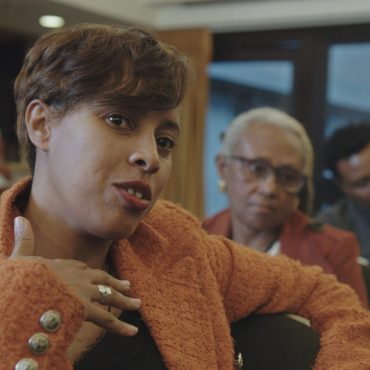


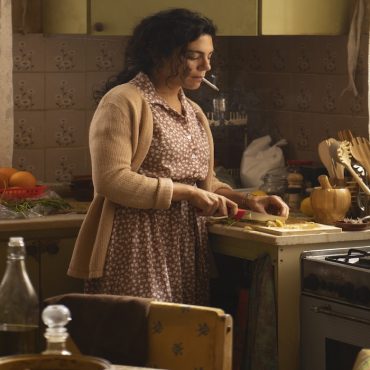
“Occupational Hazards”, interview with the producer, Rula Nasser
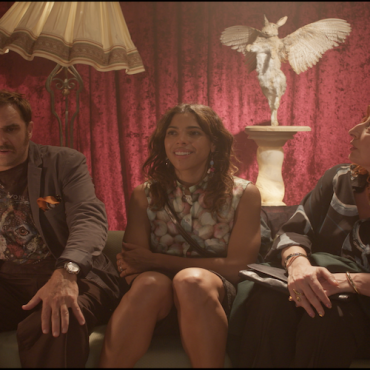
Rula Nasser presents "Occupational Hazards" at the Venice Film Festival 2026, exploring Palestinian family resilience through dark comedy. Click to read!
Listeners:
Top listeners:
 play_arrow
ENGLISH Channel 01 If English is your language, or a language you understand, THIS IS YOUR CHANNEL !
 play_arrow
ITALIAN Channel 02 Se l’italiano è la tua lingua, o una lingua che conosci, QUESTO È IL TUO CANALE!
 play_arrow
EXTRA Channel 03 FRED Film Radio channel used to broadcast press conferences, seminars, workshops, master classes, etc.
 play_arrow
GERMAN Channel 04 Wenn Ihre Sprache Deutsch ist, oder Sie diese Sprache verstehen, dann ist das IHR KANAL !
 play_arrow
POLISH Channel 05
 play_arrow
SPANISH Channel 06 Si tu idioma es el español, o es un idioma que conoces, ¡ESTE ES TU CANAL!
 play_arrow
FRENCH Channel 07 Si votre langue maternelle est le français, ou si vous le comprenez, VOICI VOTRE CHAINE !
 play_arrow
PORTUGUESE Channel 08
 play_arrow
ROMANIAN Channel 09 Dacă vorbiţi sau înţelegeţi limba română, ACESTA ESTE CANALUL DUMNEAVOASTRĂ!
 play_arrow
SLOVENIAN Channel 10
 play_arrow
ENTERTAINMENT Channel 11 FRED Film Radio Channel used to broadcast music and live shows from Film Festivals.
 play_arrow
BULGARIAN Channel 16 Ако българският е вашият роден език, или го разбирате, ТОВА Е ВАШИЯТ КАНАЛ !
 play_arrow
CROATIAN Channel 17 Ako je hrvatski tvoj jezik, ili ga jednostavno razumiješ, OVO JE TVOJ KANAL!
 play_arrow
LATVIAN Channel 18
 play_arrow
DANISH Channel 19
 play_arrow
HUNGARIAN Channel 20
 play_arrow
DUTCH Channel 21
 play_arrow
GREEK Channel 22
 play_arrow
CZECH Channel 23
 play_arrow
LITHUANIAN Channel 24
 play_arrow
SLOVAK Channel 25
 play_arrow
ICELANDIC Channel 26 Ef þú talar, eða skilur íslensku, er ÞETTA RÁSIN ÞÍN !
 play_arrow
INDUSTRY Channel 27 FRED Film Radio channel completely dedicated to industry professionals.
 play_arrow
EDUCATION Channel 28 FRED Film Radio channel completely dedicated to film literacy.
 play_arrow
SARDU Channel 29 Si su sardu est sa limba tua, custu est su canale chi ti deghet!
 play_arrow
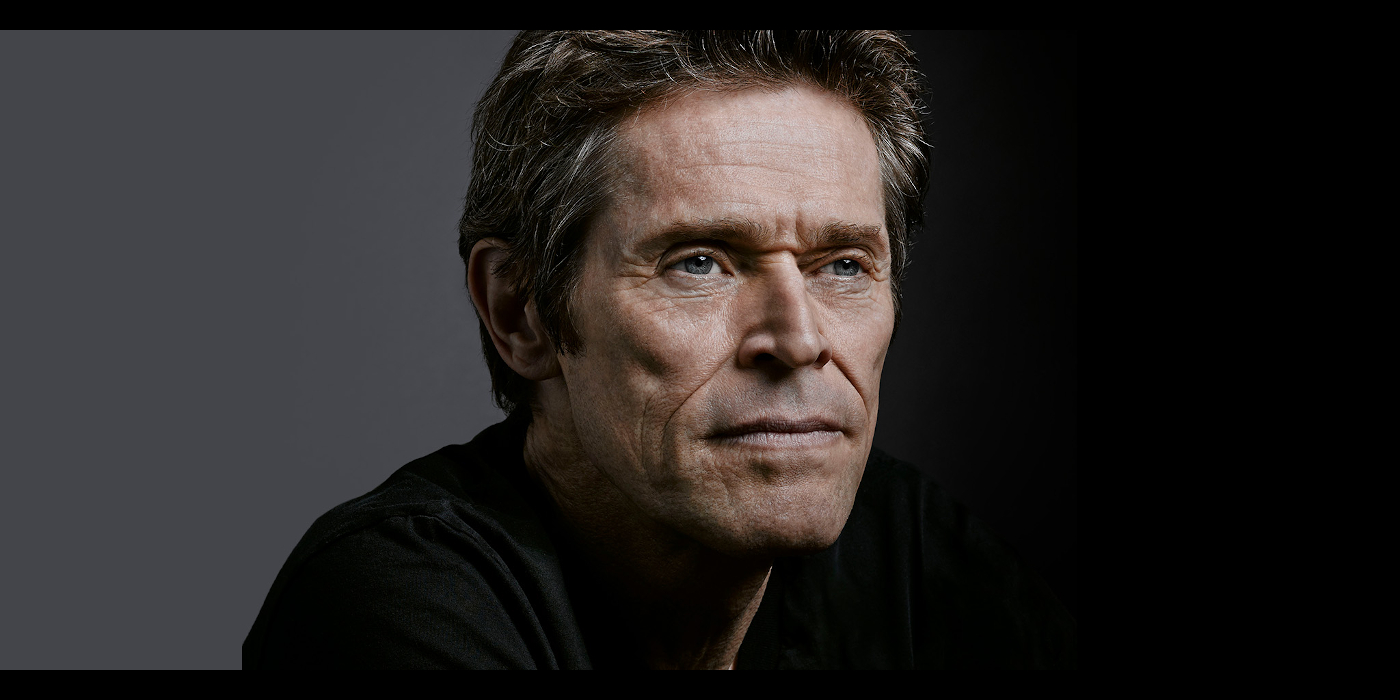
“Conversation with” at the 20th Marrakech IFF, interview with actor Willem Dafoe Bénédicte Prot
 play_arrow
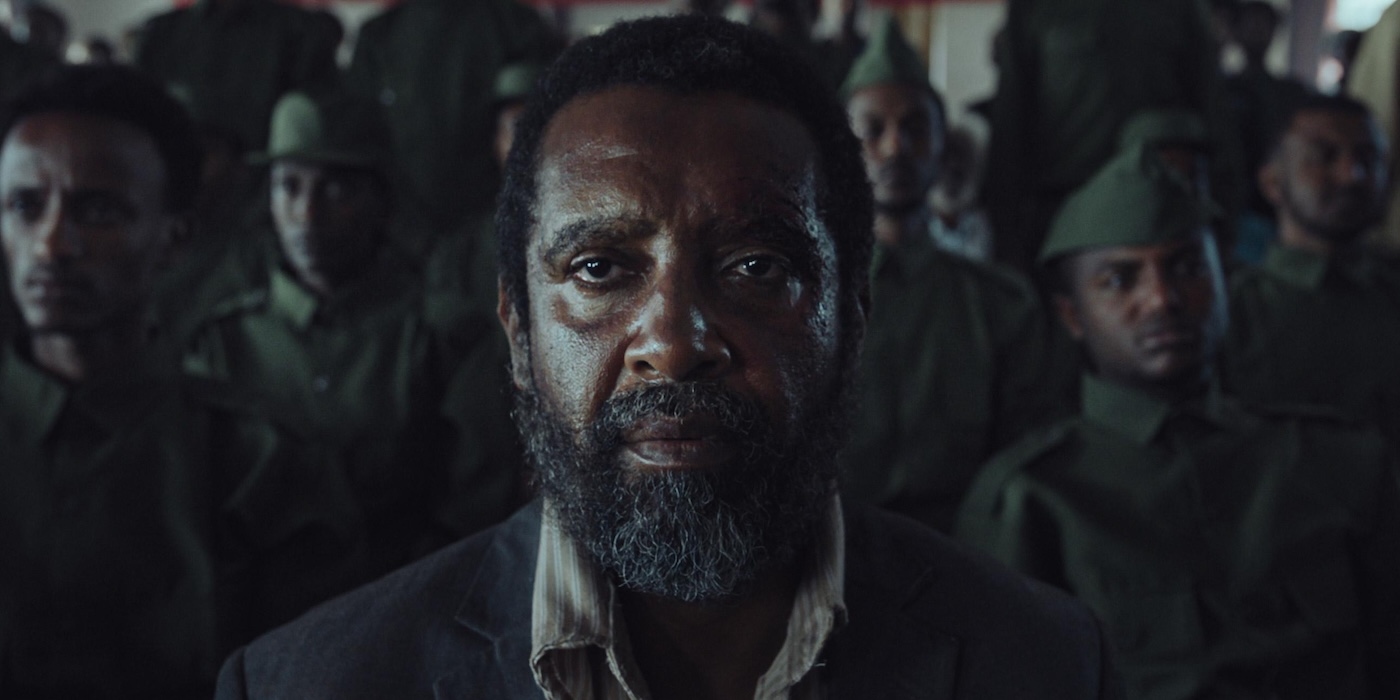
"Mehal Sefari", interview with producer Tamara Mariam Dawit Carolina Mancini
Tamara Mariam Dawit, producer from Gobez Media, and acclaimed Ethiopian director Abraham Gezahagne, are the creative team behind the film Mehal Sefari, which is one of the six feature films selected at the 14th edition of Final Cut in Venice 2026, the program of Venice Film Festival and Venice Production Bridge that supports film in post-production from all African countries and six countries of the Middle East (Jordan, Iraq, Lebanon, Palestine, Syria and Yemen).
Mehal Sefari is the first project from Ethiopia’s to make it into Final Cut in Venice: this emphasizes the importance of the program in opening doors for African cinema. The discussion also explores the film’s themes, production process, and international collaborations.
Tamara Mariam Dawit discusses how the film’s inclusion in Final Cut in Venice signifies a major milestone, opening new opportunities for Ethiopian filmmakers on the international stage. She emphasizes the importance of this project in elevating Ethiopian stories and facilitating international co-productions. The film itself, set during the Ethiopian Red Terror, offers a poignant look into a turbulent period in Ethiopian history, which remains largely underrepresented internationally. This makes Mehal Sefari not only a political statement but also a cultural bridge through which stories from Ethiopia and Africa at large can reach a broader audience.
amara Mariam Dawit explains the extensive international co-production behind Mehal Sefari, involving Ethiopia, Canada, Germany, Norway, and Saudi Arabia. She highlights the strategic role of these partnerships in securing financing and technical expertise, particularly in building production infrastructure within Ethiopia. She shares that most of the crew was Ethiopian, with targeted inclusion of international professionals to facilitate knowledge sharing and capacity building. The film was shot entirely in Addis Ababa, using a mix of local talent and foreign crew. This collaborative approach aims to develop local capacity while ensuring the film meets global standards, demonstrating the power of Mehal Sefari to serve as a model for future Ethiopian and African productions.
Ethiopia in 1977 is under a brutal military regime. Thousands of suspected opposition supporters are executed and their bodies left in the streets as a warning. Mourning the dead is forbidden, and grieving relatives risk arrest. Tilahun, a widowed ambulance driver, has been reassigned from saving lives to collecting corpses destined for mass graves. Unable to leave his job, he warns his two teenage children to stay away from the growing resistance movement.
His world collapses when he discovers the body of his sixteen year old son during a night shift. Tilahun is faced with the impossible choice of claiming his son’s body and exposing himself. He then uncovers his daughter’s secret involvement with the opposition and learns that her actions contributed to her brother’s death. Determined to give his son a proper burial and save his daughter, Tilahun devises a desperate escape plan.
Amid a citywide uprising, he retrieves his son’s body and hides his daughter in the ambulance. But the plan fails, and both children are swallowed by the violence. Broken and alone, Tilahun attempts to take his own life. After an encounter with his daughter’s boyfriend, he begins to believe she may still be alive. For the first time, he chooses a side and uses his ambulance to help members of the resistance escape the city.
Rula Nasser presents "Occupational Hazards" at the Venice Film Festival 2026, exploring Palestinian family resilience through dark comedy. Click to read!
Discover the intriguing story behind A quarter to Thursday, a surreal film exploring absurdity, politics, and resilience in a world lacking common sense.
Talking with Pascal Diot, director of the Venice Production Bridge, we got insights into this year's event, highlighting its role in connecting immersive content markets and supporting international film and TV projects.
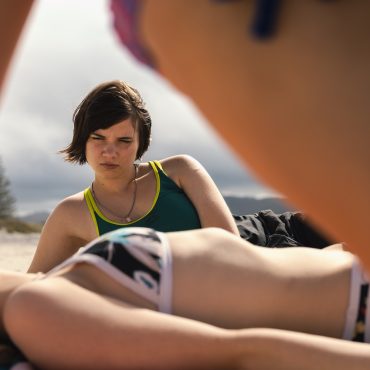
At Alice nella Città 2026 with Big Girls Don't Cry, Paloma Schneidman on adolescence, desire and the blurry space between child and adult
Eva Sangiorgi, director of the Viennale 2026, on a city festival with over 100 features, no competition and a Robert Aldrich retrospective.
Ruth Beckermann on Wax & Gold, her documentary on Ethiopia seen through a hotel in Addis Ababa, at the Rome Film Fest 2026.
A dark fairy tale about growing up, belonging and the fear of being replaced. Bàrbara Farré and Diego Betancor discuss the personal origins of Mala Bèstia, its unsettling vision of adolescence and the decision to make a debut feature without …