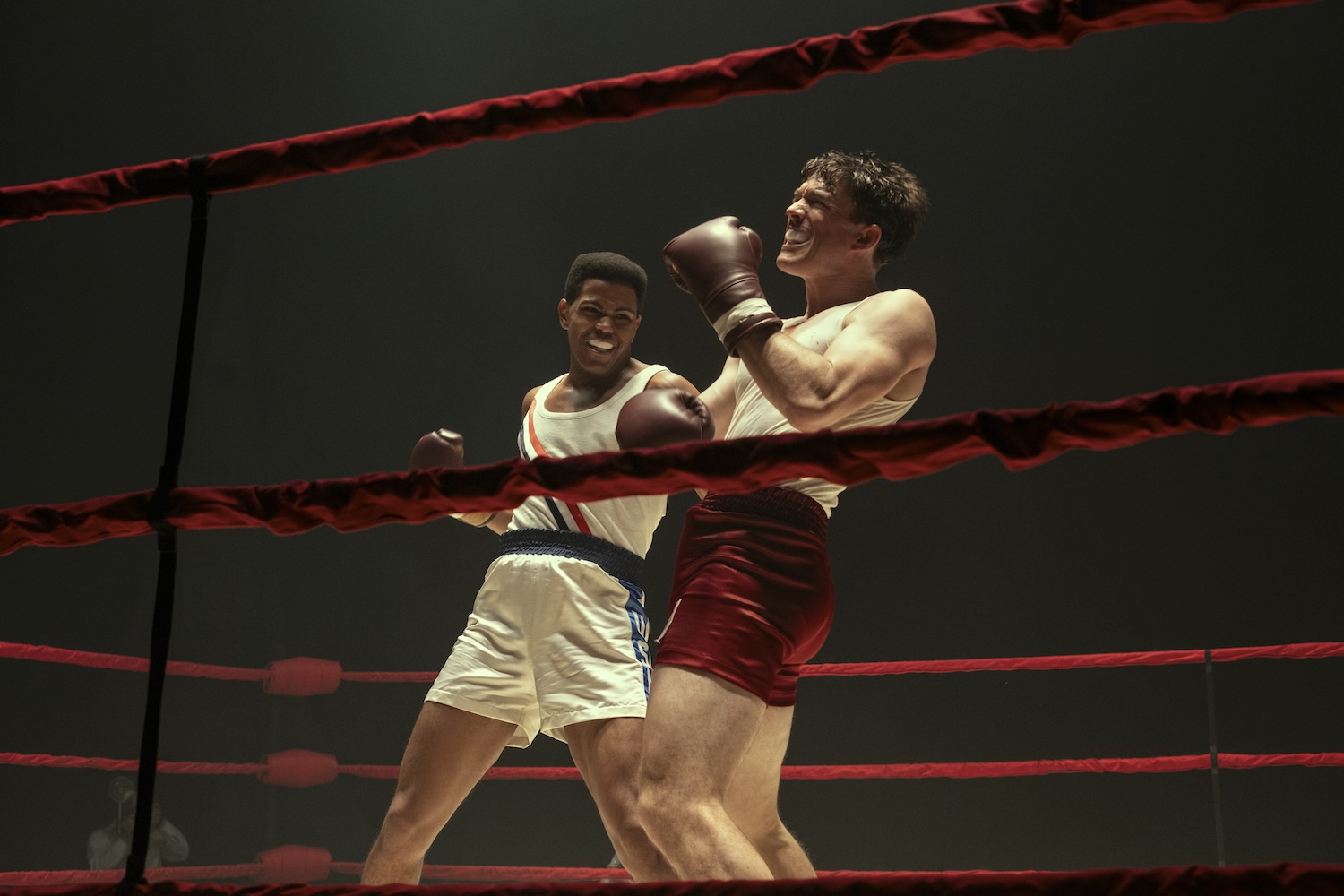
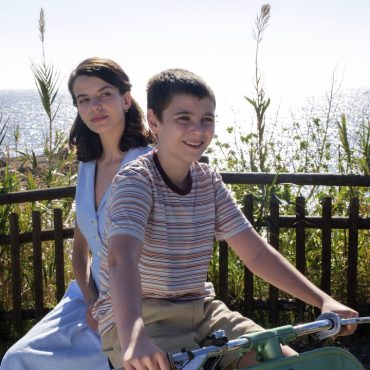
Premiering November 4 on Prime Video, The Greatest is the first authorized scripted series about the life of Muhammad Ali, created by showrunner Ben Watkins and executive produced by Lonnie Ali. The eight-episode first season follows a young Cassius Clay, played by Jaalen Best, from his return home to Louisville, Kentucky, with an Olympic gold medal from the 1960 Rome Games, through his first heavyweight championship and his emergence as Muhammad Ali, with Giovanni Ribisi as his trainer Angelo Dundee. Watkins, Best and Ribisi talk about the choice to tell the story as a coming of age, what it means to play someone who made a difference, responsibility and the willingness to disagree with your environment, Ali’s legacy of shared humanity, and the relationship between a fighter and his trainer.
Before the icon
For Ben Watkins, the starting point was the image everyone already has of Muhammad Ali: “You’re talking about someone that everyone knows the name. And if you say the name, everyone pictures something. Most of them picture this fully formed icon, heroic figure, legend. But I felt like we already know about that. If we’re going to tell a story about Muhammad Ali, we need to add something new to it. And I realized that the best thing we could do is to remind you that he’s human. He’s not an icon or a legend, and that’s not all he is.” That is why the series is a coming of age: “Coming of age is the most natural place to start with that, where you get to see this kid before he became the man. We really made an effort on all levels to disconnect you from what you picture when you hear the name Muhammad Ali. We want to make you forget that. And we want to introduce you to this young kid, 18 years old from Louisville, Kentucky, who has no idea he’s going to change the world.”
Playing someone who made a difference
For Jaalen Best, playing Ali was also a way to look at himself: “It was a special feeling to be able to play someone that made a difference like that, and I think that opportunity allowed me to look within myself and see where I could make the difference in my own personal life. An experience like that didn’t just change my mindset as an actor, it changed my mindset as a human, a person outside of the craft, because what you do is not who you are.” Thinking of the younger generation, he describes the work as an ongoing dialogue: “For me it was a constant conversation I would have with myself. Daily affirmations, journaling, therapy, talking to people about how you feel. I think that helps you find ways to inspire change within yourself, within the community, within organizations.” What stayed with him, he says, was the chance “to find ways after it to translate that over to Jaalen, and figure out ways Jaalen could make that change in his life.”
Life and death stakes
For Giovanni Ribisi, the story is about something precise: “I think the story, the more we talk about it, is really about responsibility and the willingness to disagree with your environment. And I think the biggest difference between his time, during the 1960s and 70s, and today is really that the stakes were life and death. He could have been killed for a lot of the things that he was doing and saying, whereas today you have your phone and you say something and there’s no responsibility.” And he adds: “I don’t mean to sound like I’m preaching about responsibility, because it’s a word that can repulse people, but I think that this is power, when you’re willing to do that.”
Our shared humanity
Watkins hopes viewers will come away from the series with a new understanding of Ali’s legacy: “Hopefully, if you watch the story, you will come away with this understanding: you might get introduced to the greatest boxer in history, and that will not be the thing they are most remembered for. They’ll be more remembered for what they did for their community, for the times that they stood up for what they knew was right, even when all of society was turning against them. And they’ll be more remembered for all of the people that they brought together, because they fought for this very simple thing, our shared humanity.” For Watkins, that is the core of it all: “That is what I think is the core of Muhammad Ali’s legacy, and one of the reasons that he could go from being at one point the most hated man in the world, or in America, to being the most revered man in America, and why you can go anywhere in the world and say the name Muhammad Ali and people are inspired by him.”
Getting out of the way
In the series, Angelo Dundee asks Cassius whether he wants to be the youngest champion or the greatest one. For Ribisi, the role of the trainer was mostly to support: “A lot of what Angelo Dundee was about was just him getting out of the way, but supporting this man, who eventually I think he regarded as a son, supporting him when he needed it. I think their relationship went outside of the ring. It was almost impossible for it not to, because Muhammad Ali was so vocal, such a sociological presence.” But in the end, Dundee’s world remained the ring: “For the most part, Angelo’s obsession was boxing, and dance as well. And so this was his focus, on someone who he had just never seen anything like.”
Plot
1960, 18yearold Cassius Clay returns from the Rome Olympics with a gold medal and a conviction that he can become the greatest boxer in the world. At home in Louisville, Kentucky, he is still a son and a brother, confronting racism, family responsibilities, and the distance between the future he can imagine and the life he can claim.
THE GREATEST follows the young fighter through the years that will make him Muhammad Ali.
As Cassius pursues the heavyweight championship, his ambitions draw him into new friendships, competing loyalties, and questions of faith and identity. His mother, Odessa "Bird" Clay, and father, Cassius "Cash" Clay Sr., carry their own hopes and disappointments; his brother Rudy knows the person behind the bravado. Beyond the family, trainer Angelo Dundee, Malcolm X, and reigning champion Sonny Liston each have a life and a stake in the world Cassius is entering.
Created by Ben Watkins, and starring Jaalen Best, the eightepisode first season brings the private life of an emerging champion into focus. From the Clay home to the gyms and arenas where his confidence is tested, it is a comingofage drama about the relationships, choices, and convictions that shape a young man before the world knows his name.