

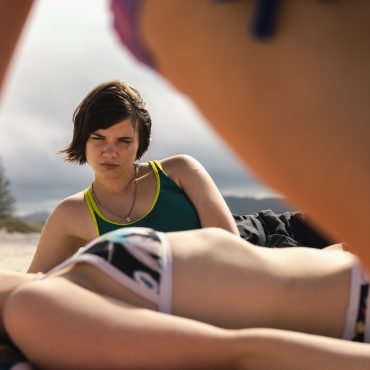
“Big Girls don’t cry”, interview with director Paloma Schneidman
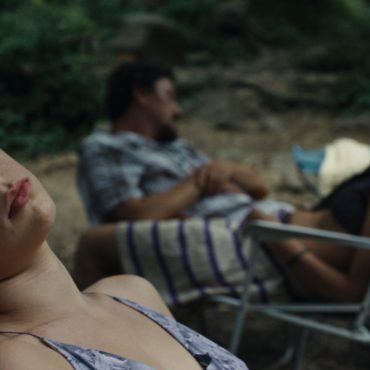
At Alice nella Città 2026 with Big Girls Don't Cry, Paloma Schneidman on adolescence, desire and the blurry space between child and adult
Listeners:
Top listeners:
 play_arrow
ENGLISH Channel 01 If English is your language, or a language you understand, THIS IS YOUR CHANNEL !
 play_arrow
ITALIAN Channel 02 Se l’italiano è la tua lingua, o una lingua che conosci, QUESTO È IL TUO CANALE!
 play_arrow
EXTRA Channel 03 FRED Film Radio channel used to broadcast press conferences, seminars, workshops, master classes, etc.
 play_arrow
GERMAN Channel 04 Wenn Ihre Sprache Deutsch ist, oder Sie diese Sprache verstehen, dann ist das IHR KANAL !
 play_arrow
POLISH Channel 05
 play_arrow
SPANISH Channel 06 Si tu idioma es el español, o es un idioma que conoces, ¡ESTE ES TU CANAL!
 play_arrow
FRENCH Channel 07 Si votre langue maternelle est le français, ou si vous le comprenez, VOICI VOTRE CHAINE !
 play_arrow
PORTUGUESE Channel 08
 play_arrow
ROMANIAN Channel 09 Dacă vorbiţi sau înţelegeţi limba română, ACESTA ESTE CANALUL DUMNEAVOASTRĂ!
 play_arrow
SLOVENIAN Channel 10
 play_arrow
ENTERTAINMENT Channel 11 FRED Film Radio Channel used to broadcast music and live shows from Film Festivals.
 play_arrow
BULGARIAN Channel 16 Ако българският е вашият роден език, или го разбирате, ТОВА Е ВАШИЯТ КАНАЛ !
 play_arrow
CROATIAN Channel 17 Ako je hrvatski tvoj jezik, ili ga jednostavno razumiješ, OVO JE TVOJ KANAL!
 play_arrow
LATVIAN Channel 18
 play_arrow
DANISH Channel 19
 play_arrow
HUNGARIAN Channel 20
 play_arrow
DUTCH Channel 21
 play_arrow
GREEK Channel 22
 play_arrow
CZECH Channel 23
 play_arrow
LITHUANIAN Channel 24
 play_arrow
SLOVAK Channel 25
 play_arrow
ICELANDIC Channel 26 Ef þú talar, eða skilur íslensku, er ÞETTA RÁSIN ÞÍN !
 play_arrow
INDUSTRY Channel 27 FRED Film Radio channel completely dedicated to industry professionals.
 play_arrow
EDUCATION Channel 28 FRED Film Radio channel completely dedicated to film literacy.
 play_arrow
SARDU Channel 29 Si su sardu est sa limba tua, custu est su canale chi ti deghet!
 play_arrow
“Conversation with” at the 20th Marrakech IFF, interview with actor Willem Dafoe Bénédicte Prot
 play_arrow
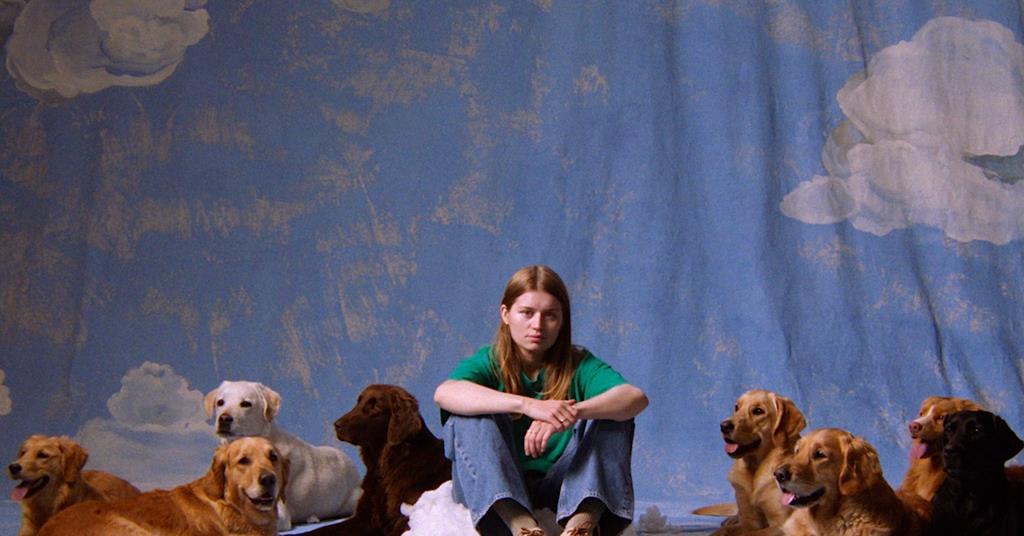
"Low Expectations", interview with director Eivind Landsvik Chiara Nicoletti
Presented as a special screening at the 23rd edition of Alice nella Città 2026, Low Expectations by Eivind Landsvik follows Maja (Marie Ulven), a musician who falls apart at the height of her career and has to step away from her ambitions. Depressed and broke, she moves back home with her mother and works part-time at a local high school, where, far from the spotlight and wrapped in everyday kindness, she slowly finds her way back to life. Landsvik talks about his own long road to filmmaking, the scene in which Maja rediscovers creating for its own sake, why he chose a female artist as his protagonist, the phrases people repeat to comfort someone who is depressed, and his refusal to romanticize depression.
Eivind Landsvik sees in the film’s idea of a second coming of age something of his own experience: “In my own case, trying to debut as a feature film director for so many years, a lot of the time I haven’t been happy, I haven’t had a good time, and the question that often popped into my mind was: how long are you going to chase this dream if it doesn’t make you happy?” Giving up, however, was never an option: “In my case it’s just that I can’t leave this thing alone. A rational thing would be to quit, and I think that’s what most people do. But to me, I can’t leave it alone. And now I’m very happy, because I made a film about it.”
Towards the end of the film, Maja finds herself alone in a classroom, playing around with a school keyboard: “She’s left her coolness behind, she’s given up completely. There’s no facade left. And this is really a humbling point for her, because she realizes she’s nothing to these kids. They don’t care about who she is. And to me, that brings her back to creating for the sake of creating.” It is a risk the director knows well: “As a filmmaker, this is something you risk along the way, because in the beginning you just make stuff for yourself and you have this naive idea that you can do anything, and after a while you have to convince people, and then people react to what you’re making, and you can convince yourself: I have to do this, I have to do that. I think the film is also about that.”
For Eivind Landsvik, “art is such a good way of being empathetic. I think it’s a great way to study empathy”. Having had an experience not too far from Maja’s, he wondered how it would feel for someone far more exposed than him: “I was thinking: if I, as a man in my 30s, don’t have a lot of exposure and I feel this way, how would it feel for a female artist who has had way more exposure? People know how she looks, they know who she is, and she’s also so judged by her looks, and she’s getting older in a different way, because there are so many factors in which society is harder towards women than men. I think that’s the reason.”
Some have criticized the film as clichéd, because everyone keeps telling Maja that things will be fine. Landsvik answers from experience: “Having gone through depressions myself, and one that was really bad, I promise you, the thing you hear on repeat from everyone is: it’s going to work out. You can call it a cliché, but trying to comfort someone is one of the hardest things in life.” When a colleague tells Maja that her depression will one day be just an anecdote for an interview, he explains, the line points to something else: “A lot of the time it’s not about the art. Especially for artists, you have to sell this story of: you had a tough time, and so on.” And he adds: “Now I just did the same thing myself, talking about depression.”
In one scene Maja shows up unannounced at a teacher’s home and starts trashing the profession: “She’s trashing the occupation of a teacher, which is a very important profession, at the home of a teacher. She’s not trying to be mean, but she’s so unaware of her surroundings.” Landsvik wanted the audience to see all of her: “I tried also to make it not just like: oh, we have to feel pity for her all the time. You’re allowed to be annoyed by her. I am when I watch the film. She’s cruel to her mother sometimes, and she doesn’t mean to be, but to take depression seriously, you have to show all of it. It’s not a pretty picture.” Above all, he did not want to romanticize it: “It’s often romanticized and it’s easy to romanticize, especially in art. There is so much art about depression, and it’s really beautiful art, and it’s really beautiful music that you listen to when you’re sad. It is very romantic, but it needs to be handled with care.”
At the height of her music career, Maja falls apart and has to step away from her ambitions. Depressed and broke, she moves back home with her mother and works part-time at a local high school. Far from the spotlight, wrapped in everyday kindness, she slowly finds her way back to life.
At Alice nella Città 2026 with Big Girls Don't Cry, Paloma Schneidman on adolescence, desire and the blurry space between child and adult
A dark fairy tale about growing up, belonging and the fear of being replaced. Bàrbara Farré and Diego Betancor discuss the personal origins of Mala Bèstia, its unsettling vision of adolescence and the decision to make a debut feature without …
Anemone by Ronan Day-Lewis , winner of the 23rd Alice nella città - Best Debut feature award, marks the return of Daniel Day-Lewis
In “A Second Life”, director Laurent Slama captures silence, hope, and rebirth in Olympic Paris — a story of connection beyond sound and sight.
Ben Watkins, Jaalen Best and Giovanni Ribisi on The Greatest, the Prime Video series that tells Muhammad Ali's story as a coming of age, before the icon and the legend
France Odeon - Festival del Cinema Francese
La Vie d'une Femme explores the tension between duty and freedom as a surgeon’s carefully ordered life is transformed by an unexpected connection.
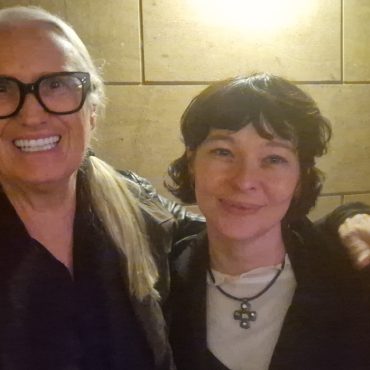
Big girls don't cry captures the wild, unfiltered world of teenage life in 2006—and the filmmaker’s journey from Jane Campion’s mentorship to the big screen.
Clio Barnard's I See Buildings Fall Like Lightning leads the Rome Film Fest 2026 winners, with major awards also going to Congo Boy, Mustang and The Life and Deaths of Wilson Shedd. The complete list of winners and the festival's …