

“My Undesirable Friends: Part II – Exile”, Interview with director Julia Loktev
Julia Loktev discusses exile, journalistic responsibility and the lives of Russian reporters forced to leave their country after the invasion of Ukraine.
Listeners:
Top listeners:
 play_arrow
ENGLISH Channel 01 If English is your language, or a language you understand, THIS IS YOUR CHANNEL !
 play_arrow
ITALIAN Channel 02 Se l’italiano è la tua lingua, o una lingua che conosci, QUESTO È IL TUO CANALE!
 play_arrow
EXTRA Channel 03 FRED Film Radio channel used to broadcast press conferences, seminars, workshops, master classes, etc.
 play_arrow
GERMAN Channel 04 Wenn Ihre Sprache Deutsch ist, oder Sie diese Sprache verstehen, dann ist das IHR KANAL !
 play_arrow
POLISH Channel 05
 play_arrow
SPANISH Channel 06 Si tu idioma es el español, o es un idioma que conoces, ¡ESTE ES TU CANAL!
 play_arrow
FRENCH Channel 07 Si votre langue maternelle est le français, ou si vous le comprenez, VOICI VOTRE CHAINE !
 play_arrow
PORTUGUESE Channel 08
 play_arrow
ROMANIAN Channel 09 Dacă vorbiţi sau înţelegeţi limba română, ACESTA ESTE CANALUL DUMNEAVOASTRĂ!
 play_arrow
SLOVENIAN Channel 10
 play_arrow
ENTERTAINMENT Channel 11 FRED Film Radio Channel used to broadcast music and live shows from Film Festivals.
 play_arrow
BULGARIAN Channel 16 Ако българският е вашият роден език, или го разбирате, ТОВА Е ВАШИЯТ КАНАЛ !
 play_arrow
CROATIAN Channel 17 Ako je hrvatski tvoj jezik, ili ga jednostavno razumiješ, OVO JE TVOJ KANAL!
 play_arrow
LATVIAN Channel 18
 play_arrow
DANISH Channel 19
 play_arrow
HUNGARIAN Channel 20
 play_arrow
DUTCH Channel 21
 play_arrow
GREEK Channel 22
 play_arrow
CZECH Channel 23
 play_arrow
LITHUANIAN Channel 24
 play_arrow
SLOVAK Channel 25
 play_arrow
ICELANDIC Channel 26 Ef þú talar, eða skilur íslensku, er ÞETTA RÁSIN ÞÍN !
 play_arrow
INDUSTRY Channel 27 FRED Film Radio channel completely dedicated to industry professionals.
 play_arrow
EDUCATION Channel 28 FRED Film Radio channel completely dedicated to film literacy.
 play_arrow
SARDU Channel 29 Si su sardu est sa limba tua, custu est su canale chi ti deghet!
 play_arrow
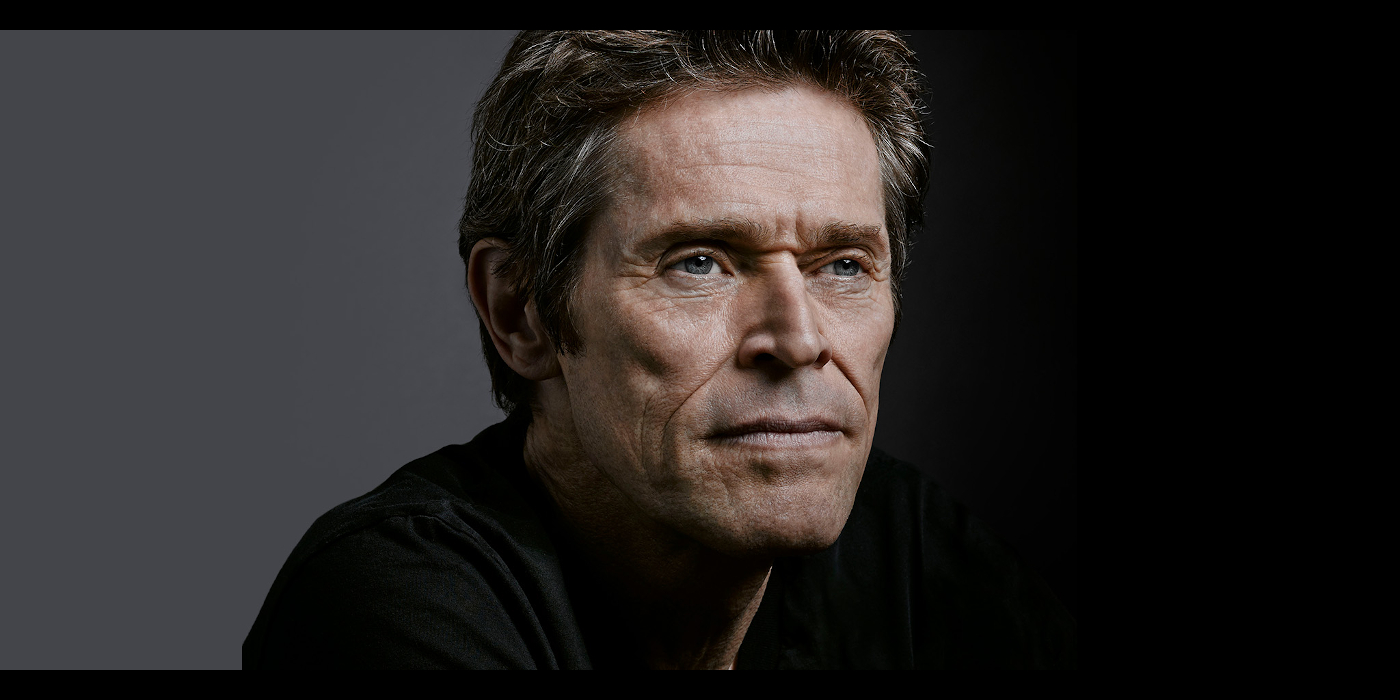
“Conversation with” at the 20th Marrakech IFF, interview with actor Willem Dafoe Bénédicte Prot
 play_arrow
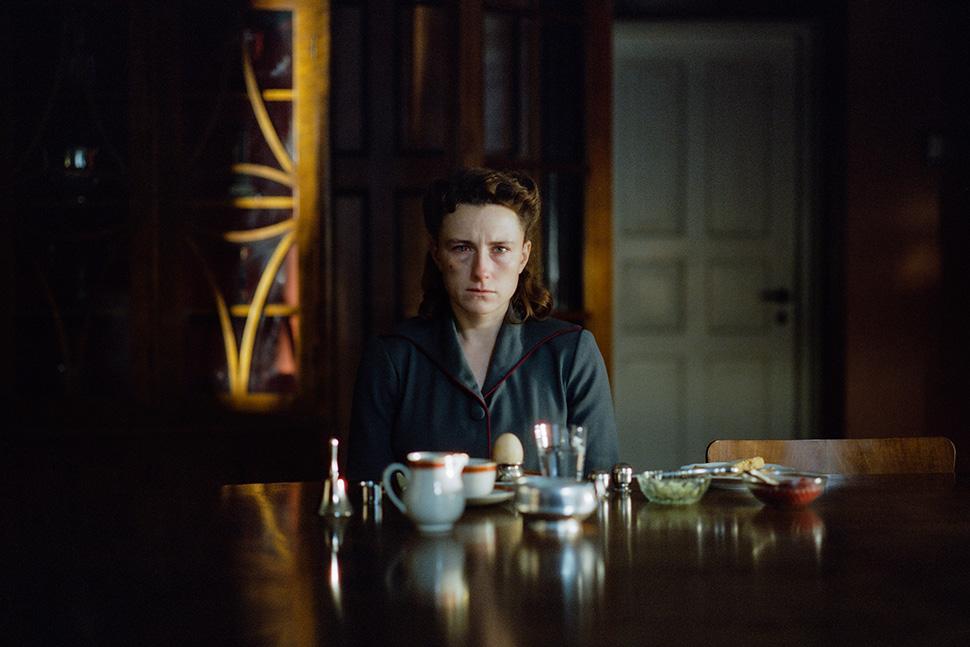
"Woman Unknown", interview with director May El-Toukhy and actress Mathilde Arcel Chiara Nicoletti
In competition at the Venice Film Festival 2026, Woman Unknown follows Marie, a young nanny about to marry the wealthy widower she works for, whose wartime affair with a German soldier threatens to unravel the new life she has built for herself amid post-war anarchy.
Director May El-Toukhy, the only woman directing a competition title this year, and lead actress Mathilde Arcel discuss the history of the so-called horizontal collaborators behind the film, the physical work of playing a woman holding her fear in, and the decision to keep the story’s violence subtle rather than explicit.
El-Toukhy traces the film back to a specific historical interest: “What came first was the interest in the so-called horizontal collaborators. That was the starting point, and then me and my co-writer Maren Louise Käehne worked backwards from that point”. That research led her to the liberation weeks that followed the German occupation, a moment of celebration shadowed by violence against these women: “We became interested in the post-war time, the liberation weeks, where there was euphoria and joy because the occupation had ended, but at the same time these women were incredibly afraid to be hunted down.
Many of them were hunted down, humiliated in the street, assaulted, spat on, pissed on, and cut”. Trying to understand how that violence became possible pushed her toward a wider, and still current, idea: “The female body is seen as part of the national territory, and almost something that’s owned by the nation because of reproduction. That’s something universal — it’s still very true today in every war zone where women’s bodies are violated during or after a war. But I became interested in what that looks like within the parameter of a private setting”.
For Arcel, building Marie started with research into real accounts of women who lived through the same experience: “It became very important, first of all, to research a lot and to read as many excerpts of diaries from these women that I could find, or anonymous interviews, so I could get to understand these women as well as possible”. Just as important, she says, was imagining who Marie was before the war reduced her to a single secret: “It was also really important for me to try to invent for myself what kind of life Marie had before the war. What kind of woman was she? Because she wasn’t only shaped by this single event, this intimate relation with a German soldier.
The world would probably shape her in that image if they knew that about her, but for her, she had a lot of dreams and hopes for the future before all of this happened”. That interior life translated into a very physical approach on set: “The emotion very present in the movie is a lot of fear, and fear is a very physical emotion. I worked a lot with breath, for instance, holding my breath in a whole scene, because Marie is holding all of these emotions in and trying not to show anything, because she’ll lose everything if her secret gets out”.
Asked about a film that conveys violence against the female body without ever showing it explicitly, El-Toukhy describes the research behind those scenes: “There’s a lot in the scenes we did on the female body and violation of the female body, or what we put our bodies through, without spoiling the film. We were really thorough with these scenes. I read a lot of scientific material about how you would investigate the female body at that time, and what remedies you could use to relieve pain, and how little care there was for women in pain”. A neglect, she notes, that has not entirely disappeared.
Asked about a line late in the film, in which Marie’s future husband dismisses one of her wishes by saying it only happens in fairy tales, El-Toukhy ties it back to the real testimonies she read: “When you read the accounts and testimonies of these women, many of them had really difficult lives after the war, after the stigma they experienced in post-war, the assaults, it was something that never left them. So it felt right to stay true to the tragedy of it all”.
Marie, a young nanny and housemaid, is about to marry the wealthy older widower, Christian, for whom she is working. But Marie guards a shameful secret. During World War II, she was in an intimate relationship with a German soldier. Now Marie’s past threatens to catch up with her, and she is forced to do everything in her power to preserve her new status as lady of the house in post-war anarchy.
Julia Loktev discusses exile, journalistic responsibility and the lives of Russian reporters forced to leave their country after the invasion of Ukraine.
Demetra in Esilio by Maria Giovanna Cicciari, at Biennale College Cinema 2026: the myth of Demeter and Persephone in Milan.
Venice Film Festival 2026, Werner Herzog on his tribute to David Lynch, two sisters who speak in unison, and a film with no precedent in Bucking Fastard
At the Venice Film Festival 2026, Martin McDonagh on two CIA agents, a doomed friendship and the shadow of Chile's 1973 coup in Wild Horse Nine
Dust di Tsai Ming-liang, presentato in Venice Open - Fuori Concorso della Mostra di Venezia 2026: impermanenza e meditazione.
Listen Global Critics Venice Voice! Exclusive and thoughtful conversations with leading international film critics, and in-depth analysis of the most anticipated films of the Venice International Film Festival 2026.
At the 83th Venice Film Festival 2026, Skyler Gisondo, Merritt Wever and Bokeem Woodbine on stepping into the circus of Primetime
In competition at the 83° Venice Film Festival, Luca Marinelli and Alicia Vikander on The Echo Chamber, inheriting Bernardo Bertolucci's screenplay and the traces we leave in each other's life